
 E-Paper



Delhi’s 19 heritage structures to get a makeover
Nine lesser-known tombs, two mosques and one ancient structure are among buildings set to get a fresh lease of life thanks to the Delhi archaeology department. The project to cost Rs 7 crore, restoration will commence in April.

 Prefer HTon Google


Nineteen of Delhi’s lesser known monuments are set to get a new lease of life with restoration work on these heritage structures, with an aim to bring back their original glory, set to begin from April.

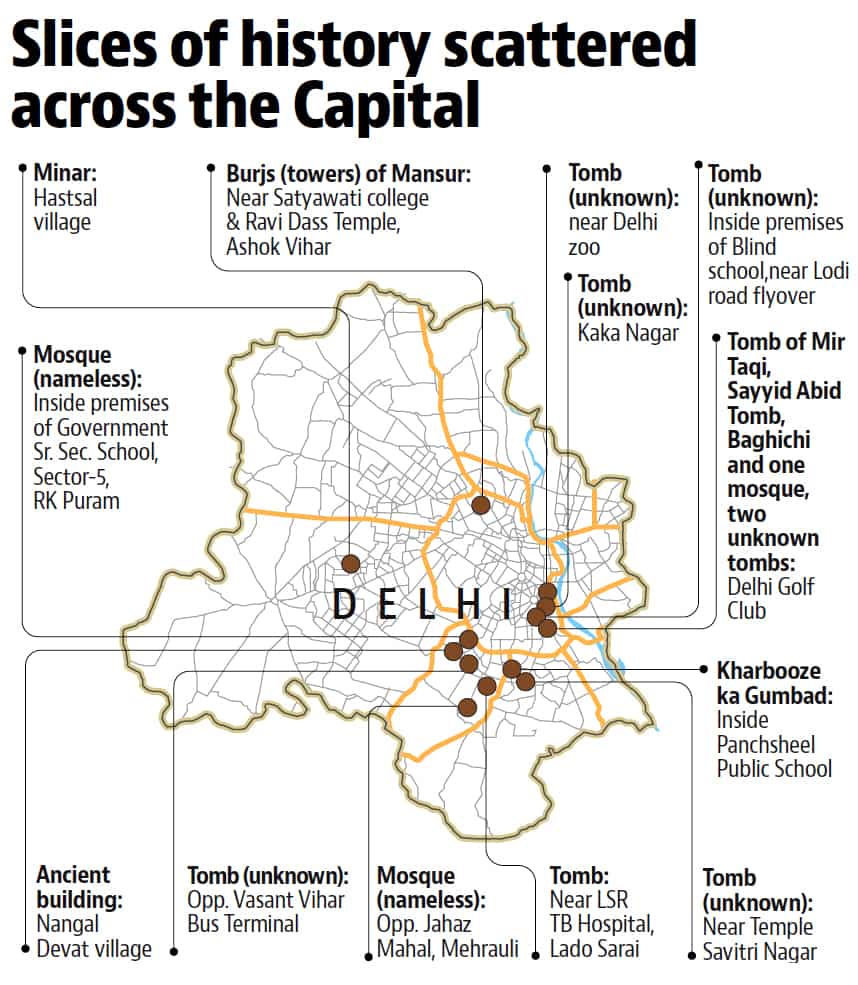
The state archaeology department has selected nine lesser known tombs in Lado Sarai, Vasant Vihar, Sundar Nagar, Savitri Nagar and Kaka Nagar, two nameless mosques in Mehrauli and RK Puram, and an ancient building in Nangal Devat Village in southwest Delhi for refurbishment work.
Other significant structures to be conserved are a minaret in Hastsal Village, Kharbooze ka Gumbad, burjs (towers) of Mansur, tombs of Mir Taqi, Sayyid Abid and Baghichi.
The restorer — Indian National Trust for Art and Cultural Heritage (INTACH) — is likely to submit a detail project report (DPR) by this week after which work may begin.
The project will cost Rs7 crore, Vikas Maloo, head of office (archaeology) said.
The initiative is part of the department of archaeology’s ambitious project for restoration of historically important structures in the national capital initiated almost 10 years ago.
After a survey, it identified 238 structures for their phase-wise preservation and conservation. The department of archaeology signed a pact with INTACH for the purpose in 2008. Since then, it takes up repair of about 18 buildings each year. So far, 50 historically significant edifices, including tombs, baolis, and sarais, have been restored.
The selection of structures to be taken up for preservation is based on recommendations from the offices of lieutenant-governor and chief minister, Maloo said.
“The department is contesting several court cases to get illegal occupants removed from the protected buildings. As and when, we get a judgment in our favour, we will include them in the list,” he said.
Restoration and its challenges
Unknown or nameless monuments pose a challenge to restorers as very little information or, in some cases, no details are available. Some structures are damaged to such an extent that even their stablisation gets tricky. As the conservators are unaware of their time of construction, the name of the builder and the purpose of construction, their (design or architecture) reconstruction becomes difficult.
“We can’t find the exact date of construction. However, with the help of their architectural designs, we can trace the period during which they were built as every dynasty had a distinct style of construction. At times, things turn out to be different at the site from the available information. Then we do our own research, but that also comes to a dead end after a point,” said Ajay Kumar, director project, INTACH (Delhi chapter).
The other crucial aspect, he said, is of ambiguity in the policy for the restoration of ancient structures.
“Restoration and conservation are two separate things. Already there’s an ongoing debate on the topic among conservators. The government policy only lays emphasis on consolidation and conservation,” he said, adding that illegal occupation and vandalism are other factors.
Corroborating Kumar’s version of vandalism, Maloo said that community’s cooperation in such situations is indispensable. Citing a past event of 2009, he said vandals had tried to break the dome of the tomb at Hauz-e-Shamsi in Mehrauli while it was being repaired.
“They were illegally occupying the structure. So when they were removed, they tried to demolish it. Sometimes, transporting repairing material proves to be a tough task particularly if work is being carried out in the Walled City area. In these cases, public cooperation is important,” he said.


