
 E-Paper



Microsoft researcher explains why he returned to India from Canada: 'Never felt belongingness to the country'
Nandan Thakur said that there wasn't a single strong reason to return to India, but an accumulation of many small things that he considers crucial for his life.

 Prefer HTon Google


Nandan Thakur, a recent PhD graduate from the University of Waterloo in Canada, has shared why he and his wife, Esha Saha, chose to return to India, right after completing their respective PhDs in Canada, saying the decision was shaped by several personal and professional factors rather than a dislike of life abroad.
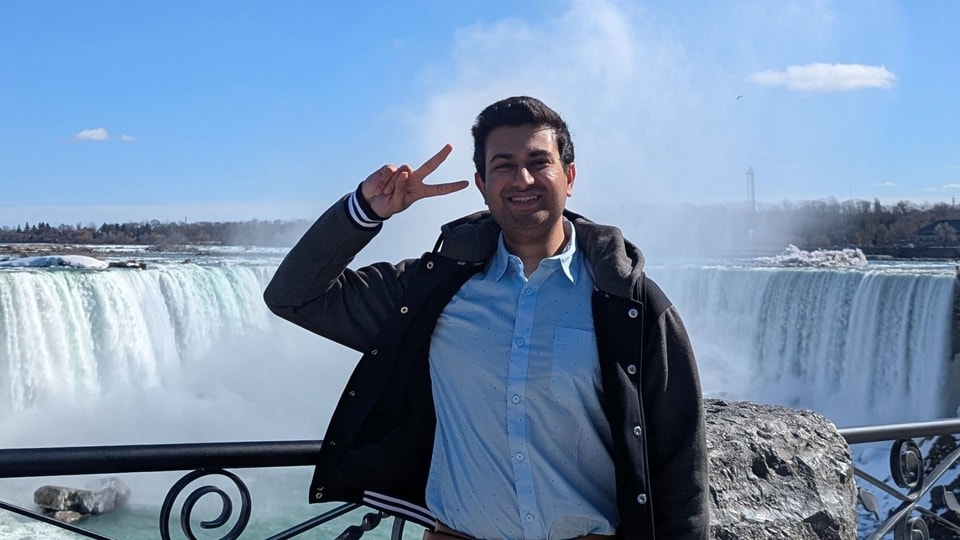
Taking to X, Nandan Thakur, who is now working as a postdoctoral researcher at Microsoft India in Bengaluru, detailed his decision in an article titled 'Why am I returning to India after my PhD?'. He shared the article with a disclaimer that the views were his own, shaped by personal experiences and his wife's perspective, noting that her determination to move back at this point in their career ultimately shaped their decision. He urged readers to make decisions based on what works best for them and their family.
Return to India
Thakur explained his 'unusual' decision, saying that there wasn't a single strong reason to return, but an accumulation of many small things that he considers crucial for his life.
"The idea of returning to India is daunting, when you are settled abroad for a few years, after getting your PhD degree at a prestigious university. At this stage, you might even have lucrative and higher-paying job offers, in comparison to those in India. In addition, you have spent so much time in adapting culturally and socially to a new country, you start to compare the pros of the new country and compare it against the potential downsides of living in India," Thakur wrote.
However, he said his experience in Canada made him realise that several things he valued were missing from his life there. Among them was social connection, particularly during Edmonton's harsh winters, when he and his wife found it difficult to socialise and spent considerable time at home.
"We found that socializing was hard in Edmonton as unfortunately we could not find the right friend circle to vibe with. Winters naturally made socializing harder and without much sunlight, the mood was pretty gloomy," he wrote.
Thakur said that he also missed Indian food, friends and family. He said that the distance from India meant he missed several close friends' weddings and important occasions, while flights could cost CAD 2,000-3,000 and take around 18 hours.
(Also Read: American woman breaks down in tears as Indian neighbours bid goodbye before returning to India. Watch)
Life as an immigrant
Thakur also spoke about the uncertainty he experienced as an immigrant, saying visa processes, paperwork and immigration status could become sources of anxiety. He recalled how some Indian students faced additional difficulties during the Covid-19 pandemic because of Canada's vaccine recognition requirements.
"Personally, as an immigrant, we've unfortunately never completely felt that belongingness to the country. We also saw friends live with a tremendous amount of stress around visas and immigration status," he wrote.
Thakur further stressed that his return was not a "backup plan" and that both he and his wife's primary goal of coming to Canada was to complete their PhDs. "Returning to India was never something we viewed as a backup plan or a fail-safe," he wrote.
"Like most of us who have stayed (or are staying) abroad, returning home was initially a theoretical plan where I would've done it 'sometime', maybe in 5 years or 10 years or even after retirement! However, after discussing with a lot of friends and family who chose to move back or remain abroad, we started getting a clearer picture of what it would take if we wanted our theory to move to reality," he wrote, quoting his wife's words.
"We discussed our goals, both short term and long term and why we had decided to come to Canada in the first place; both of us had the same answer: to complete our PhD. I think the timing and decision to return to India became clearer after that, where there was nothing holding us back once we had both accomplished our goals," he added.
(Also Read: NRI in US explains why returning to India after earning crores is ‘next to impossible’)
What excites him the most about returning to India?
The researcher said India's rapidly developing AI ecosystem was another major reason behind his decision. He pointed to research groups at IITs, IISc and BITS, along with organisations including Microsoft Research, Google DeepMind, IBM and startups such as Sarvam, saying the country now offers an increasingly exciting environment for AI research.
"I would like to tackle important problems, help build research, mentor students, collaborate with universities and industry, and hopefully contribute in whatever small way I can to the community here," Thakur wrote.
‘Culture shock’ after moving back
However, after spending about a month back in Bengaluru, the couple acknowledged that returning also brought "its own form of culture shock". Thakur said traffic and excessive honking sometimes bothered him, while his preferences had also changed after years abroad.
But ultimately, Thakur said conversations with his wife about their future, being closer to friends and family, speaking Hindi, contributing to India's AI ecosystem and feeling a stronger sense of belonging made the decision easier.


