
 E-Paper



Delhiwale: A thousand-pillar Tughlaq puzzle
Public interest: The palace of the sultan who moved Delhi’s residents to the Deccan, has survived many transformations


This was the palace of Muhammad bin Tughlaq (1300-1351), the sultan who forcibly moved Delhi’s entire population 700 miles south to the Deccan. Having survived many transformations, Bijay Mandal, or what is left of it, is like a difficult poem with its first and last verses missing.
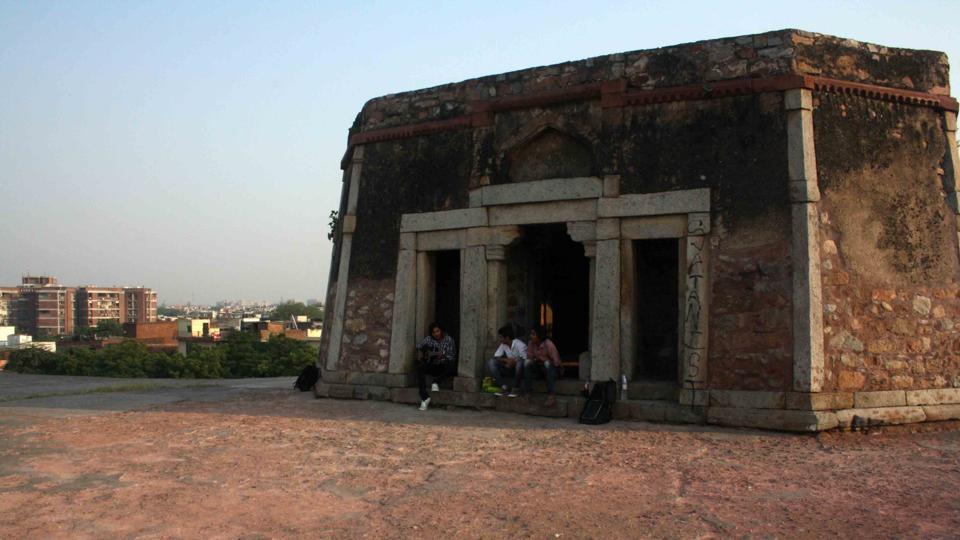
Historians call it Delhi’s most puzzling monument. They guess it was the site of the famous thousand-pillared hall, whose pillars were said to be of painted wood and whose roof was exquisitely carved. They guess because all that is gone.
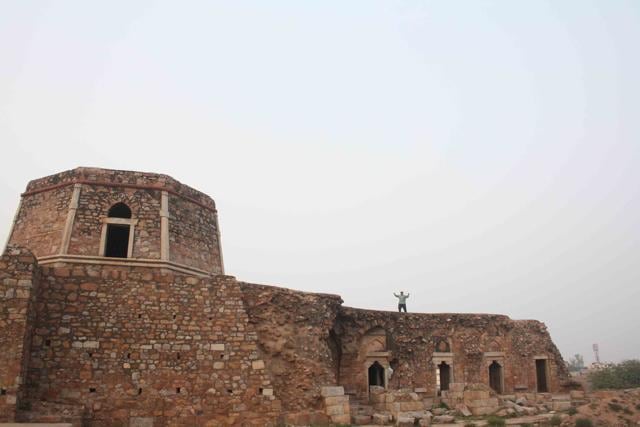
Hardly anyone climbs the stairs to reach the plinth on which the palace was built during the first half of the 14th century. The main hall is open to the elements and yet is dark and musty. Its southern portion has collapsed. The walls have lost their smoothness. The roof is broken. The hall has two treasure pits from which pearls, porcelain, gold and rubies were excavated during the last century.
An octagonal pavilion adorns the roof. But the ramp that leads up ends in a padlocked door. Daring boys climb the walls for a majestic view of the city, but you had better not risk it.
The northern side of the main hall looks into a burial ground, which houses the shrine of the Sufi saint Sheikh Hasan Tahir. Further ahead is a ruin with beautiful arches.
The monument’s southern side offers a peek into the private lives of Begumpur village’s residents. If the wind is favourable, you can hear the barking of dogs from the bungalows of Sarvapriya Vihar. Sometimes, boys from the village come here with their guitars and sing love songs.
Stay updated with all top Cities including, Bengaluru, Delhi, Mumbai and more across India. Stay informed on the latest happenings in World News along with Delhi Election 2025 and Delhi Election Result 2025 Live, New Delhi Election Result Live, Kalkaji Election Result Live at Hindustan Times.


