
 E-Paper



Delhiwale: Home is where his heart is
Gladly stranded at his workplace, a migrant muses about his village


Home is a place where the heart feels easy — at least this is how the self-proclaimed “mast maula (carefree soul)” Ashok Kumar Dhaka feels.
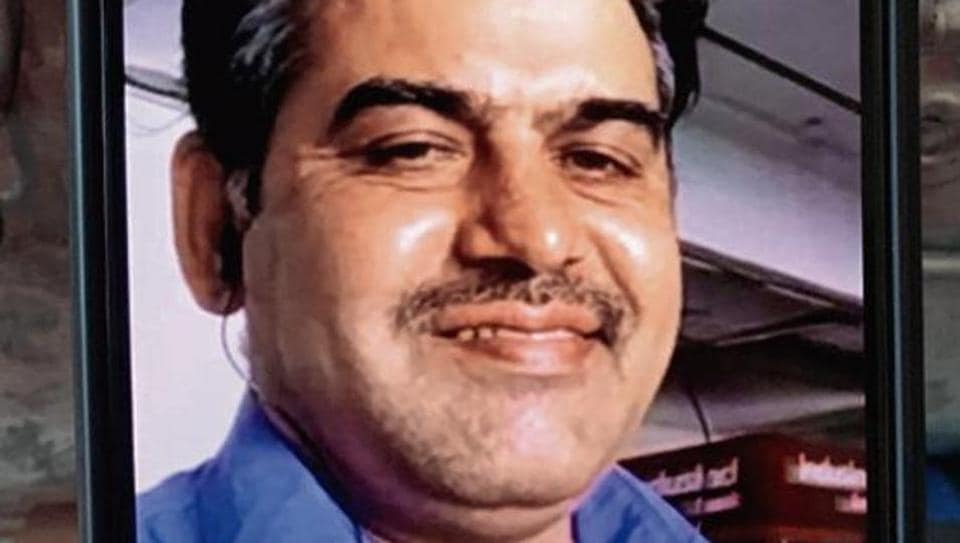
“And the best way to keep the heart calm is to try to remain contended,” he says, adding, “no point in worrying about what might happen tomorrow.”
An electrical engineer in a Gurugram residential society, Mr Dhaka, 36, is chatting on WhatsApp — the picture is taken through the phone screen that connects him to this reporter. He says he is never perturbed by external events, and is not particularly rankled even by the ongoing pandemic. “I take all the precautions I can”—he is wearing a white mask—“but I don’t fret about things upon which I have no control.”
Unlike many of us, Mr Dhaka’s working life hasn’t been profoundly altered. Indeed, he is temporarily staying in the apartment complex—his workplace—due to the lockdown. Otherwise he lives alone in a one-room house in Jharsa village in Sector 39, which he doesn’t consider a home. It doesn’t have his family (they’re in the village). There’s no TV. The only potential source of distraction in the room is the window through which he might look out into the neighbourhood “but I keep it covered with a curtain,” he says, laughing.
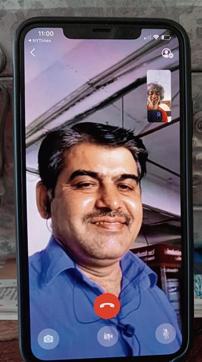
Instead, the gentleman considers his workspace his “ghar,” home. He is a workaholic, and it was true even in the BC (Before Corona) era. He would always try to opt for early morning shifts, and though his duty would end by 2pm, he wouldn’t leave straight for Jharsa village. “I’d mostly continue to work until it would be really dark... there’s nothing to do in the room after all.” And then he would cover the 20-minute distance walking, his hands sometimes tucked into his pants pockets, and his black pitthu bag (backpack) hanging on his back.
So now he must be thrilled having to live on his “work site” 24/7, thanks to the lockdown.
Mr Dhaka looks amused. Following a pause, as if thinking hard to translate his feeling into words, he says, “to me, naukri is home.”
What about the village then?
His family, including wife and kids, live in Jhunjhunu, Rajasthan.
“I frequently visit them—they’re only 4 hours away by bus.”
In fact, he was in the village a few days before the lockdown started. “By then, I had already heard of coronavirus... there were news of people dying in China.” Nobody in the village was talking of the virus, though. “My village is far removed from the tensions of cities.” Mr Dhaka wistfully talks of its temples, its by-lanes, the friends he left there, and the taalaab (rainwater lake) whose cool water is a refuge to the cattle. “Life there is as mast as me.”
To be honest, Mr Dhaka sometimes wonders just why he left the village, especially “when the high cost of living in Gurgaon nullifies whatever difference in the earnings one enjoys in a city compared to a village.”
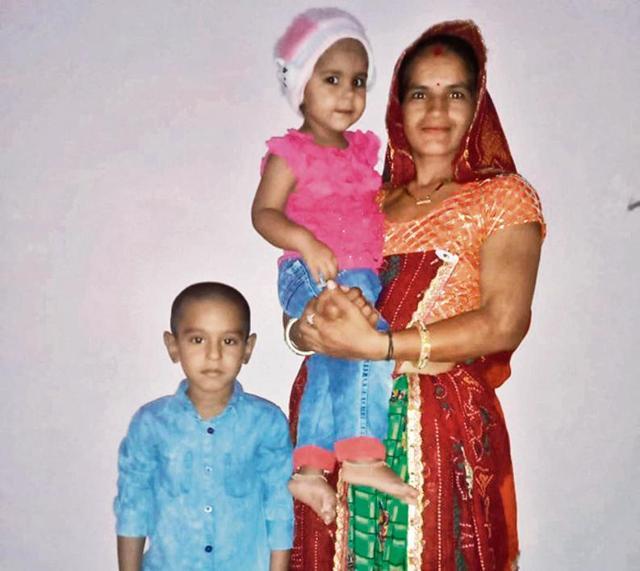
But he doesn’t stress much. “I enjoy my present.” He opens a picture in his mobile that depicts “the biggest part of my present”—a portrait of his wife, Sunita, and children, Mohit and Lakshita.
As soon as the lockdown ends, Mr Dhaka will wait for 10 days “for things to normalise” and then he will board a bus for a holiday in the village—“my true home.”

Stay updated with all top Cities including, Bengaluru, Delhi, Mumbai and more across India. Stay informed on the latest happenings in World News along with Delhi Election 2025 and Delhi Election Result 2025 Live, New Delhi Election Result Live, Kalkaji Election Result Live at Hindustan Times.


