
 E-Paper



Overcrowded shelter homes in Delhi face new coronavirus challenge
The raging Covid-19 pandemic in the capital has brought a fresh set of concerns for the state government — the safety of rescued children at government-run shelter homes.

 Prefer HTon Google


The raging Covid-19 pandemic in the capital has brought a fresh set of concerns for the state government — the safety of rescued children at government-run shelter homes.
Alarm bells have started ringing in the state administration ever since 57 minors in a shelter home in neighbouring Uttar Pradesh tested positive for the virus on June 21.
Back home, as the number of daily cases being reported from the city grows exponentially, the government is yet to formulate a protocol to test and safely house the newly rescued children who are placed in protection centres.
Delhi has 27 shelter homes for children and women. Apart from their own facilities, the government has also roped in NGOs that run around 61 such centres.
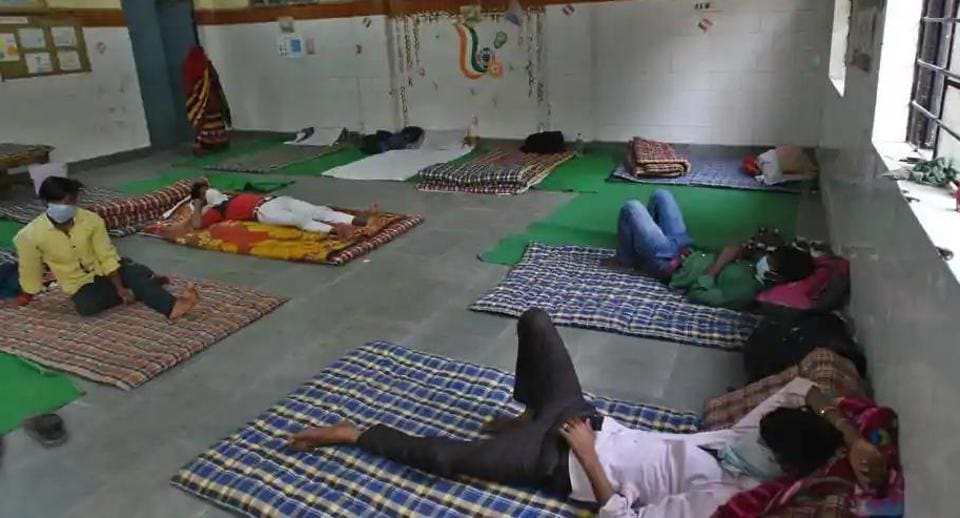
The caretakers of these packed facilities said that since the outbreak ,many shelter homes are struggling to ensure social distancing among its residents. However, the bigger problem now are the new entrants, where the background and exposure of children are not clear and to put them in direct contact with other minors in the protection homes could lead to more infections.
Also read | Social distancing goes for a toss at Delhi’s RML testing centre
“We are already running at full capacity and this pandemic has caused quite a few management problems. We have tried to place beds at a distance to ensure social distancing and to ensure that interaction between residents and even staff members happens from a distance, so that there is a limited chance of any infection spreading. However, if even one case comes up here, then controlling it would be a problem,” said the caretaker of one such government-run facility in west Delhi.
He added, “These children who are rescued, often live in dingy places during their time away from their families and often come in contact with a lot of people, putting them at a greater risk of contracting the infection. Many could also be asymptomatic carriers, but there is no space to put them in quarantine.”
A senior official at Nirmal Chhaya, a Delhi government shelter for children and women, said that on April 18, the administration had converted its short-stay home located on west Delhi’s Jail Road into an ‘isolation centre’ for rescued children and women. However, new entrants are not tested for coronavirus and isolation rules are barely being followed.
“Testing all the rescued children who come here is not possible especially considering the low testing in the city. However, before being admitted children are put through a standard medical examination, which was followed even before the pandemic hit, and their temperature is recorded,” said the official.
Social organisations working for the rescue of trafficked children said these centres are already in “poor condition”, bursting at their seems and functioning beyond its capacity. The pandemic has just made things worse.
Also read | Covid-19 crisis: Sero survey to cover 20,000 people across Delhi’s 11 districts
Rishi Kant from Shakti Vahini, an NGO fighting against human trafficking — which also partners with police and government agencies to rescue trafficked women and children — said, “The situation in these shelter homes was already bad. This virus has only strained the infrastructure more. There is a protocol that we must try that rescued children do not have to come to protection homes in the first place and are instead sent to their respective states and families immediately. But that is not happening.”
Delhi minister for women and child development Rajendra Pal Gautam said that surprise inspections are being conducted in the shelter and observational homes to ensure that what happened in Kanpur (where 57 minors tested positive) does not repeat in the Capital.
“We did a surprise inspection on Tuesday and found that the facilities were adequate. However, I have directed all officials to pay special attention to the health and safety of children and women. This is our priority,” Gautam said.


