E-Paper



Smile killer: Study finds beverages bad for your teeth
Stained, yellowing teeth? Do you know coffee, tea and colas yellow and stain teeth more than nicotine and alcohol

 Prefer HTon Google


Contrary to popular belief, coffee, tea and colas yellow and stain teeth more than nicotine and alcohol.

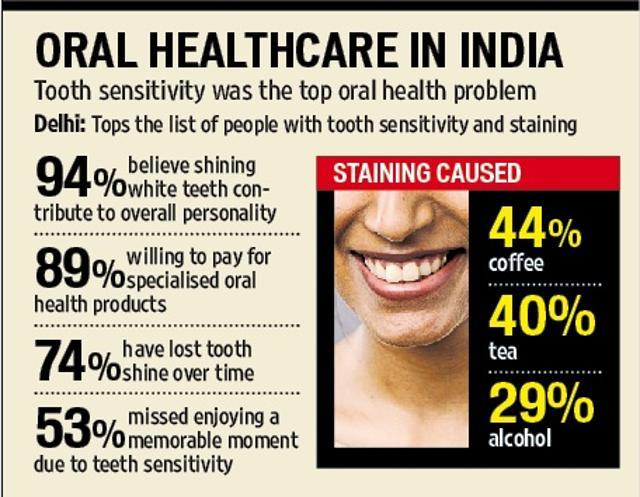
Data from four metros— Delhi, Mumbai, Chennai and Kolkata -- showed that 44% of the 600 people surveyed between ages 25 and 54 years blamed their discoloured, stained teeth on coffee, while 40% blamed it on tea.
“Black coffee and tea are most staining, but the worst are spices and condiments such as turmeric, red chilli powder, cumin powder, coriander powder etc. that roasted and ground. Over time, these leave a deposits on teeth,” says Dr Mahesh Verma, director and principal, Maulana Azad Institute of Dental Sciences (MAIDS).
Processed food high in sugar and starch and poor oral hygiene cause staining and sensitivity due to poor oral hygiene practices that make cavities, tooth decay and bad breath the most common dental problems among people in India.
Most people do not give much thought to the problem. The sensitivity-awareness index -- a measure of awareness about oral health -- in India is a low of 17% versus 33% in the western countries.
Only 4% per cent of Indians visited dentists and most Indians did not follow basic oral-care hygiene practices like brushing twice daily.
The mouth is home to millions of bacteria, even more than found in the anal canal. These include anaerobic bacteria that can survive in crevices without oxygen and can lead to not just bad breath and tooth/gum decay but also heart disease.
“People avoid seeing a professional and keep delaying, while trying over-the-counter remedies that are detrimental for oral health. If a toothpaste claims to remove stains then it has to have harmful chemicals in it. Only a professional can do it correctly,” says Verma.
Once in a year or if there are symptoms then one should see a dentist once in six months to maintain an overall oral hygiene.