
 E-Paper



80% govt hospitals in Delhi don’t have basic fire safety measures in place
Overcrowding, lack of trained manpower and poor maintenance are other problems that put the city’s hospitals at risk.


Almost 80% of government-run hospitals in Delhi, which together have a daily footfall of about 50,000, do not have basic fire safety measures in place.
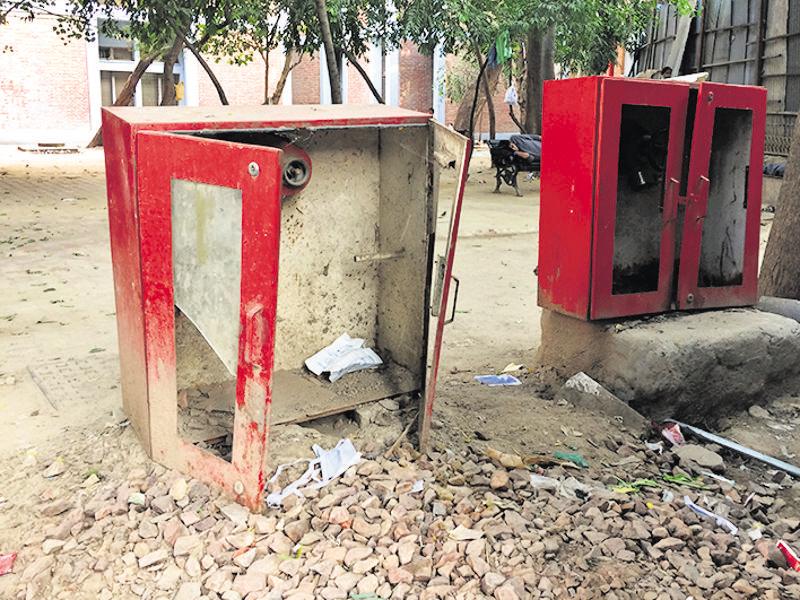
Overcrowding, lack of trained manpower and poor maintenance are other problems that put the city’s hospitals at risk.
At least 20 people were killed and scores injured in a fire that broke out at a private hospital in Bhubaneswar, Odisha, on Monday night.
“In government hospitals, deficiencies in compartmentalisation to prevent spread of smoke and fire from one section to another, lack of smoke management system and unreliable fire management systems were noticed during a review after the AMRI fire in Kolkata in 2011,” said AK Sharma, former director of Delhi Fire Services. Some of the hospitals have not addressed these problems.
“However, almost all private hospitals have the basic fire safety measures in place and maintain them,” he said.
A Comptroller and Auditor General (CAG) report says that emergency exit gates were locked at Deen Dayal Upadhyay (DDU) and Dr Ram Manohar Lohia (RML) hospitals. Together the hospitals receive almost 14,000 patients in their out-patient department daily.
“Many gates and doors are locked in the government hospitals to better manage the crowd and ensure safety of the doctors and staff. But, it is at the cost of safety in case of fire,” said Sharma.
In RML, compartmentalisation using fire-safe doors was not according to the standards and the fire systems in the Post-graduate Institute block weren’t functional. There was no trained fire staff.
In DDU, apart from the locked gates, there was no water for fire-fighting measures, no emergency power supply and a dysfunctional public address system, the CAG report pointed out.
“The overwhelming crowd at these hospitals, almost five times what the building are designed to handle, might lead to stampede in case of a fire. Apart from that, the huge patient inflow means that the hospitals keep many fire-safety doors – which are used to compartmentalise the hospital – open, rendering them useless,” said Sharma.
Evacuation is a challenge. “Most serious patients are on some equipment, others too are sick, too old or too young to move around on their own and there is shortage of staff, making evacuation almost impossible. Preventing and controlling the fire is the only way,” said Sharma.
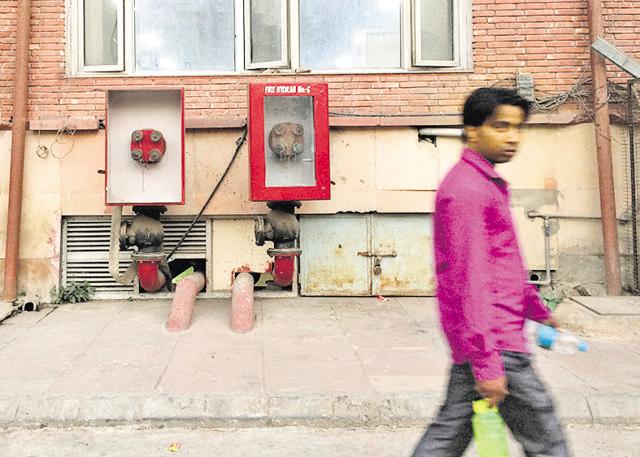
In the last one month, there have been two fire incidents in Safdarjung hospital and one at All India Institute of Medical Sciences (AIIMS). All were contained within minutes.
“We fulfill all the legal requirements and have fire-detectors in place for early detection and control of fires,” said Dr DK Sharma, medical superintendent of AIIMS.
“We have also realised that almost all the fires are a result of electrical faults and that is why proper maintenance of all equipment is done. There are extinguishers and fire hose placed strategically, we have an evacuation plan in place and even conduct fire safety drills every three months,” the AIIMS chief said.
Safdarjung officials said the fact that no casualties were reported during the recent fire incidents prove that the hospital was capable to handle such disasters.
“Both the incidents were handled well by the hospital staff and the fire was doused within minutes. Safdarjung is prepared to deal with fire incidents,” said AK Rai, medical superintendent.

Stay updated with all top Cities including, Bengaluru, Delhi, Mumbai and more across India. Stay informed on the latest happenings in World News along with Delhi Election 2025 and Delhi Election Result 2025 Live, New Delhi Election Result Live, Kalkaji Election Result Live at Hindustan Times.


