
 E-Paper



A tragedy that was avoidable
Those responsible for this tragedy – whether it be the authorities who may have rushed the opening of the bridge, the civic officials who allowed too many people to get onto the bridge, or the firm that may have cut corners – must be held accountable

 Prefer HTon Google


The factual details of how a recently renovated heritage bridge in north Gujarat’s Morbi town collapsed on Sunday evening, sending 130-odd people plunging to their deaths in the Machchu river below, are still emerging. But this much is clear: The tragedy was avoidable. As rescuers dove into the waters to save people and locals struggled to bring back to safety people clinging to dangling cables, local authorities traded charges, trying to pin the blame on a rush of tourists and the firm that carried out the renovation work, saying the recent repairs were inadequate. But this cannot distract from the culpability of the local municipal corporation, which has jurisdiction over the bridge. Whether it be questions around the opening of the structure, built in 1879, allegedly without proper verification or allowing far too many visitors to climb onto the bridge, the conduct of the municipal officials will remain under the spotlight.
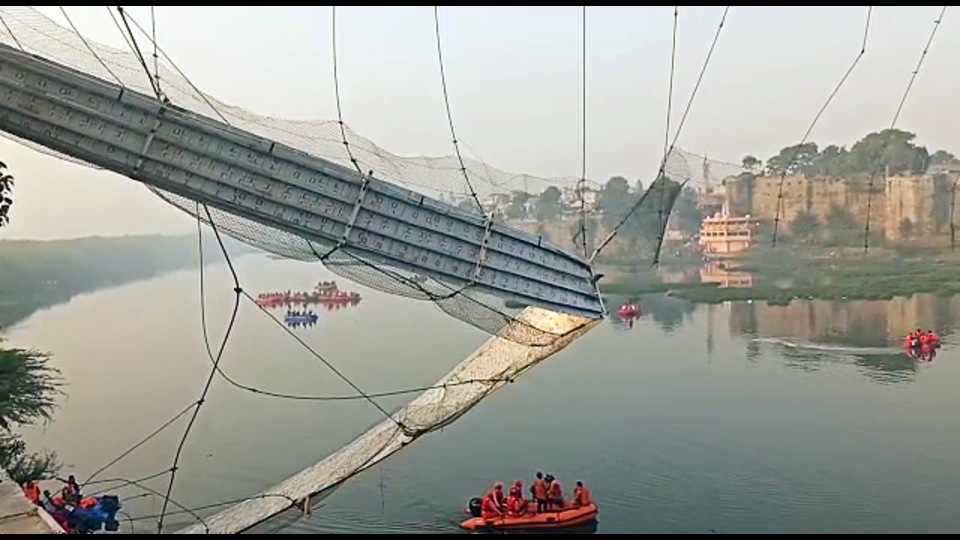
All structures have a safety certificate and clearly specified maximum load-bearing capacity. These limits are adhered to across the world to avoid precisely the kind of tragedy that rocked Morbi. Anecdotal accounts suggest that local authorities allegedly sold tickets several times in excess of the maximum capacity of the bridge. When the cables snapped, far too many people were on the bridge. There is no excuse for such mismanagement, and these allegations must be independently investigated. Crowd control poses a challenge to governments across the world, and the death of 150 people in a stampede in Seoul last week is another example of this problem. Yet, instances such as the Kumbh Mela show that efficient management is possible; authorities need to discern best practices from such events, stringently enforce norms and rules, and penalise people and officials who flout these guidelines.
Governments at every level – whether it be local, regional or national – pay scant attention to implementing guidelines, choose to look the other way when rules are broken and swing into action only after a major accident. But as the Morbi tragedy shows, no amount of after-the-fact alacrity can make up for laxity in governance. Those responsible for this tragedy — whether it be the authorities who may have rushed the opening of the bridge, the civic officials who allowed too many people to get onto the bridge, or the firm that may have cut corners in renovation — must be held accountable after a probe, not only to dispense justice for those who perished on Sunday but also to ensure that no one else does in the future.


