
 E-Paper



Coalitions take centre stage
Despite alliance building by both sides, it is vote shares and voter chemistry that will be key

 Prefer HTon Google


2014 heralded the return of the unipolar era in national politics. Coalitions were seen as the remnant of a bygone age of messy multi-party consensus drafting and fractured mandates. Yet, the events of this week have proven that the obituaries of alliance politics may have been hasty. With 26 Opposition parties coming together as INDIA, or the Indian National Developmental Inclusive Alliance and the Bharatiya Janata Party (BJP) pushing to expand the National Democratic Alliance (NDA) after allowing it to atrophy for several years, coalition dynamics have vaulted to the top of the agenda for 2024. Four things need to be kept in mind.
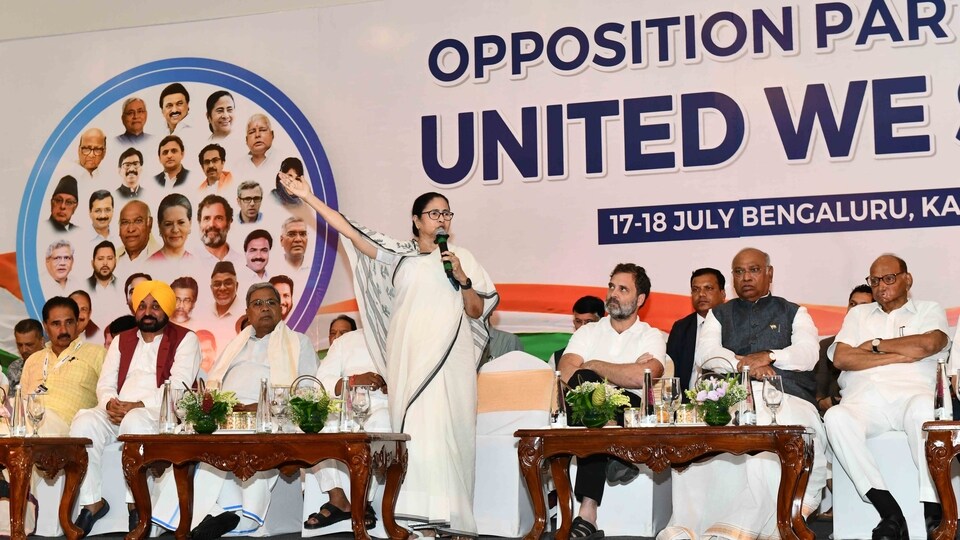
One, even though 2024 might be looking like a battle between two alliances, the contours of this contest are very different from the heydays of coalition politics between 1989 and 2014. In fact, 2024 might be a peculiar amalgamation of two distinct eras – the one-party domination of the 50s and 60s on one side, and the first stirring of a national Opposition front of the late 70s and 80s on the other. Two, in terms of seats, the NDA (323) is far ahead of the INDIA (134), but the vote shares (NDA’s 42% to INDIA’s 35%) make them more competitive. The Opposition might feel confident about having 11 states under its control but it should remember that vote shares often don’t transfer perfectly (as the Samajwadi Party-Bahujan Samaj Party combine discovered to their chagrin in 2019) and in some states such as West Bengal, alliance politics could stand to help the BJP. Therefore, seat-sharing arrangements will be key, as will be signalling and narrative setting.
Three, the fact that both groups have long tails says something interesting about how the ground has shifted in Indian politics. In the NDA, 22 of the 39 parties have zero seats in the Lok Sabha but these smaller outfits can convey an important signal to their respective social groups. In UP, for example, the BJP is dominant but remains keen to have parties such as Apna Dal and Nishad Party on board not due to their respective strengths but because of the message it gives to non-dominant backward communities across the state. And four, despite the coalition rhetoric, the Lok Sabha election will likely hinge on a handful of major states and head-to-head contests between the Congress and the BJP. If the Opposition cannot improve its showing in states such as Maharashtra and Bihar, and if the Congress can’t propel its strike rate into respectable double digits against the BJP, the outcome of 2024 will be a lot less exciting than its build-up.


