
 E-Paper



Collegium’s crisis of credibility
It doesn’t have a sufficiently consistent, publicly understood procedure governing its deliberations

 Prefer HTon Google


The collegium system was evolved to insulate judicial appointments from executive interference, but three decades after the Supreme Court gave judges primacy in selecting their successors, it remains vulnerable to opacity, inconsistent procedures, and the concentration of power in the Chief Justice of India (CJI). Former Supreme Court judge Sanjay Kishan Kaul’s memoir, Without Fear or Favour, offers a candid account of these fault lines, including the pressure exerted by the government and the difficulty of reconciling institutional independence with accountability.
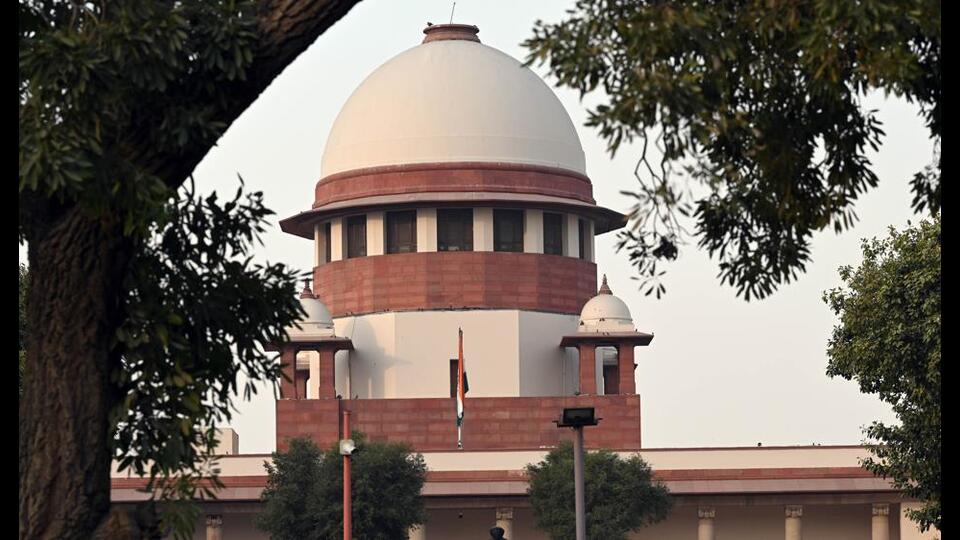
Justice Kaul’s assertion that “it is fantasy to imagine that the collegium is isolated from political pressures” goes to the heart of the problem. He traces much of the tension to the political establishment’s continuing resentment over the 2015 verdict striking down the National Judicial Appointments Commission (NJAC), which sought to give the executive and eminent persons a formal role in appointments. The judgment protected judicial primacy as a safeguard for independence, but it also left the task of repairing a system whose problems the court itself acknowledged to the judiciary.
The memoir also illustrates how much the process can depend on the CJI’s individual approach. Justice Kaul recounts disagreements over the government’s role, the treatment of candidates and the need to scrutinise their judgments before recommendations are finalised. Yet the larger issue is not simply whether one CJI was more assertive than another. It is that a system entrusted with choosing constitutional court judges has no sufficiently consistent, publicly understood procedure governing its deliberations.
The publication of collegium resolutions along with reasons has varied across CJIs, from detailed reasoning to bare announcements. Nor does unanimity in formal resolutions necessarily reveal the deliberations in their entirety. Former CJI DY Chandrachud, responding to Kaul’s account, has said the published resolutions were unanimous and Justice Kaul did not record dissent on recommendations. Both the formal record and the concerns raised in the memoir underline the need for clear rules, not personalities, to govern the process.
Reform need not mean surrendering appointments to the government or reviving the NJAC in its invalidated form. It should mean published eligibility criteria, documented evaluation, consistent and reasoned resolutions, transparent complaint redressal, and a clear framework for transfers and timelines. Executive inputs on suitability and antecedents must not become a veto over judicial choice; equally, judicial primacy cannot be a licence for unexplained decisions.
The collegium’s credibility will depend on whether it can institutionalise these safeguards. Independence is indispensable, but without accountability and consistency, it risks becoming an assertion of power rather than a guarantee of public confidence.


