
 E-Paper



The dangers of freebie culture
Using them to get votes threatens the quality of state finances and the Union’s fiscal health

 Prefer HTon Google


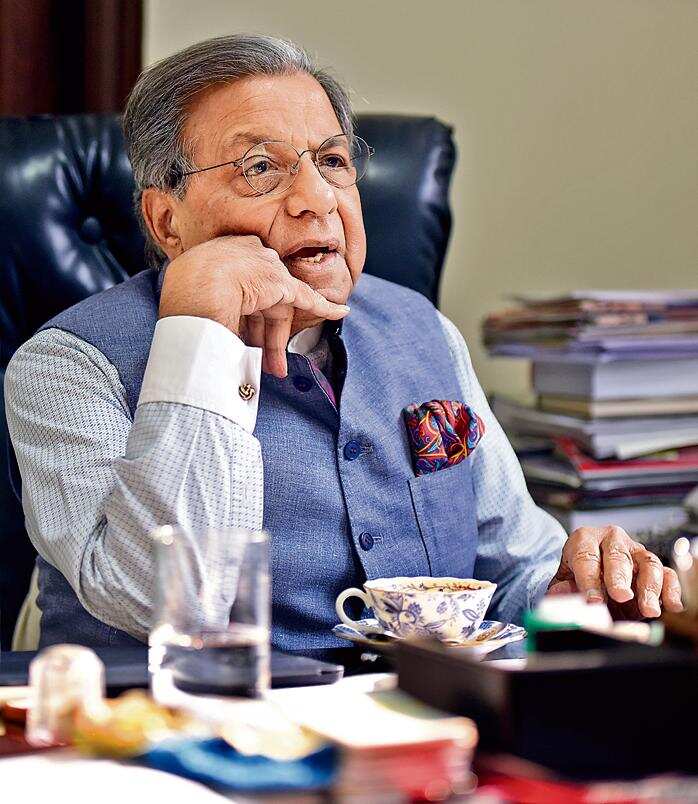
In a lecture on the annual day of Delhi School of Economics, 15th Finance Commission Chairman NK Singh set the cat among the pigeons on the issue of fiscal federalism. If states continue to disregard the question of fiscal prudence and intergenerational equality in distributing freebies to win votes, has the time come to consider the idea of sub-national bankruptcy in India, Mr Singh asked.
The suggestion is both drastic and provocative. Our constitutional framework does not provide for such a mechanism. Given the fact that it took almost two decades to get the states to agree to the Goods and Services Tax (GST), the states agreeing to the idea of sub-national bankruptcy is extremely unlikely, if not impossible. To be sure, the states have their share of genuine grievances on the fiscal federalism front. They are left with very little sovereignty in revenue generation after the roll-out of GST and the Centre has shifted a large part of its taxes out of the divisible pool. The latter means that states’ share in central taxes is much lower than the finance commission mandated figure of 41%. These caveats notwithstanding, it is equally true that the political race to offer more and more freebies to win votes has emerged as a major threat to the quality and sustainability of state finances, and by extension the Union’s fiscal health. Money which should be spent on improving physical and social infrastructure is being frittered away on populist doles with an eye on the elections. Such expenditure is harmful in both the short- and long-run. In the former, it deprives genuine requirements of resources, and in the latter, it leaves a debt burden for future generations without endowing them with any long-term gains out of such spending (which, for instance, spending on an asset would do).
Is there a way for India to stop the proliferation of this self-destructive freebie culture? The question, as Mr Singh correctly pointed out in his lecture, cannot be left to economists alone, and has to be seen from the intersection of politics and economics. A good way to initiate a healthy dialogue on such issues would be to rejuvenate a platform in addition to the NITI Aayog and GST Council, where both the Centre and the states discuss issues concerning federalism in an amicable continuum.


