
 E-Paper



The rise of new political dynasts | HT Editorial
In Tamil Nadu, the Dravida Munnetra Kazhagam (DMK) is witnessing its first election, without the leadership and guiding hand of its late supremo, M Karunanidhi


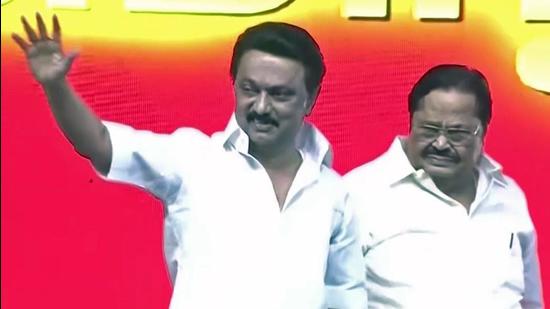
In Tamil Nadu, the Dravida Munnetra Kazhagam (DMK) is witnessing its first election, without the leadership and guiding hand of its late supremo, M Karunanidhi. His son, MK Stalin, is finally leading the party — and could well become the state’s next chief minister. But the focus is not as much on Mr Stalin within the DMK as it is on his son, Udhaynidhi Stalin, who has been given a ticket to contest from the same assembly constituency which his grandfather once held. An actor who became active in the party’s youth wing, Udhaynidhi Stalin will have to rise through the party’s hierarchy just as his father did — but being a third-generation dynast gives him a natural edge. It is also further evidence that a party rooted in the idea of rationality and wider social justice has become a family enterprise — given the extensive control of the wider Karunanidhi family over the party apparatus.
In West Bengal, while chief minister Mamata Banerjee remains the face of the Trinamool Congress and the party’s key campaigner, there is now little doubt that her nephew, Abhishek Banerjee, a parliamentarian, is possibly the second-most powerful person in the organisation. From poll strategy to finances, public relations to intra-party issues, Mr Banerjee is playing an important role — with speculation rife that he is being groomed as the party’s next leader. This has alienated other veteran leaders, but the control of the Banerjee family over the party is absolute.
Dynastic politics is neither new in India, nor confined to these regional forces. It has complex sociological roots, from family elders in politics prodding their young to take on the same professional route to issues of trust since party finances are closely controlled within a circle of trust; from the political ambition of those who can see a short-cut to state power because of family links to mass support for a family brand. But none of this is adequate justification for the rise of dynasts, and as voting patterns show, a young and new India is increasingly (albeit not always) sceptical of those who have little to show but family lineage.


