
 E-Paper



Wider impact of churn in Nepal
The primary driver of the dramatic political developments in Nepal — which culminated with Pushpa Kamal Dahal ‘Prachanda’ taking oath as prime minister (PM) — appears to be personal power calculations

 Prefer HTon Google


The primary driver of the dramatic political developments in Nepal — which culminated with Pushpa Kamal Dahal ‘Prachanda’ taking oath as prime minister (PM) — appears to be personal power calculations. The largest pre-poll coalition ruptured after Nepali Congress chief Sher Bahadur Deuba overreached and refused to give up the position of PM, and Prachanda walked into the camp of his friend-turned-foe-turned-friend KP Sharma Oli. Mr Oli agreed to a rotational PMship, but secured the positions of president and speaker, both key roles in a deeply fractured Parliament. That newer outfits such as the Rastriya Swatantra Party, which campaigned on a promise of a new kind of politics but joined the old establishment leaders they had railed against not even two months ago, added to the churn. On paper, this may appear as a far-Left alliance but the public falling out of Prachanda and Mr Oli in 2021 — when the former vowed never to join hands with the latter and backed Mr Deuba for PM — underline that this is a more political than ideological arrangement.
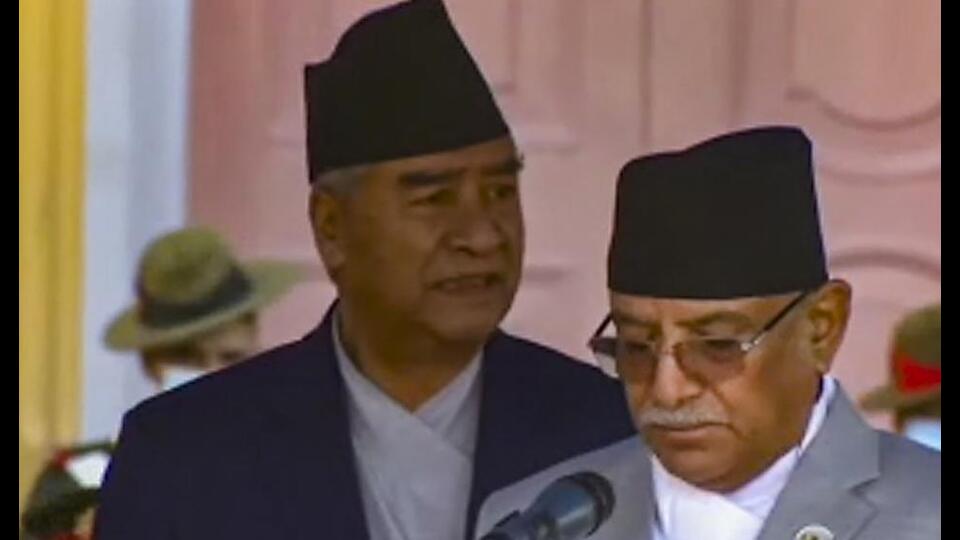
Prachanda and Mr Oli have both previously spouted anti-Indian rhetoric for domestic politicking. But while Prachanda has a pragmatic streak, Mr Oli, who is the power behind the throne, has made ultra-nationalism his signature theme. His government introduced a potentially intractable territorial dispute by pushing a new map that marked Indian territory as that of Nepal, rather than leaving it to diplomatic negotiations. China — which played a key role in bringing the two Communist parties together in 2017 — appears to have played a role again this time. It will gain an upper hand in a country where China-backed projects have stalled in recent months amid apparent signs of a rethink by Mr Deuba on Chinese investment.
While New Delhi was keen to see the Deuba-Prach-anda alliance continue, it largely respected Nepali sovereignty and let the political process play out. PM Narendra Modi’s congratulatory message to Pracha-nda and emphasis on shared ties show that India will do business with whoever is in power. This is a mature course of action. But India will have to keep an eye on the macro and micro policy decisions that the Prachanda-Oli duo take in a competitive geopolitical landscape. The onus is on Prachanda and Mr Oli to reciprocate PM Modi’s gesture, tone down their ultra-nationalist rhetoric, recognise that Nepal’s interests lie with deeper cooperation with India, and while working with China, not take steps that hurt Indian strategic, security and economic interests. The next few months will show which way the wind is blowing in Kathmandu.


