E-Paper



Demographic ghosts dominate Assam’s politics – Part 1 | Number Theory
.

 Prefer HTon Google


Before Assam united in grief over the death of singer Zubeen Garg, its political discourse had reached a nadir of sorts in communal polarisation. The Assam unit of the Bharatiya Janata Party (BJP) put out an AI generated video on the microblogging website X (formerly Twitter), portraying a demographic takeover of the state by Muslims, and claimed to be fighting against this perceived trend. While the video justifiably generated outrage, it is important to understand the wider context behind this kind of politics. This two-part series will seek to do that. The first part will give basic demographic statistics about Assam and the second part will discuss the political dynamics in Assam’s recent past when the BJP became a dominant party in the state.
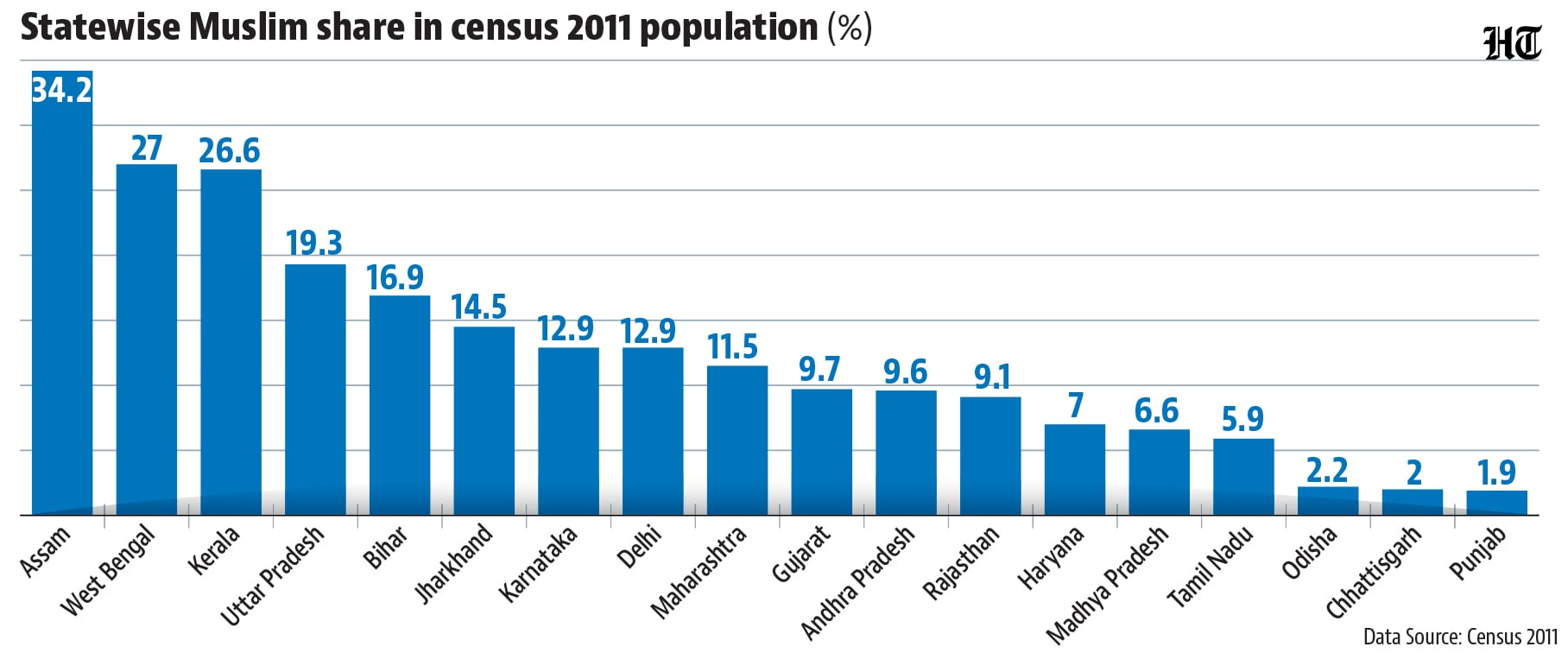
 Assam has the largest share of Muslim population among Indian statesMuslims accounted for 22.6% of Assam’s population in the 1951 census. This number increased to 34.2% in the 2011 census – a more than 50% increase in the share of Muslim population in the past six decades. The share of Muslim population in the rest of India has increased from 9.8% to 14.2% While there are other states in India which have seen a higher growth in Muslim population in percentage terms during this period, what makes Assam a special case is the role of immigration in its demographic change.
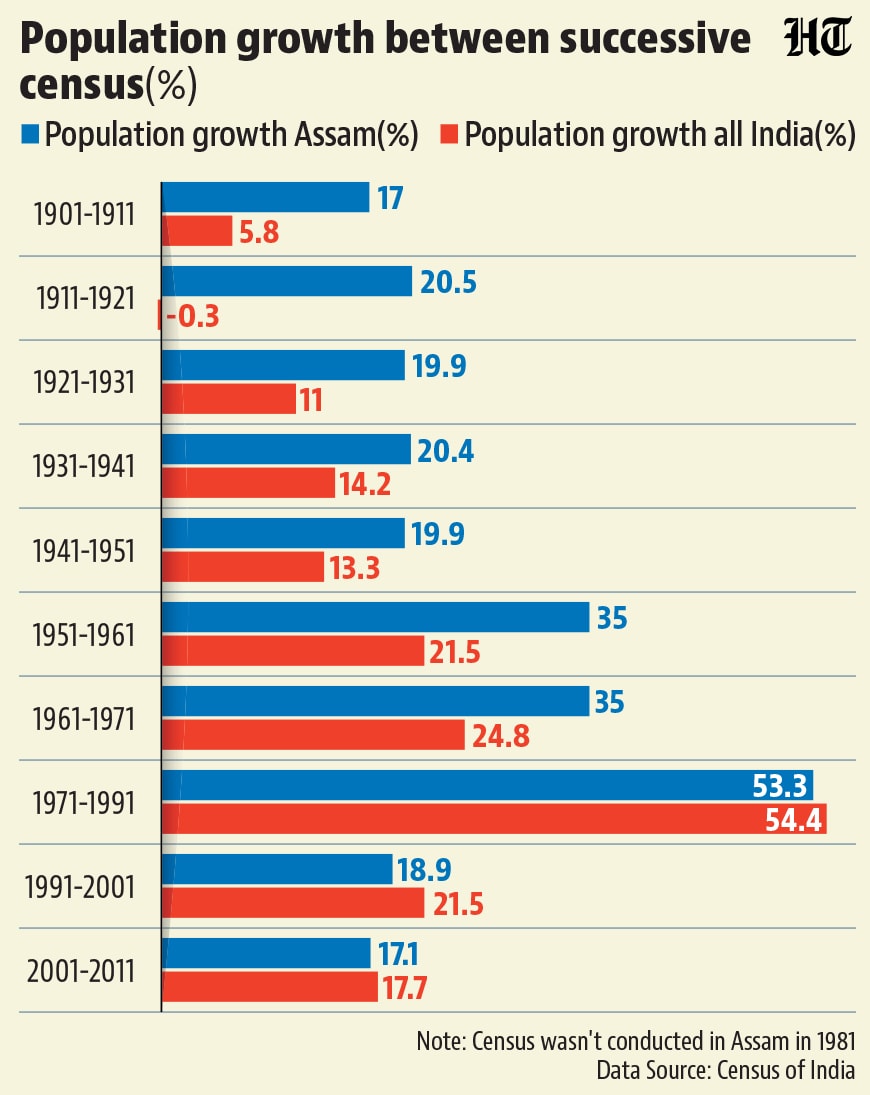
- However, Assam’s demographic churn started before India became independentAssam is perhaps India’s most troubled (or dynamic) region in terms of the interplay between immigration and pre-existing demography. It has experienced large waves of immigration driven by economic as well as political factors. The former unfolded primarily through migrations such as tribal populations from other parts being brought in as indentured labour for tea gardens and then an even larger number of Bengali speaking Muslims from neighbouring East Bengal (now Bangladesh) coming into the state. This was first nudged by the British to increase cultivated area in Assam but soon acquired a momentum of its own. “What began as government policy of actively encouraging immigration became a long period of privately driven large-scale immigration into one of the last land frontiers of the Indian subcontinent”, historian Sanjib Baruah writes in his book India against Itself: Assam and the Politics of Nationality. The political immigration gathered momentum after Bengali speaking Hindus moved out of East Pakistan (later Bangladesh) into the neighbouring state. The fact that Assam’s population growth differential vis-a-vis the rest of India has come down in the recent past shows that immigration’s magnitude has fallen significantly. However, the historic impact of immigration on the state’s geography, and linguistic and religious composition continues to animate politics.
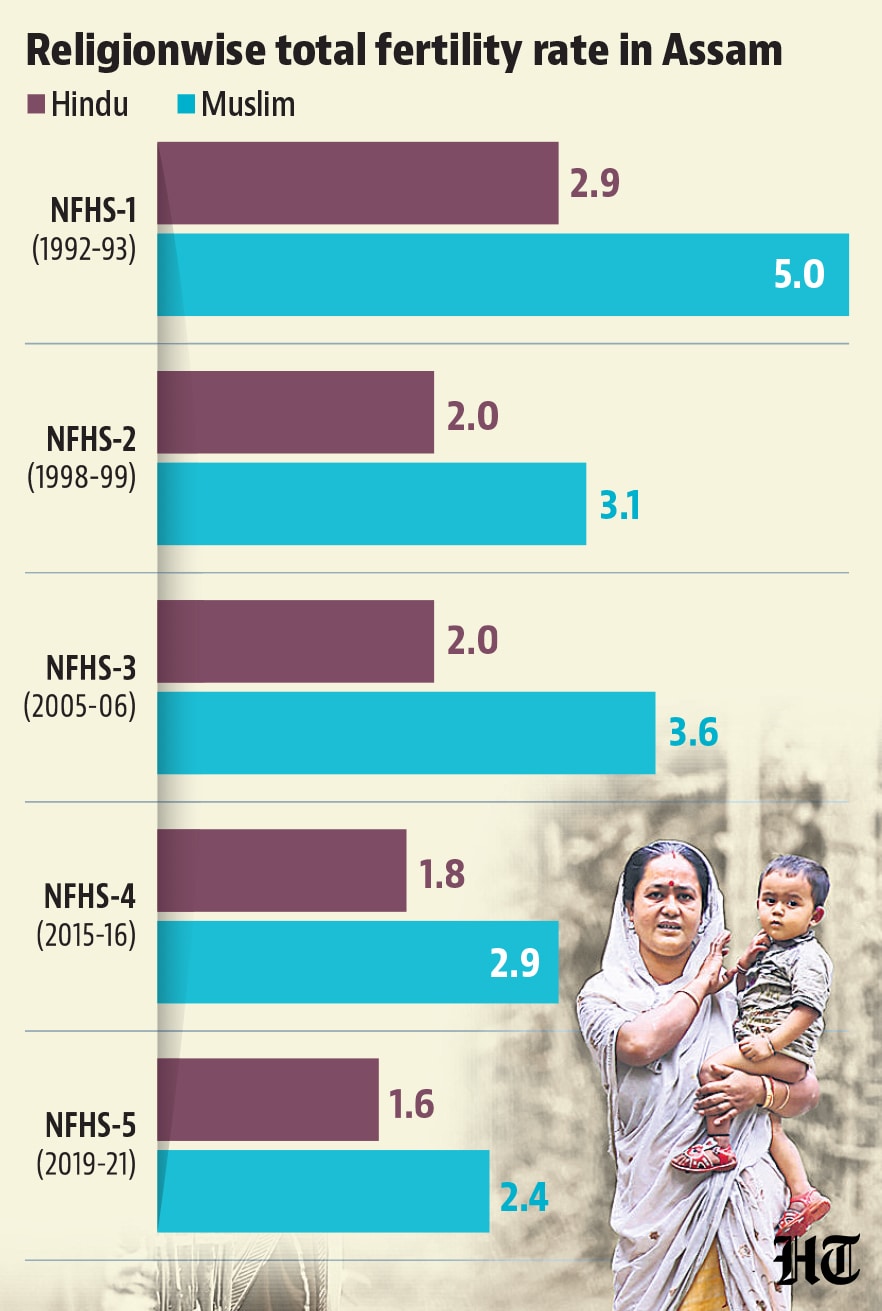
- Fertility gap between Hindus and Muslims is high in Assam but it is narrowingAssam’s overall total fertility rate (TFR) – the average number of children a woman has in her lifetime – was 1.9 in the 2019-21 census. A TFR of 2.1 is considered the replacement level threshold and if sustained over a long period entails births just compensating for deaths to keep the population stable. Religion-wise break-up of Assam’s TFR data shows that Muslims have a much higher TFR than other communities. While the Muslim TFR isn’t very different from what it is in the rest of the country, the TFR for Hindus in Assam is lower than the corresponding national number. To be sure, even the Muslim TFR has been falling in Assam when seen in successive NFHS rounds.
- Conclusion...The numbers given above underline the fact that the primacy of anxiety about demography in Assam’s politics is not without an objective basis. The state has had a troubled history over both linguistic and religious identity on multiple fronts. In fact, the demographic angst today is far more muted than what it was in the 1970s and 1980s which led to large-scale violence and even the postponement of the 1981 census in the state. What is more recent in the state is the current political dominance of the BJP. How did the BJP replace the Congress, which seemed to have regained its dominance since the 2000s? This is what the second part of this series will discuss.