E-Paper



Number Theory: NW states stare at more rain due to climate crisis
This is because of a complex change of meteorological factors
Updated on: Sep 17, 2024, 10:25:33 IST

 Prefer HTon Google
Share via


Copy link

North-western India is one of the regions which has a big rain surplus this monsoon season. Higher rainfall in this region is in line with long-term trends. Why is this happening?

A paper by Ligin Joseph from University of Southampton and others published in Geophysical Research Letters last month shows that this is because of a complex change of meteorological factors triggered by global warming where the latter has played an indirect role in changing wind patterns which in turn have affected rainfall. Here is a summary of what exactly is happening.
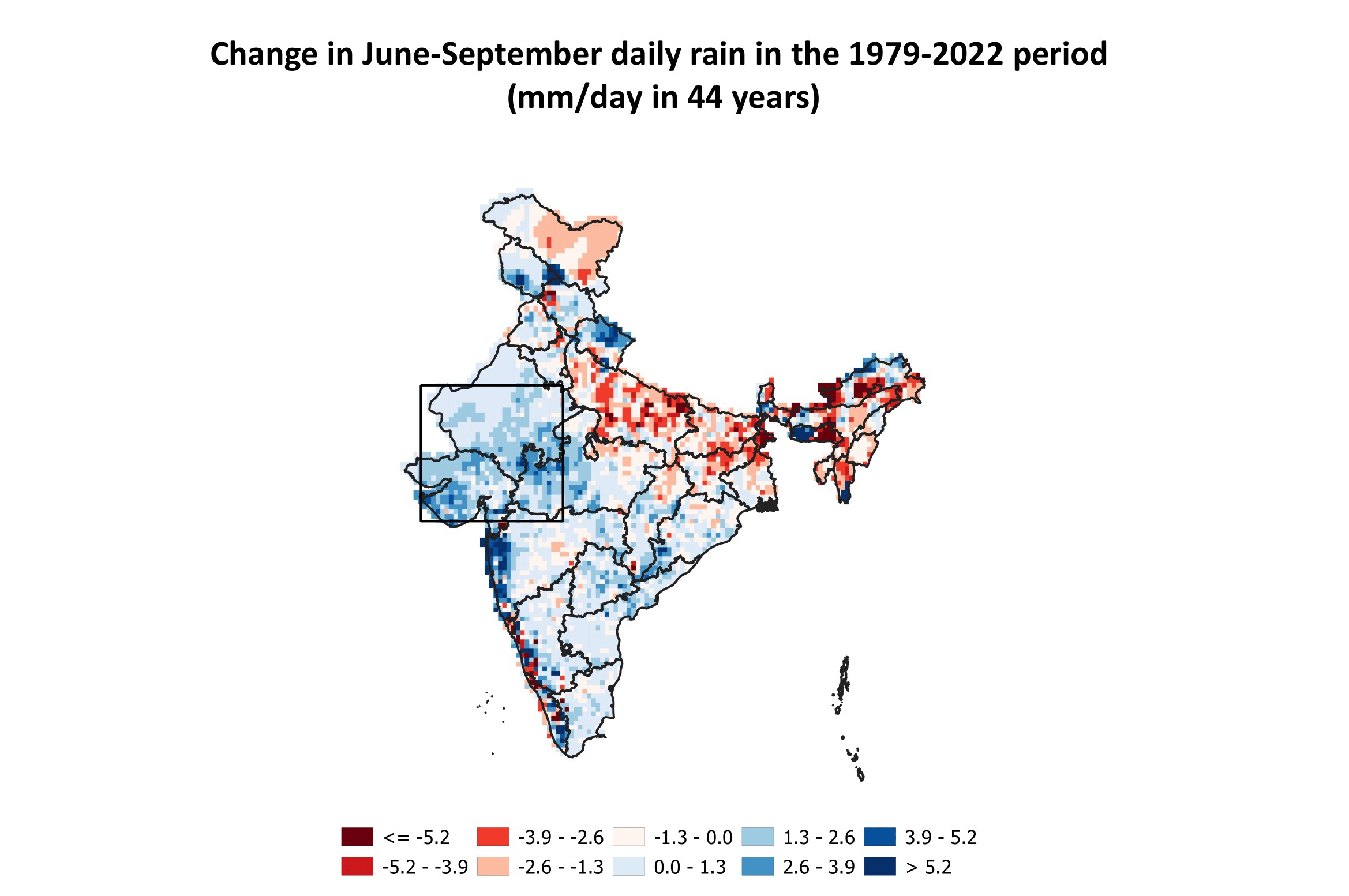
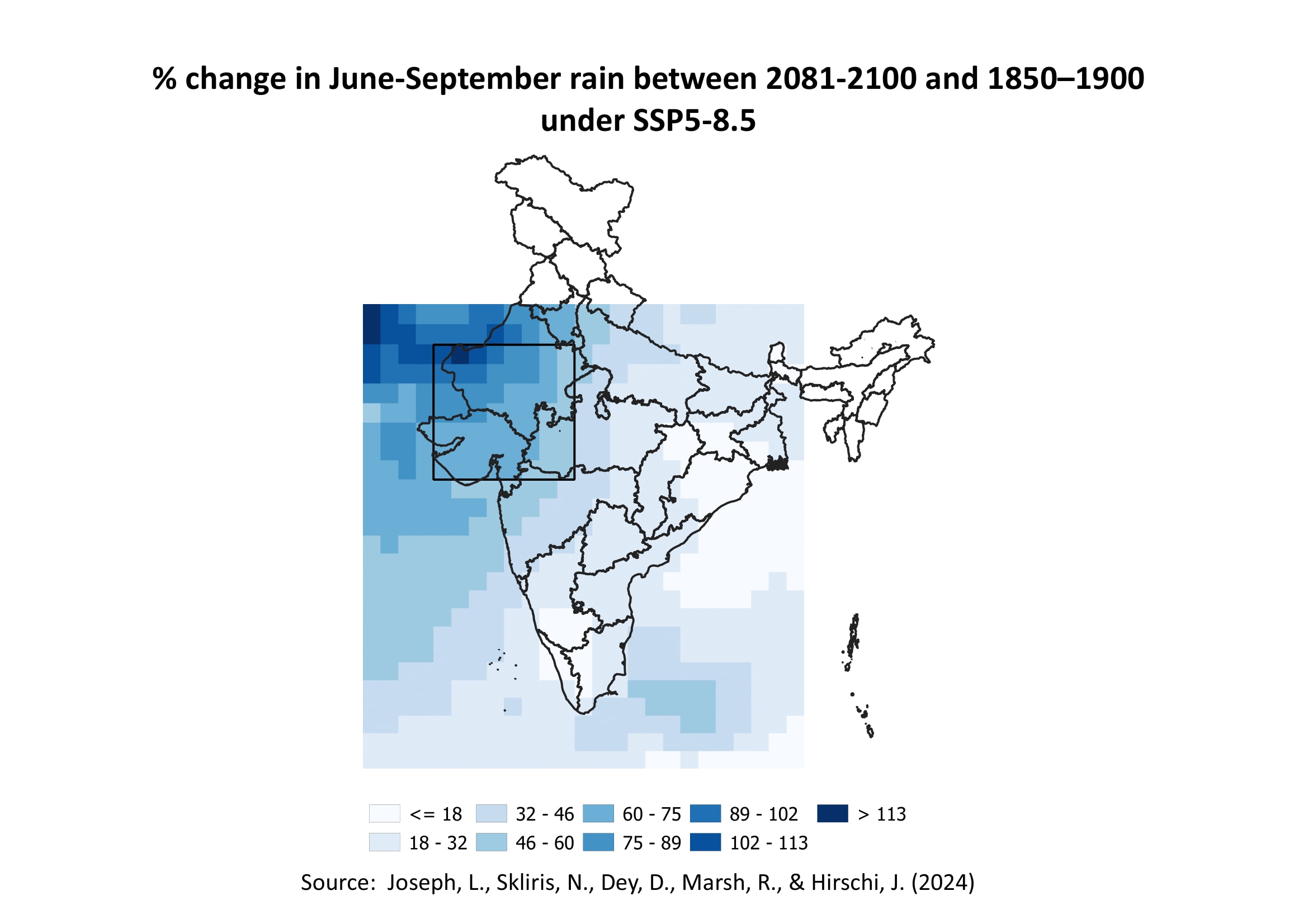
 North western India is getting wetter in the monsoonThe north western India that the paper analysed (21°N–28°N; 69°E 77°E) covers nearly all of Gujarat and Rajasthan and parts of Madhya Pradesh. Not only has this region already become wetter in recent decades, but might continue to do so in the future as per the paper’s modelling. The paper shows north-western India experiencing a higher growth in monsoon rains than most of India under the “business-as-usual” high emissions global warming scenario called SSP5‐8.5.
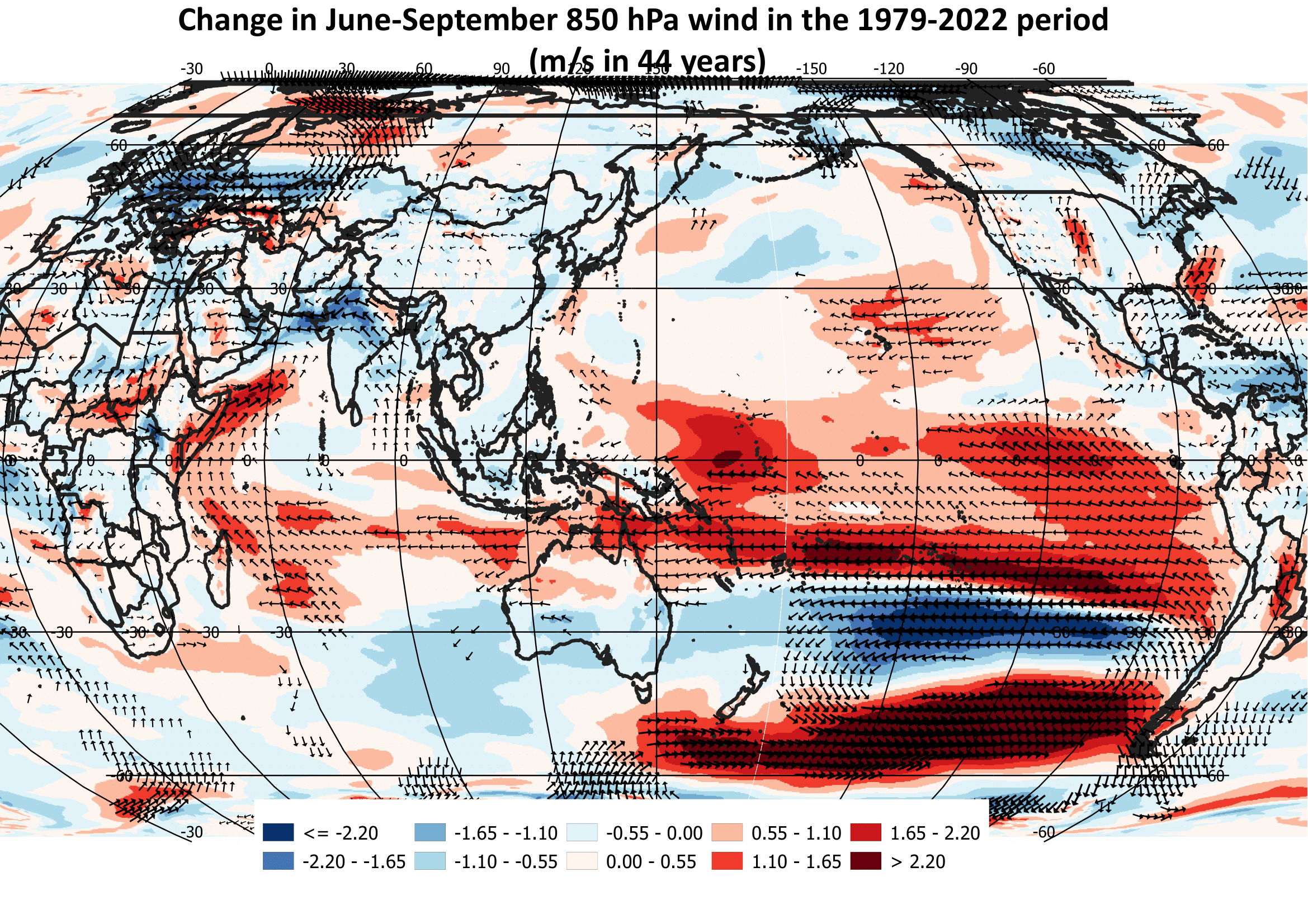
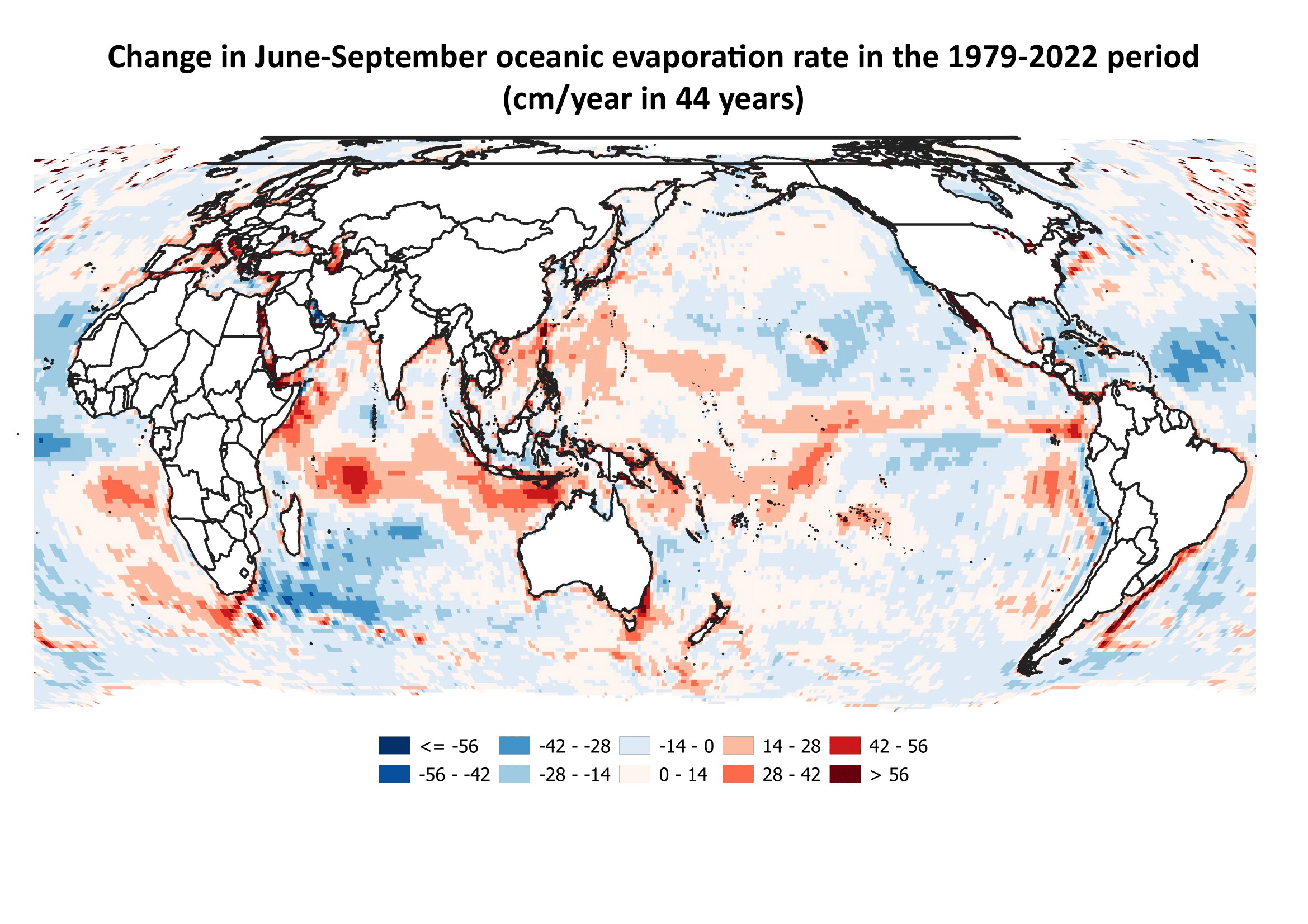
- The region now gets more moisture from Arabian Sea and loses less of that moistureTo find why north-western India is getting wetter, the paper analyses how moisture’s flow – this is what causes precipitation or rainfall – in and out of the region has changed. This analysis showed two important trends: the inflow of moisture from the Arabian Sea-facing southern boundary has increased and the outflow of moisture from both the eastern and northern boundaries has decreased. This allows the moisture flowing in to stay in the region and cause more rain. And changing monsoon wind patterns have an important role to play in this The moisture transport analysis suggests that increased evaporation in the Arabian Sea is only part of the reason behind north-western India becoming wetter. For example, increased evaporation in the Arabian Sea does not explain why the moisture’s outflow from north-western India has decreased. The reason for the latter can be seen in the trend of wind patterns: speeding up over the Arabian Sea and slowing down over northern India. This is why the increased moisture inflow from the Arabian Sea causes rain stays in north-western India instead of being transported over rest of the landmass.
- The wind pattern analysis also shows other important trends. For example, the evaporation trend over the Arabian Sea is very similar to the wind trend, but not the trend in sea surface temperatures (SST). “Here we can see that along the path where the monsoon winds increase, the evaporation also increases. This happens because when the wind blows, it carries away the moist air that is close to the surface, replacing it with drier air. This continuous replacement of air allows more water to evaporate because the drier air can absorb more water vapor,” Joseph told HT in an email.
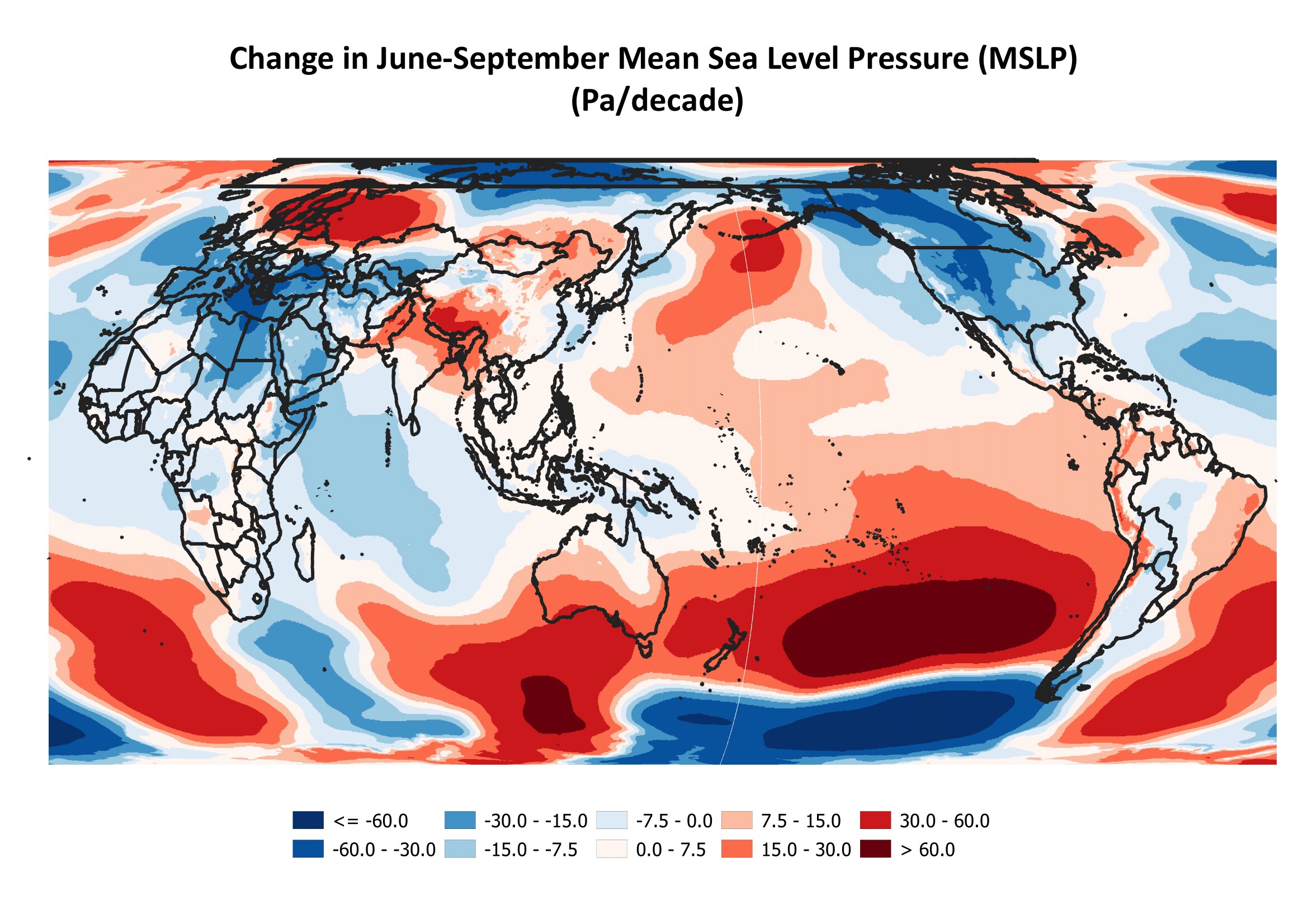
- Why are the wind patterns changing?Wind patterns are often the result of a pressure gradient, since winds usually flow from a high-pressure area to a low-pressure area. Changes in pressure gradient are, therefore, also driving the changes in monsoon winds. For example, pressure has increased over a well-known region of high pressure around Mascarene Islands in the south Indian Ocean, but decreased in the equatorial Indian Ocean. This has strengthened the south-north cross-equatorial monsoon winds that bring rain to north-western India. This wind is additionally being strengthened by an increasing east-west gradient. This is the result of the increasing pressure over the eastern Pacific Ocean. At least this latter trend is expected to continue in all future scenarios of global warming, which could mean even rainier monsoons in north-western India in the future.