
 E-Paper



India’s reckoning with the war’s economic cost begins | Number Theory
Although India has been hit by the global energy squeeze, its households have so far avoided the harsher restrictions seen elsewhere.
Published on: May 12, 2026, 06:42:11 IST

 Prefer HTon Google
Share via


Copy link

When Prime Minister Narendra Modi asked people to use petrol-diesel judiciously and not buy gold or undertake foreign trips on Sunday, he was conveying a clear message: the economic pain of the ongoing war in West Asia is not going away anytime soon and the economy will have to make adjustments to cope with the fallout. Now that the state election cycle is over, this mitigation is likely to be top priority for the government. How has India fared so far in dealing with the war’s economic costs? How does it compare with other countries? What about the challenges which lie ahead? Will the adjustments and mitigation strategy bring economic pain? Here is what the data shows:
India’s reckoning with the war’s economic cost begins
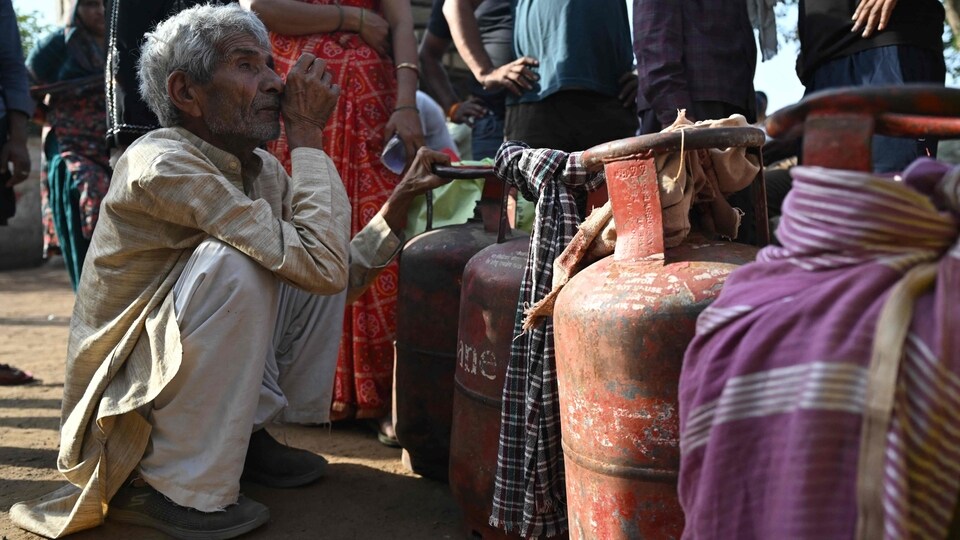
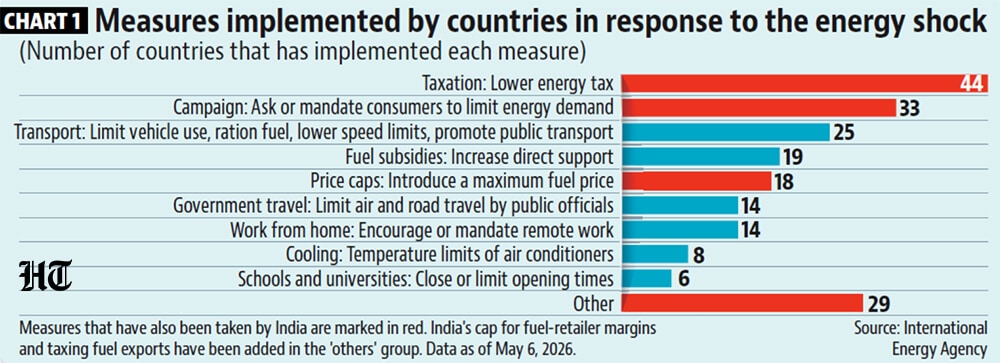
 Indians have avoided the harsher end of the energy shock so farIndia has had its share of problems because of the war’s supply shock. Shortage of domestic LPG, especially for the poor who were buying their smaller cylinders from the grey market, and inputs to industry are the biggest disruptions. But there are a lot of things which India or Indians have not had to do so far and other countries have done. The International Energy Agency’s (IEA) 2026 Energy Crisis Policy Response Tracker lists 82 economies and regional groupings that have taken steps to deal with the energy shock. Twenty-five economies in the tracker have used transport-related curbs such as fuel rationing, lower speed limits or limits on private vehicle use. Fourteen have pushed work from home for some workers, eight have imposed air-conditioning temperature limits, and six have closed or limited opening times for schools and universities. India does not appear in any of these categories. Its measures have instead concentrated on cushioning prices and managing supply. These include cuts in petrol and diesel excise duty, a cap on domestic jet fuel prices, limits on fuel-retailer margins, rationing of commercial LPG use, and attempts to speed up piped natural gas and electric cookstove adoption. This shows that although India has been hit by the global energy squeeze, its households have so far avoided the harsher restrictions seen elsewhere.
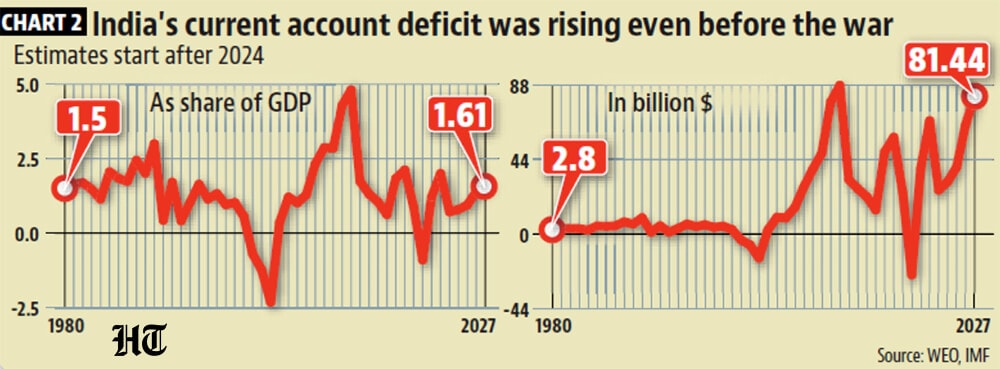
- But business-as-usual is not a costless optionCrude prices are above the $100 threshold now. Securing physical barrels remains an even more difficult task, given the situation in West Asia. The sharp depreciation in the rupee’s exchange rate has added to the pain of higher energy prices. All of this means that not increasing fuel prices will entail not just a higher fiscal deficit (assuming government owned oil marketing companies take losses which leads to lower dividend payments for the government) and a higher current account deficit as value of imports increase. The way to offset a higher current account deficit is to either get more capital inflows (which was a problem even before the war) or draw down foreign exchange reserves (tantamount to weakening a country’s external buffers). If the IMF’s latest World Economic Outlook (WEO) forecasts are to believed, India’s current account deficit (as a share of GDP) is expected to reach 1.6% in 2027, after having increased continuously for four consecutive years. To be sure, things are not as bad as they were in the early 2010s, when the current account deficit was touching almost 5% of GDP. However, what the post Global Financial Crisis experience teaches is, things can do south quickly is policy is oblivious to the challenge at hand.
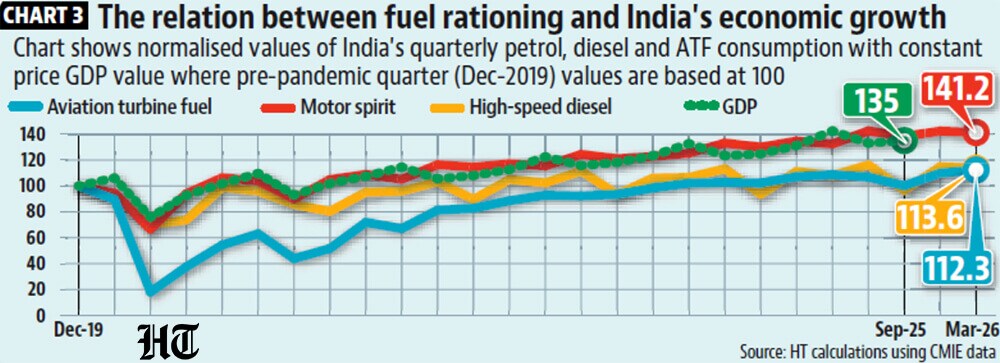
- Which makes it necessary to weight costsIf there is one word which has dominated policy and market thinking after the current war inflicted the biggest ever energy shock in the history of capitalism it is demand destruction. The logic is simple: for the world to attain an equilibrium in the aftermath of the war’s supply shock in energy markets, demand will have to fall . This means at least a part of the pre-war demand will have to be priced out of the market. As is obvious, it will have an economic cost. To give an example, it can be fewer people at restaurants because they cannot drive there anymore or higher transport costs pushing up prices of goods which become unaffordable for some people. In every such second order effect – except things such as employees working from home – there will be significant headwinds for the economy. How bad can things be? It is useful to go back to the pandemic and compare things. The initial lockdown and prolonged social distancing restrictions did lead to a fall in fuel consumption in the economy. When all three major fuels – petrol, diesel, ATF – were being consumed less than pre-pandemic number, absolute GDP was lower than pre-pandemic GDP. While ATF consumption remained below pre-pandemic value for the longest time, the economic activity crossed pre-pandemic levels once petrol consumption bounced back even though diesel was lagging. It is to be expected that the government has access to more granular data in simulating these scenarios while deciding its policy response.
- The real economy is already sending mixed signalsThe next question is whether this external pressure has begun to show up in domestic activity. The evidence is mixed. The index of eight core industries contracted 0.4% in March, its worst performance in 19 months, with clear weakness in energy-linked sectors such as coal, crude oil, electricity and fertilisers. But the broader IIP still grew 4.1%, helped by manufacturing, capital goods, and infrastructure and construction goods. PMI data also suggests resilience rather than an outright slump. The composite PMI fell from 58.9 in February to 57 in March, but recovered to 58.2 in April, with services doing better than manufacturing. Price data is the bigger warning sign. Retail inflation was still contained at 3.4% in March, but wholesale inflation rose to 3.88%, its highest in more than three years, mainly because of higher crude petroleum and natural gas prices. To be sure, some of the inflationary tailwinds are rooted in base effect than the war. While all of this suggests that the economy has not really gone in a shock because of the war, most analysts believe that the higher order effects of the war’s economic costs are still in transmission rather than irrelevant. This only underlines the need for more careful mitigation efforts to contain the damage on macroeconomic fundamentals while protecting the economy.



Unlock a world of Benefits with HT! From insightful newsletters to real-time news alerts and a personalized news feed – it's all here, just a click away! -Login Now!


