E-Paper



Number Theory: An educational explanation of Sino-Indian economic divergence - I
.

 Prefer HTon Google


India, currently the world’s fifth largest economy, will become the world’s third largest economy in a few years. While India has climbed five ranks on global GDP rankings in the past ten years, moving up from third position will take some doing for it will mean overtaking China, whose GDP is five times that of India in current dollar terms. The economic rise of China and India and the divergence between the two is one of the biggest economic stories of the post second world war period.
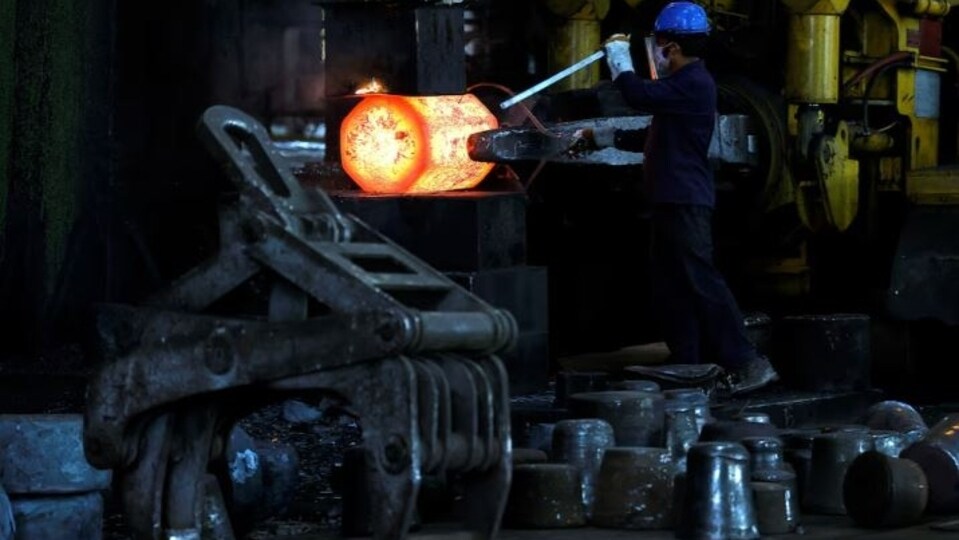
What explains the economic divergence between China and India? It is one question which even the most respected development economics narratives struggle to explain. For example, the centrality of institutions thesis by economists Daron Acemoglu, Simon Johnson and James Robinson -- they were awarded this year’s Nobel Prize in economics -- is of little use in explaining the Sino-Indian economic divergence.
This two-part series will use findings from a recently published paper by two economists, Nitin Kumar Bharti and Li Yang, to argue that the difference in the educational trajectories of the two countries -- the roots of which may have been political in nature -- might have played a big role in this economic divergence. The first part will summarise the basic contours of Sino-Indian economic divergence and the second part will draw on the Bharti-Yang paper to link this divergence to educational policy.
 Sino-Indian growth divergence began after the 1970s and peaked in the 2000sA simple comparison of compound annual growth rate (CAGR) of GDP for China and India shows this clearly. World bank data shows that the Chinese and Indian economy grew at almost the same rate -- just about 4% -- in the 1960s. 1960 is the earliest period for which we have GDP data in the World Development Indicator database. While both the Indian and Chinese economy kept gaining growth momentum until the 2000s, China’s growth acceleration was much faster than India’s. For two decades between 1990 and 2010, China enjoyed a double-digit GDP growth rate. Both the Indian and Chinese economy have lost momentum in the period after 2010 -- China’s more than India’s. However, China’s GDP, in current dollar terms, was five times India’s in 2023, the latest period for which World Bank data is available. In 1960, China’s GDP was just 1.6 times that of India.
- India will finally beat China in growth in the coming decade, but the per capita income gap would still be massiveIndia has been the world’s fastest-growing major economy for several years now. The latest World Economic Outlook (WEO) projections by IMF show that India will finally overtake China in terms of CAGR of GDP between 2020 and 2029. 2029 is the latest period for which WEO projections are available. To be sure, this will be more on account of Chinese GDP growth falling sharply rather than India reaching extraordinarily high growth levels. India overtaking China in terms of CAGR of GDP, however, will do little in terms of a per capita GDP catch-up between the two countries. China’s per capita GDP, in current dollar terms, would be more than four times that of India in 2029.
- Sector-wise comparison of China India GDP shows the centrality of manufacturing in the Sino-Indian gapWhile anecdotally widely accepted, a sector-wise breakup of Sino-Indian GDP gap shows how critical manufacturing has been in driving the gap between Chinese and Indian economies. If one were to look at the ratio of Chinese and Indian GDP across sectors -- agriculture, industry and services -- in current dollars, the gap has been the largest in industry. The World Bank database provides data on manufacturing – industry also includes activities such as construction – only from 2004 for China. Once we compare manufacturing GDP of China and India, the gap is even bigger than what it is in industry. Why is it that India has not managed to catch up with China in manufacturing? This is exactly where the Bharti-Yang paper provides a crucial link between economic performance and educational policy.