E-Paper



Number Theory: Can BJP pull off a massive win in Uttar Pradesh again?
Every election is a new test, and opposition alliances have been shifting continuously in Uttar Pradesh since 2014.

 Prefer HTon Google


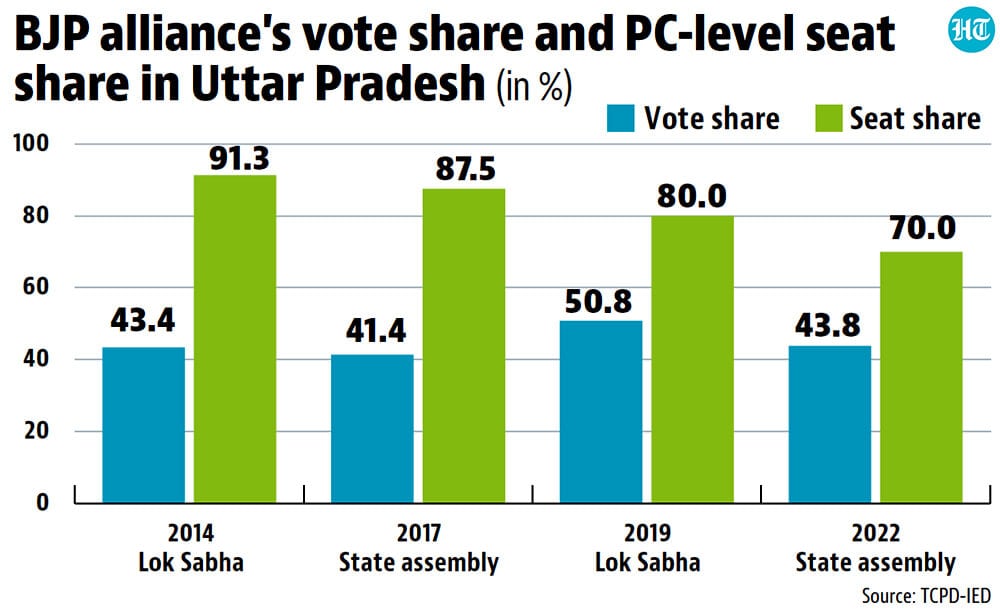
The Bhartiya Janata Party (BJP) has won every election in Uttar Pradesh since the 2014 Lok Sabha polls. Even a coming together of the two biggest regional parties, the Samajwadi Party (SP) and the Bahujan Samaj Party (BSP), in the 2019 Lok Sabha elections could not prevent it from winning 80% of the seats. There is no SP-BSP alliance in the state this time. Even the SP’s smaller allies have left it to join the BJP, and it is fighting the polls with just Congress as an ally. Does this make the Uttar Pradesh contest a walkover for the BJP? Every election is a new test, and opposition alliances have been shifting continuously in Uttar Pradesh since 2014, but here four questions based on past statistics that can help us understand the 2024 contest in Uttar Pradesh.
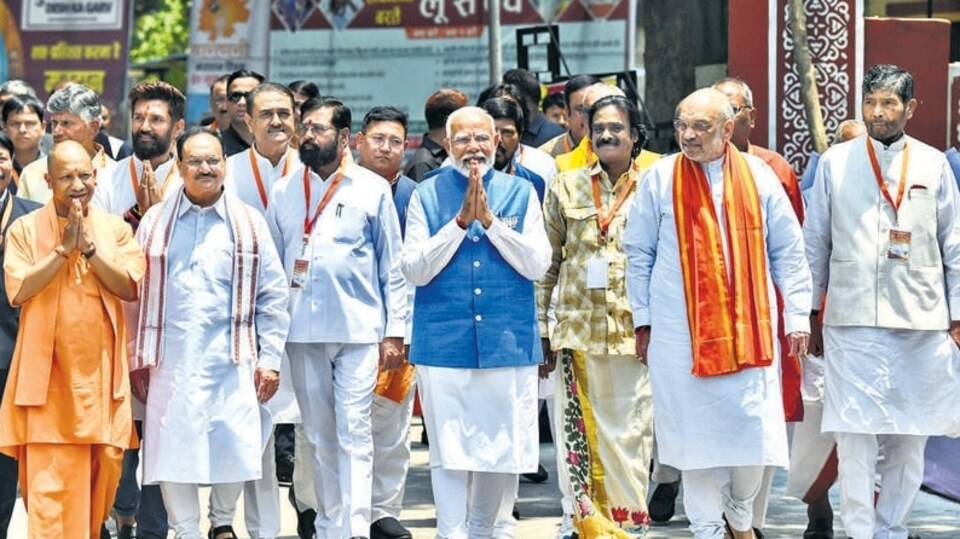
 What will the BJP’s vote share be this time?Uttar Pradesh is different from states such as Rajasthan, Gujarat, etc. where the BJP’s vote share went significantly above the 50% mark in both 2014 and 2019 Lok Sabha elections. The BJP along with its ally Apna Dal won a massive 73 out of the 80 PCs in the state in 2014 with a vote share of just 43.4%. This number fell by two percentage points in the 2017 assembly elections but increased to 50.8% in the 2019 Lok Sabha elections when the BJP was faced with the most formidable challenge in terms of Opposition unity. The BJP’s 2022 (assembly election) vote share once again came down to 43.8%. Where will the BJP’s vote share be in 2024? Was the 50.8% number a reflection of counter-consolidation in response to the SP-BSP coming together? Or is it a reflection of the Narendra Modi premium the BJP enjoys in national elections?
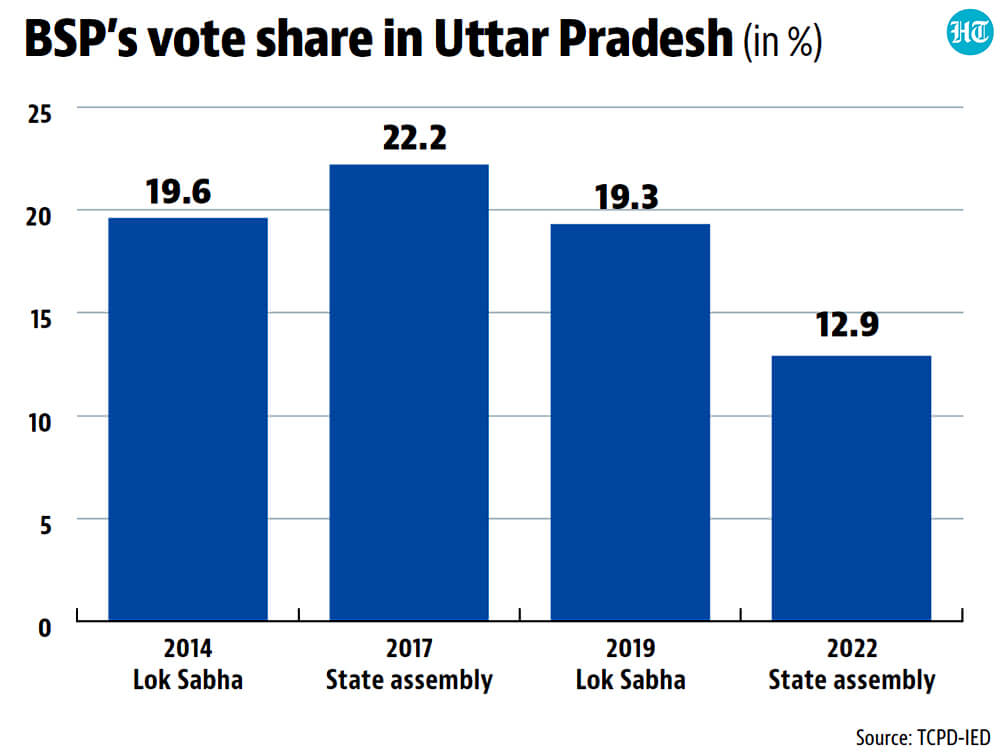
- What will the BSP’s vote share be this time?This is the most important question in the Uttar Pradesh contest. The BSP’s vote share plummeted to just 12.9% in the 2022 assembly elections. This number was 19.6% and 22.2% in the 2014 and 2017 Lok Sabha and assembly elections respectively. Because the BSP contested the 2019 elections in alliance with the SP, its 2019 share is not a good metric of its actual support in the state. The BSP’s ability to garner votes has a direct bearing on the winning threshold in Uttar Pradesh. In 2014, 2017, and 2022, when the SP and the BSP contested separately, the PC-level median vote share of a winning candidate in Uttar Pradesh was 43.7%, 42.1%, and 44.6%. In 2019, when SP and BSP contested together, this number was 52.7%. If the BSP’s 2024 vote share was to jump back to 2014 or 2017 levels, the BJP would not need a vote share in the ballpark of 50% to replicate its 2014 performance or even improve it. However, if it stays closer to or goes lower than its 2022 level, the winning threshold at the constituency level might rise.
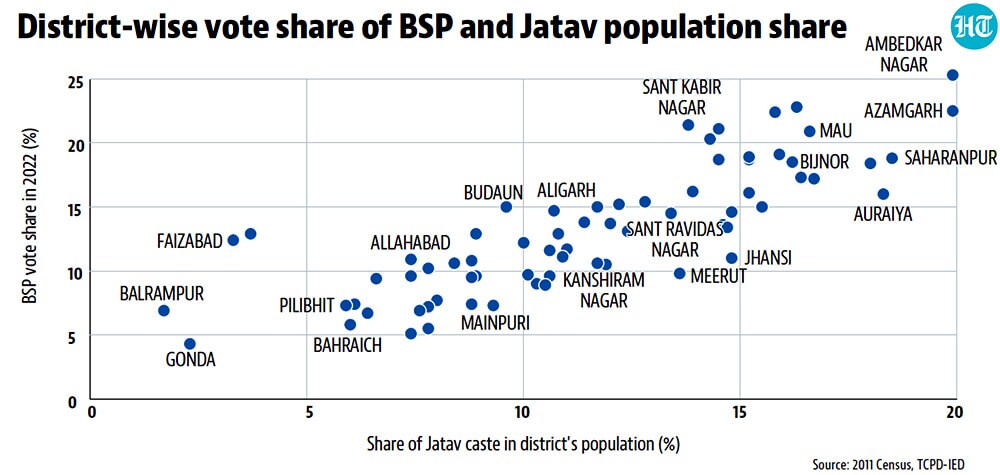
- Whether or not the BSP’s vote share goes higher or lower than its 2022 performance depends on its ability to expand or retain its core support baseA district-wise analysis of the BSP’s 2022 vote share and the population of Jatavs shows this clearly. The two had a strong correlation in 2022 which suggests that, by and large, only the Jatavs voted for the BSP in 2022. Will the BSP be able to retain its Jatav vote? Will it be able to regain some of the non-Jatav vote in the 2024 elections? Both of these scenarios will matter a lot when it comes to deciding average winning vote share threshold in the 2024 contest.
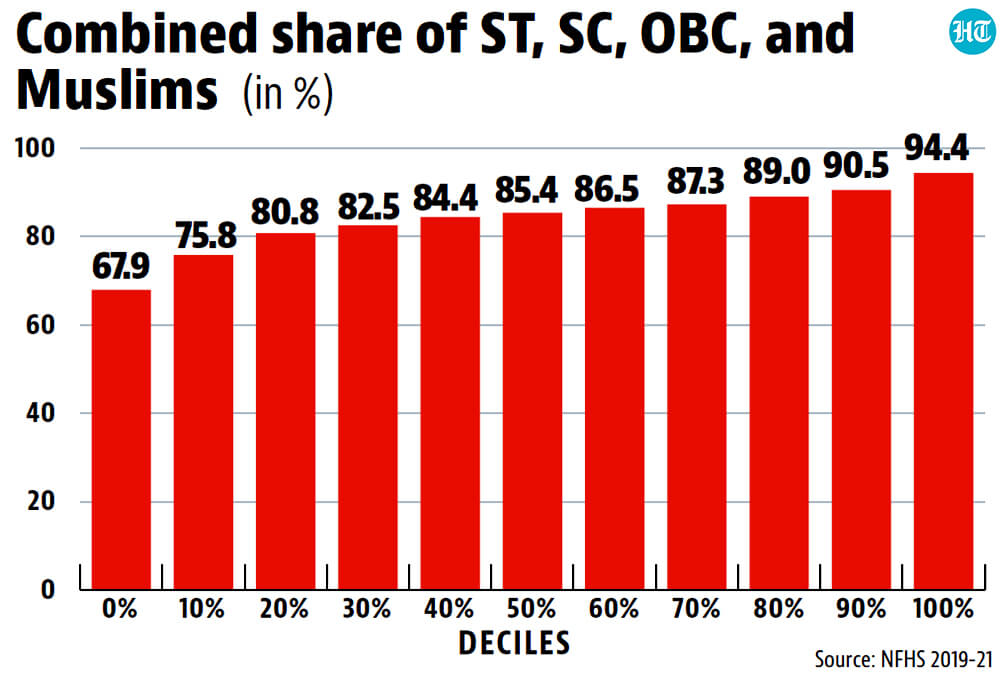
- Can SP-Congress build an effective PDA coalition?The SP is fighting the current election on the plank of consolidating a PDA or Pichda-Dalit-Alpasankhyak (OBCs-SCs-Minorities) block. To be sure, this is easier said than done, as Uttar Pradesh is one state where the BJP has made massive inroads among non-Yadav OBCs and non-Jatav Dalits. What needs to be underlined, however, is the fact that even a theoretical PDA consolidation has different rewards across the state because of the difference in population shares. Data from the fifth round of the National Family Health Survey (NFHS) shows that the combined population of SCs, Muslims and OBCs ranges from 67.9% in Ghaziabad to 94.4% in Mau across 75 districts in Uttar Pradesh. Because an overwhelming share of non SC-ST-OBCs is believed to vote overwhelmingly for the BJP, districts/constituencies with a higher share of SC, OBC and Muslim population would likely offer a lower base to the BJP to begin with.