E-Paper



Number Theory: Congress’s risky gamble in Karnataka
.

 Prefer HTon Google


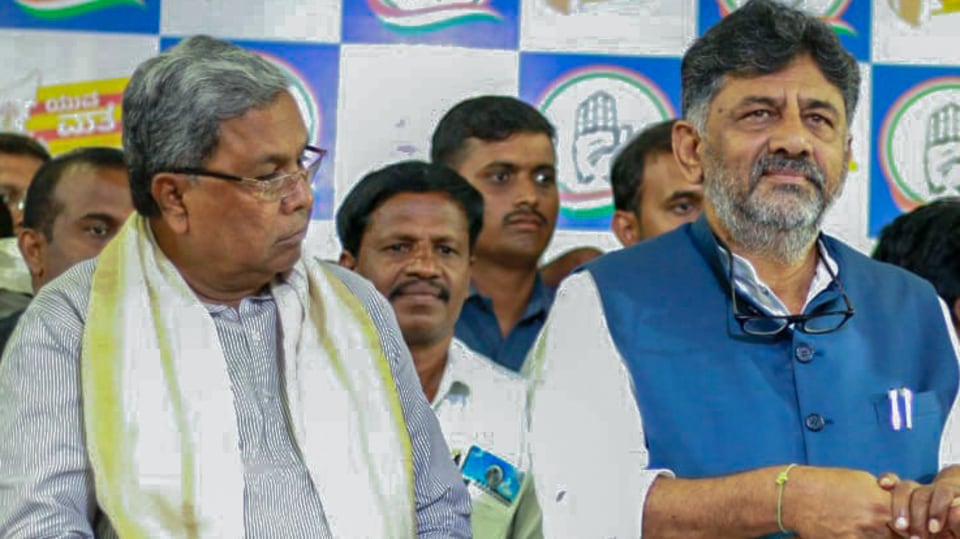
Karnataka politics is set to face a major disruption with chief minister Siddaramaiah readying to table the results of a pending caste survey in the state cabinet on 17 April and use it as the basis to redefine the reservation policy in the state. While the government is trying to sell it as a policy which will increase reservations in the state, it is hard to ignore the politics which seems to be aimed at othering the state’s two most politically dominant communities, namely, Lingayats and Vokkaligas. This two-part series will argue that the Congress is making this politically risky move to overcome what is a broken political economy in the state. The first part will explain the politics and second part the political economy behind the move.
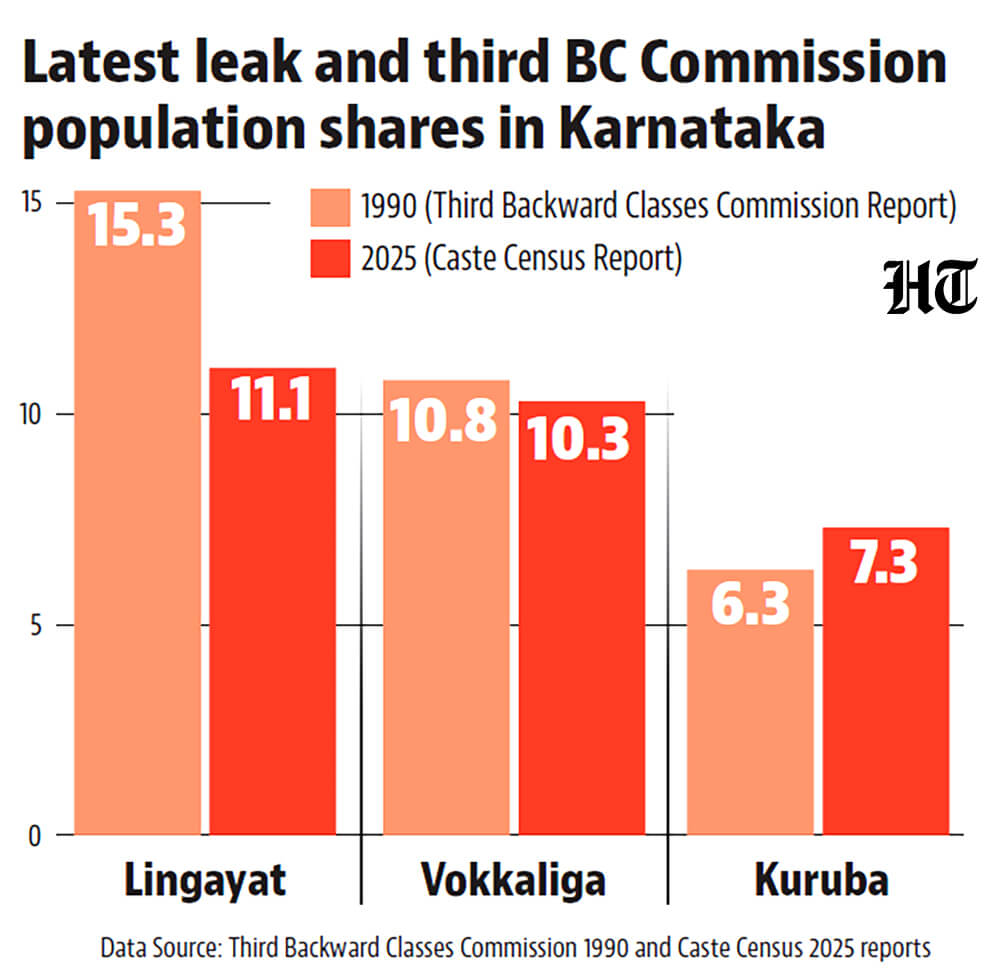
 Controversy apart, the Lingayat and Vokkaliga population shares are not very surprisingWhile the official report of the caste survey is still not out, findings reported by HT show that Lingayats and Vokkaligas together account for less than a fourth of the state’s population and their population share is not overwhelmingly large compared to Kurubas, a relatively backward (and the chief minister’s) caste group. Lingayat and Vokkaliga caste associations and leaders have questioned the findings of the survey, claiming that their population has been undercounted . This conflict over population shares of Lingayat and Vokkaligas is not something new in Karnataka, as a higher share for these two groups is seen as critical for maintaining their dominance in the state’s politics and society. In fact, a comparison of the latest numbers with the findings of the Third Backward Class Commission of Karnataka, which were published in 1990, does not show much of a difference.
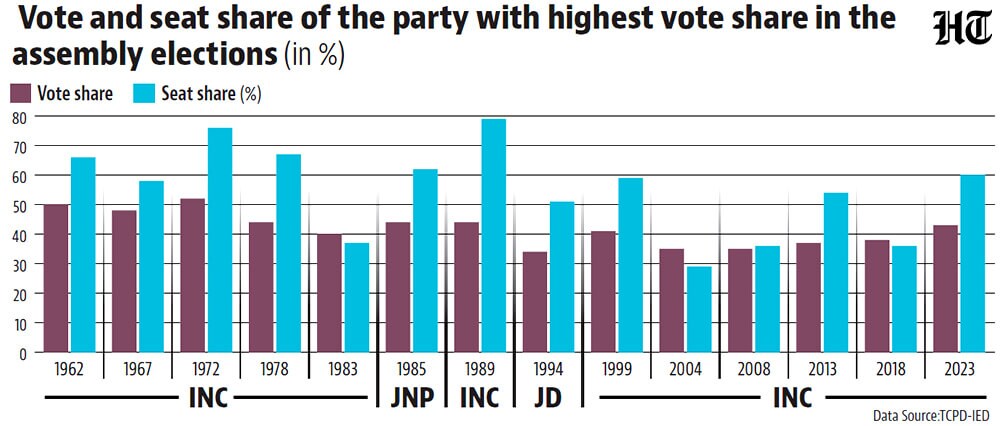
- Congress has an incentive to resurrect Karnataka’s most successful political coalition which excluded both Lingayats and VokkaligasCongress won more than 60% of the assembly constituencies (ACs) in the 2023 Karnataka assembly election with a vote share of 43%. While it improved its 2024 Lok Sabha vote share to 45.6%, it could win just 9 out of the 28 parliamentary constituencies (PCs) in the state, with the rest of them going to the Bharatiya Janata Party (BJP) and the Janata Dal (Secular) or JD(S). A big reason for this decline in conversion of votes into seats was an alliance between the BJP and the JD(S) which enjoy the core support of Lingayats and Vokkaligas respectively. The insecurity about the potential fall-out of complete consolidation of Vokkaliga and Lingayat votes against the Congress because of an alliance between the BJP and the JD (S) has perhaps encouraged Siddaramaiah to revive a plan the Congress used in the 1970s to taste electoral success: create a broad-spectrum coalition which consolidates the Muslims, Scheduled Caste (SC) and Scheduled Tribe (ST) and Other Backward Classes except Lingayats and Vokkaligas. Devraj Urs, Congress’s two-time chief minister in Karnataka perfected this strategy called AHINDA (an acronym for Alpasankhyataru or minorities, Hindulidavaru or backward classes, and Dalitaru or Dalits). Urs’s 1972 victory based on this coalition is the biggest ever in Karnataka’s history till date. As someone who comes from the Kuruba community, one of the most numerically significant backward castes in Karnataka, Siddaramaiah has often fancied his chances of resurrecting the AHINDA coalition.
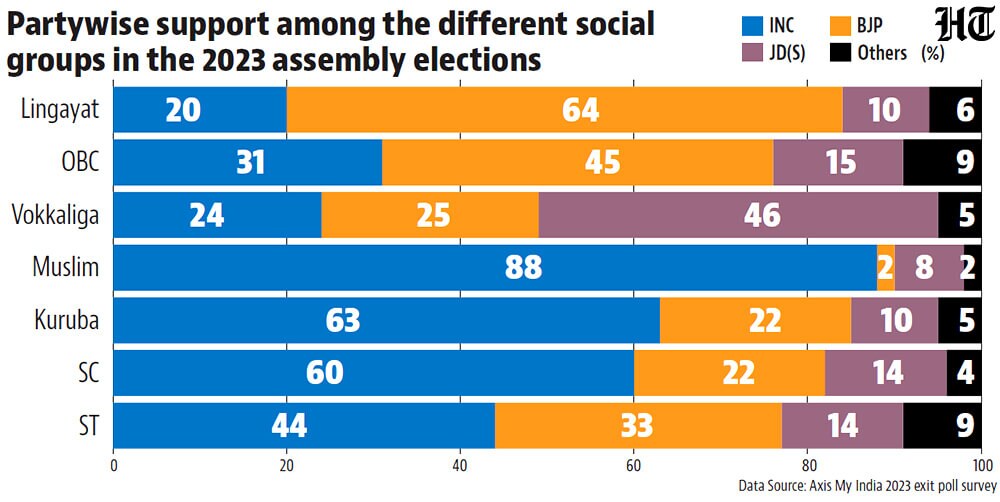
- But Congress’s current social coalition cannot afford to completely let go of Lingayats and VokkaligasWhile exit polls have increasingly been wrong in the past, the India Today-Axis My India exit poll for the 2023 Karnataka elections predicted Congress’s vote share (43% against 43.2% actual) and seats (122-140 against 135 actual) accurately. Caste-wise support numbers given by the Axis My India exit poll show that Congress had a 24% and 20% vote share among Vokkaligas and Lingayats, which, if one were to use with the population share reported in the latest survey, would roughly come to about 4.7% of the total vote share, which is around 11% of Congress’s overall vote share. On the other hand, Congress’s vote share among Kurubas and SCs was just 60% and 63%, which is lower than the level of consolidation a BJP-JD(S) alliance had among Vokkaligas and Lingayats. Pushing ahead with the publication of caste survey results and tweaking reservation policy is extremely likely to completely alienate Lingayats and Vokkaligas from the Congress. The possibility of a counter-polarization among other communities to resurrect an AHINDA coalition is what the Congress is banking on at the moment.