E-Paper



Number Theory: Israel, its economy, polity and demography decoded
Here are four key data points which tell us how Israel grew its economy, how its demography has evolved, and how its polity has changed over the years
Updated on: Sep 10, 2024, 18:51:38 IST

 Prefer HTon Google
Share via


Copy link

Israel, the 'Jewish homeland' surrounded by Arab nations, has engaged in numerous conflicts with its neighbours throughout its history. The ongoing Israel-Hamas war has already resulted in the death of more than 40,000 Palestinians (most of them civilians) and 1,200 Israelis since October 2023. Despite its many conflicts, Israel has managed to position itself as a one of the strongest economic and military power over the years. Here are four key data points which tell us how Israel grew its economy, how its demography has evolved, and how its polity has changed over the years.
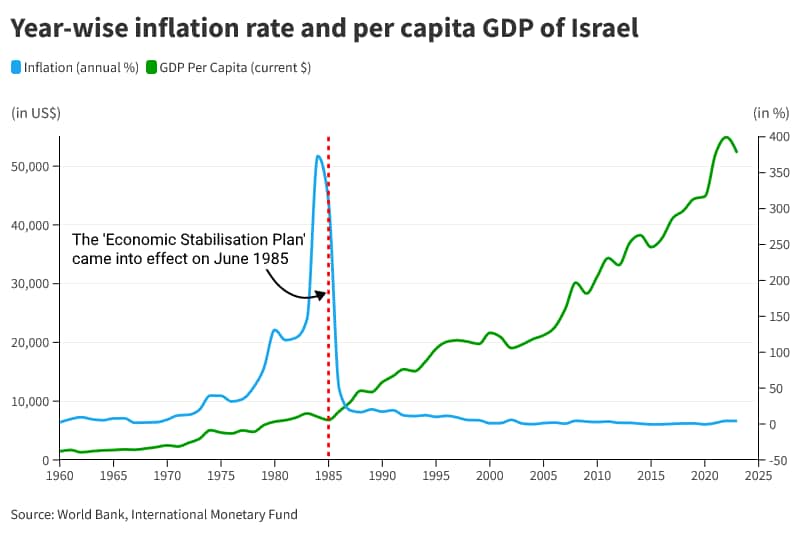
 Israel's growth as a high-tech hubIsrael, now known for its high-tech sector and modern infrastructure, faced a severe economic crisis in 1984, with a 373% annual inflation rate and a budget deficit of 17% of GDP. In June 1985, Prime Minister Shimon Peres introduced the 'Economic Stabilisation Plan', aiming to cut the fiscal deficit by 7.5% of GDP, devalue the shekel by 20%, and freeze wages and prices. Interest rates were hiked despite the risk of recession, and the U.S. provided $750 million in emergency aid for two years. Peres was successful in quickly passing the plan in his government and implementing it, albeit some of its unpopular measures. The plan succeeded, with inflation dropping by over 262 percentage points within a year, and GDP per capita nearly doubling in five years. Since then, Israel has enjoyed significant economic growth, establishing itself as a high-tech hub, with the sector accounting for 18% of the country's GDP and 48% of its exports. However, 11 months into the ongoing war with Hamas, the country's economy have started showing signs of strain. Israel's GDP grew by just 1.2% in the second quarter of 2024, below expectations, with per capita GDP growth falling 0.4%. Inflation rose to 3.2% in July, and is expected to stay above the Bank of Israel's 1-3% target. Labour force participation and productivity have also declined since the conflict began.
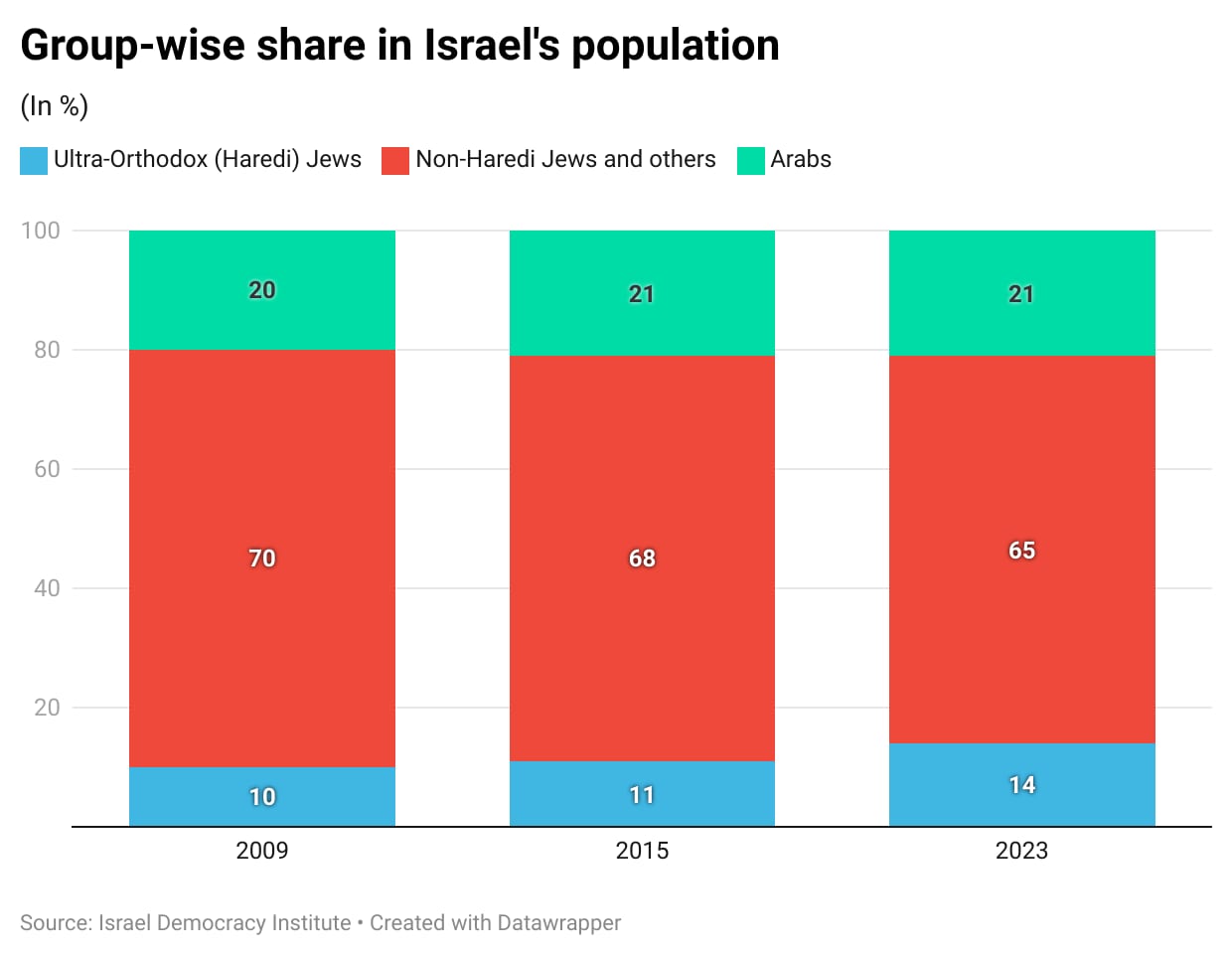
- Rising share of orthodox populationDespite being the 'homeland of the Jewish people', with 73.2% of the population being Jews, Israel is a diverse country. The share of Ultra-Orthodox (Haredi) Jews in the population rose from 10% in 2009 to 14% in 2023, while that of the non-Haredi Jews and others declined from 70% to 65%, according to the Israel Democracy Institute. The Arab population rose slightly from 20% to 21%. The Haredi growth is driven by their high fertility rate (6.4 births per woman) compared to 2.5 among other Jewish women. According to estimates, the share of Haredi Jews in Israel will further rise to reach 16% by 2030 and this trend is expected to continue further. In fact, Dan Ben David, head of the Shoresh Institution for Socioeconomic Research and professor at Tel Aviv University, estimates that by 2065, 49% of children born in Israel will be ultra-Orthodox, 15% will be Arab, and just 35% will be non-Haredi Jews.
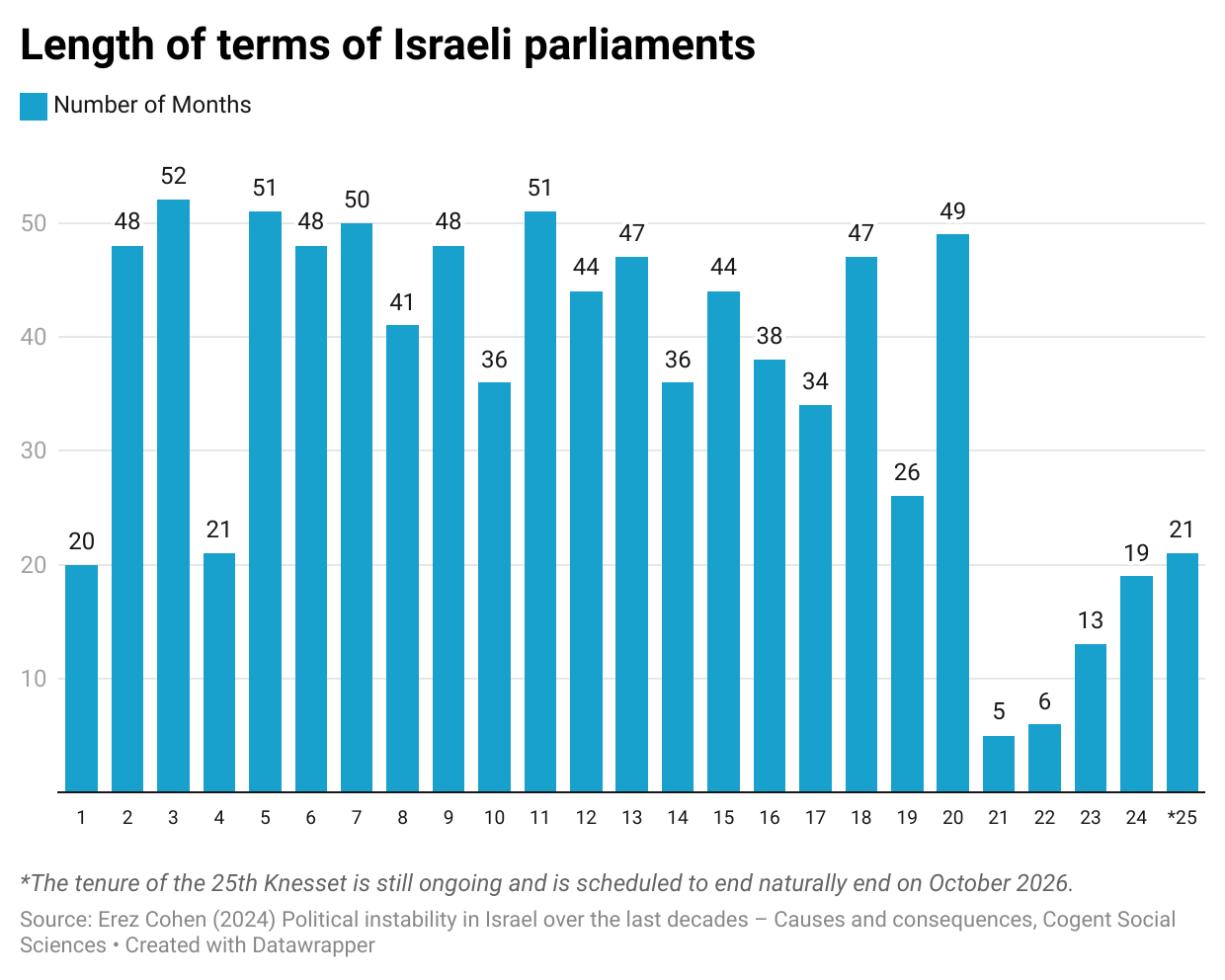
- Changing demographics and its impact on polityAccording to a study published by Cogent Social Science journal this year, the diverse demographic makeup of Israel has led to the formation of distinct ideological, religious, and political groups, increasing fragmentation and tensions. Elections since 1999 have highlighted this fragmentation in politics, as the Knesset (Parliament) now consists of 120 members from 15 political parties, many of them factional. This fragmentation and the ease of dissolving the Knesset has been key factors behind the rise in political instability in recent decades. Even the ongoing 24th Knesset was facing intense public protests against unpopular judicial reforms, which only subsided after the October 7 attacks. The current government of Israel has the most right-wing leaders in its history. According to a Pew Research survey, as many as 89% of Haredi Jews, the fastest growing population group, say that Jewish laws should take precedence over democratic principles in case of a contradiction. These demographic shifts can intensify polarisation, weakening Israel's political stability and its secular identity.
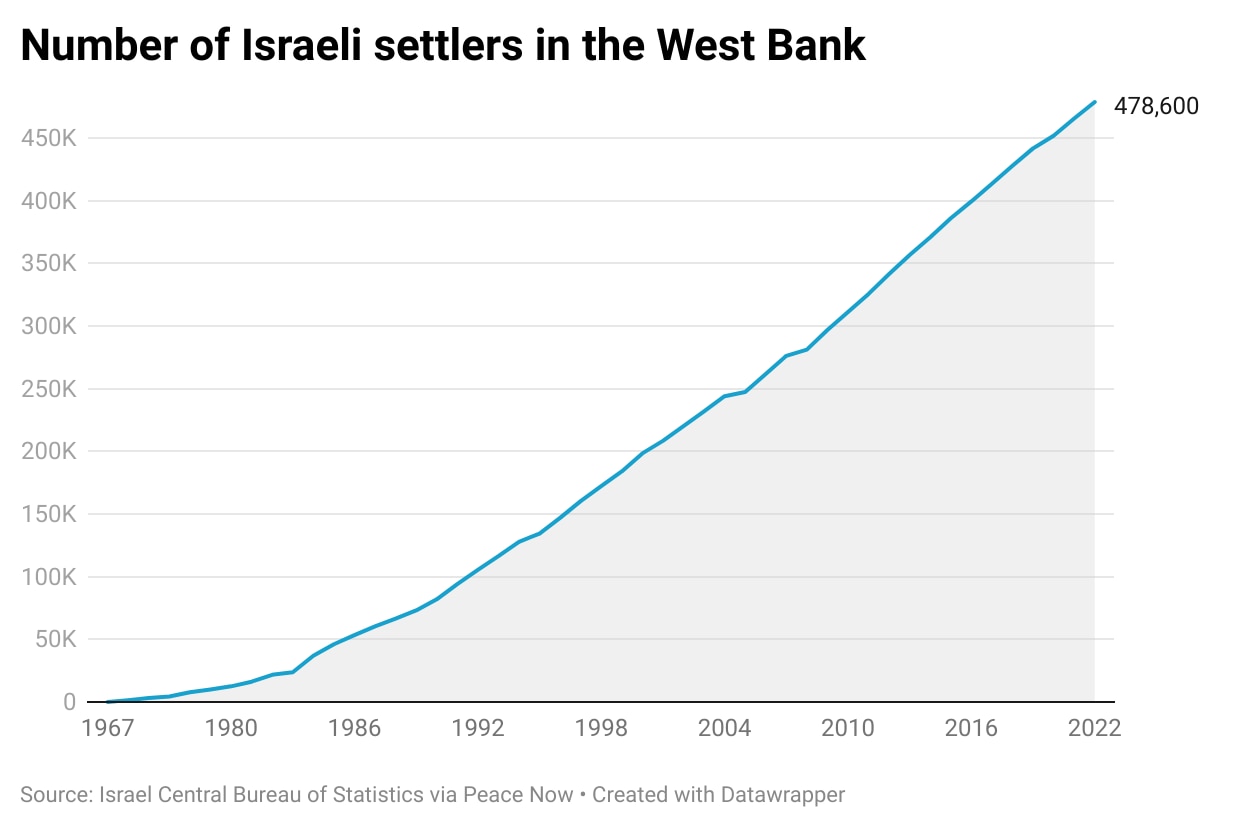
- The increasing settler populationFor decades, Israel has steadily expanded settlements in the occupied West Bank, despite the peace agreements signed with the Palestinians in the 1990s. The number of Israeli settlers in occupied West Bank have grown from just 1,500 in 1972 to around 4,78,600 as of 2022. If right wing political parties continue to make inroads into Israel's polity, this number could keep rising over the coming years as settler politics gain more voice. Bezalel Smotrich, Israel’s far-right Finance Minister, was earlier this year quoted by CNN as saying, "After October 7th it is a consensus in Israeli society. The way is to develop settlements, and we are focusing on doing broad structural processes that will result in the State of Israel developing settlements in an orderly manner." In a separate press conference, he also said that for every country recognising a Palestinian state, Israel would respond by establishing more settlements, aiming to counter the idea of a Palestinian state as a threat to Israel’s existence. Several other coalition members have also made similarly polarising pro-settler remarks. Unless the growing right wing and perhaps reactionary trends in Israel’s politics are reversed, it is Israel’s expansionism in conflict with Palestinian interests which will be noticed more and more in the democratic world.