
 E-Paper



Number Theory: What the trade war means for climate crisis
Does the resulting economic environment have any implications for the climate crisis? Here is what that shows
Updated on: Apr 11, 2025, 09:26:54 IST

 Prefer HTon Google
Share via


Copy link

The additional tariffs on goods trade announced, and subsequently partially withdrawn, by the US has sent shockwaves through the world. This is because trade has become essential to the production and consumption of goods since the second world war. Does the resulting economic environment have any implications for the climate crisis? The answer to this question is just as much uncertain as the expected economic impact of the move. However, one can expect some outcomes using past data. Here is what that shows.

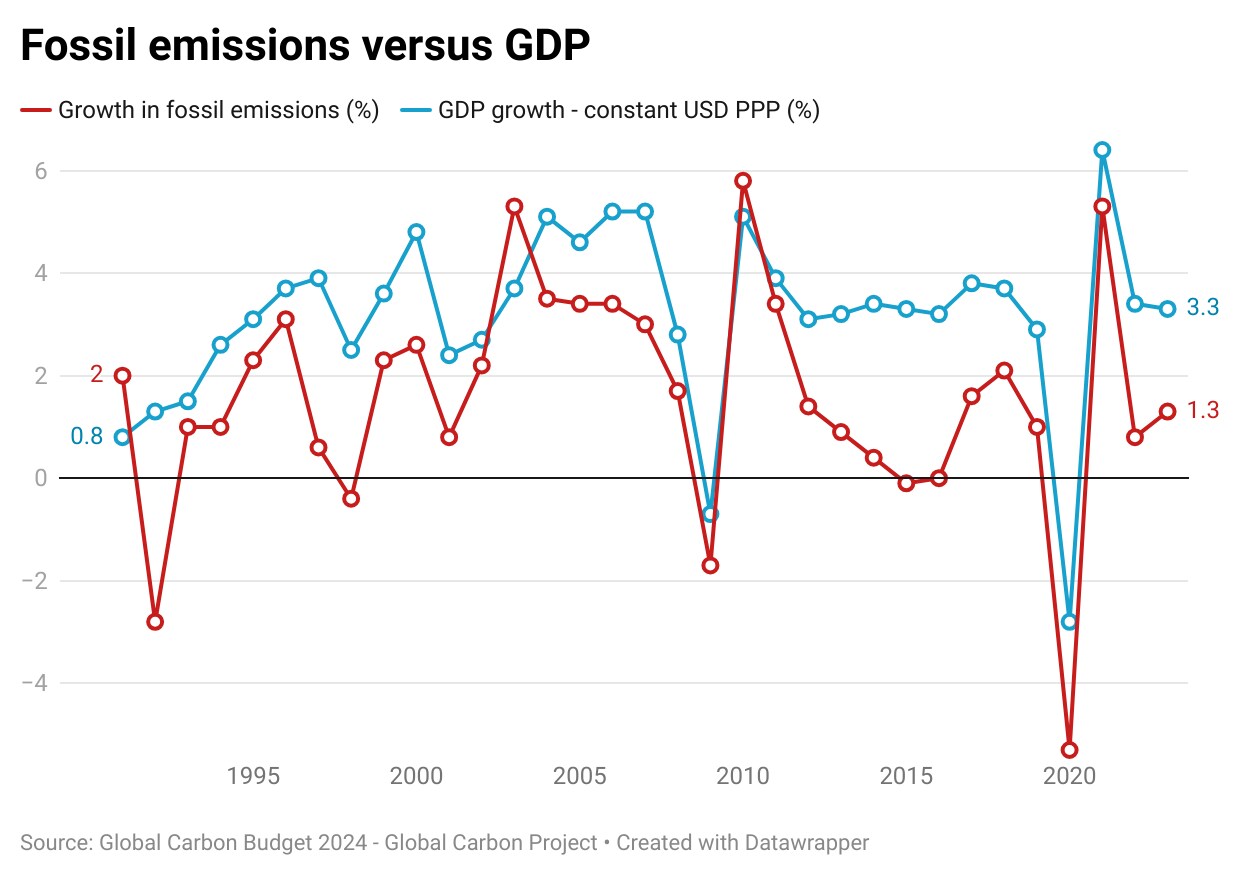
 A sharp slowdown or recession can decrease emissions in the short termConventional economic wisdom suggests that high barriers to trade depress economic growth. Therefore, a slowdown or recession in global economy is one of the expected outcomes if the tariffs are reinstated. Should this happen, fossil emissions are likely to decrease in the short-term. Here is why. Global GDP data from the World Bank is available from 1990. Both years of global recession since then – 2009 and 2020 -- led to a decline in emissions. Emissions also declined somewhat in 1992 and 1998 when growth was slower than usual. This correlation between economic and emission growth exists because our economic output depends on consumption of fossil fuels -- it has, since the industrial revolution -- and a contraction in output likely leads to fall in fossil fuel use and hence lower emissions. Unfortunately, such a decline in emissions is not necessarily good for human beings. A recession in developing or under-developed economies can hurt people’s lives and livelihoods before global warming does. Chart 1
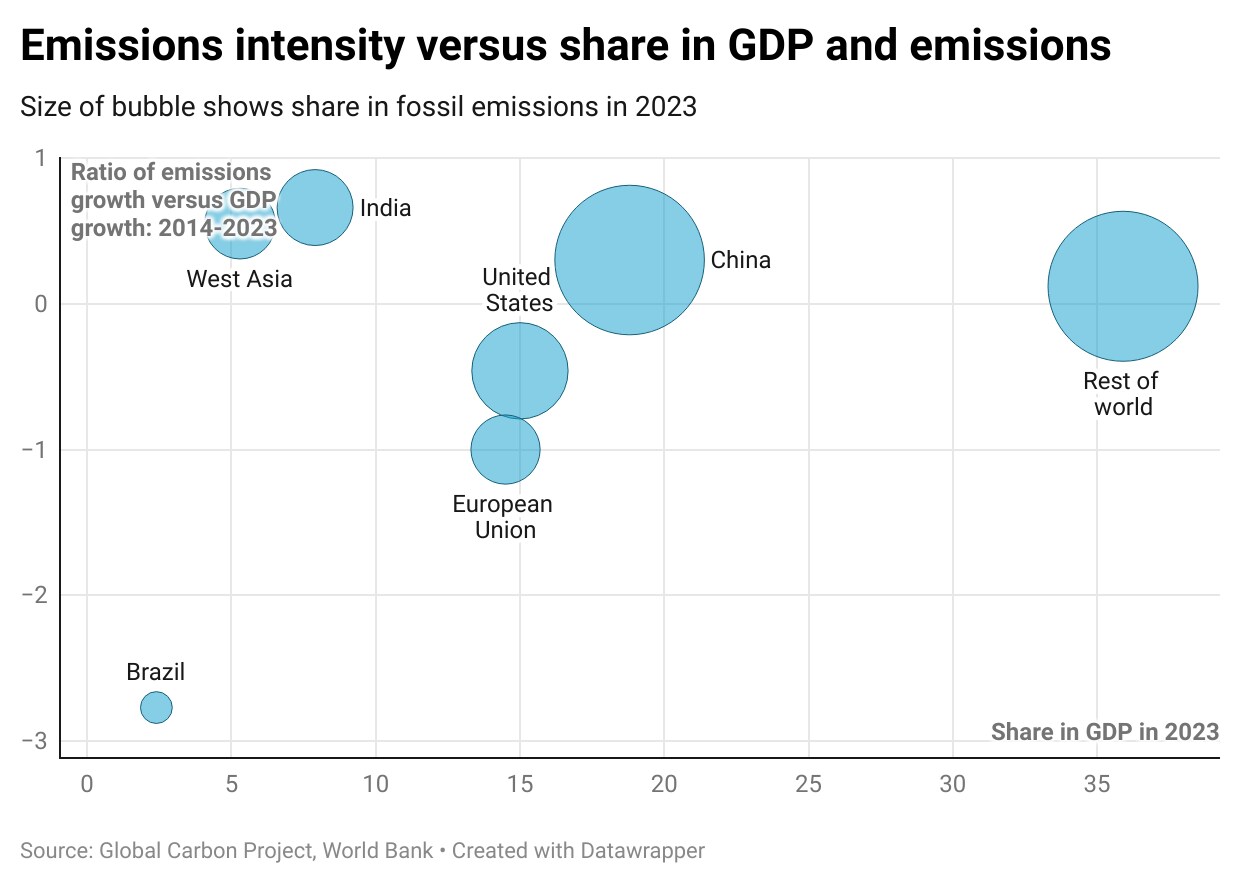
- But a lot will depend on the geographical distribution of the slowdownTo be sure, while emissions are correlated with global GDP growth, one must be careful in interpreting this trend. This is because the trajectory of fossil fuel emissions varies drastically across the world. Emissions are on a downward trajectory in most advanced economies, and still on an upward trajectory in the part of the developing world that is growing fast. Therefore, the geographical distribution of the economic slowdown will be important for the global emissions trajectory in 2025. For example, unless there is a recession, emissions are likely to grow in China, India, or West Asian countries, where emissions are on an upward trajectory. In the recent past, the growth in emission in such countries has been counter-balanced by the decline in emissions in advanced economies. However, with the US ready to go back to fossil fuels (it has a 13% share in global emissions), this counter-balance may not be as effective in 2025. This reversal to fossil fuels is likely to be helped by the trade barriers the US has erected. This is because a large share of exports of south-east and east Asian economies to the US – slapped with the highest tariffs -- is clean energy exports, according to a Bloomberg report. Economic headwinds may even prompt the EU countries to increase oil and gas in their energy mix since the prices of these commodities are likely to fall in a slowdown. Chart 2
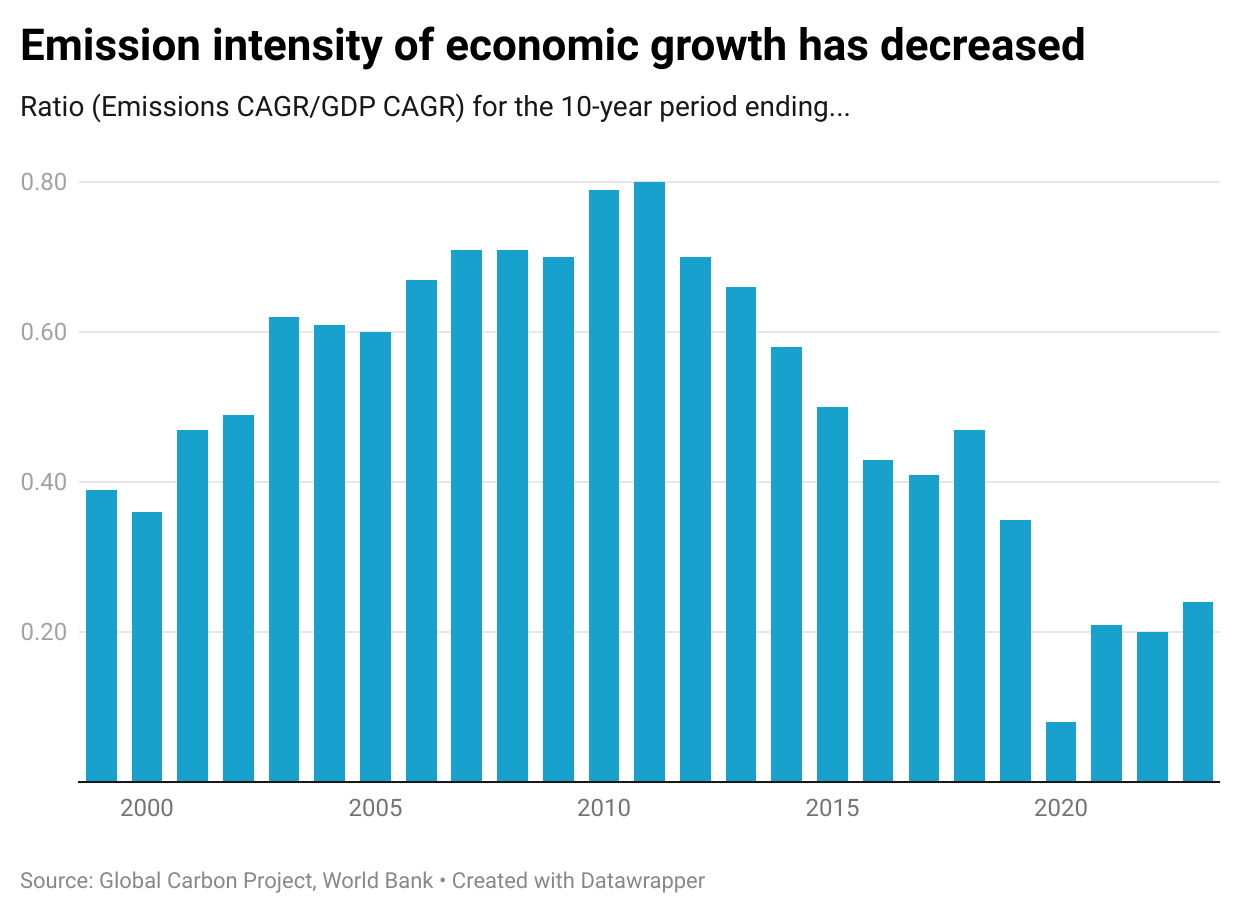
- The trade war is bad for climate transition in the long-termDo the tariffs have any longer-term implications? Among the reasons the tariff announcement is expected to depress growth is the uncertainty it has produced. With no certainty on whether they will stay or go away with the US striking bilateral deals, investments are likely to be delayed. Such a delay for a garment or footwear factory may be bearable in the short-term, but it is dangerous for the clean energy transition. While the carbon intensity of economic growth (rate at which emissions grow per unit growth in GDP) has decreased over time, emissions need to start declining for a real chance at preventing irreversible climate change. Latest data from the Global Carbon Project shows that we have only six years of emissions left at 2024’s rate of emission for a 50% chance at preventing 1.5°C warming relative to the pre-industrial average. For four of these years, Donald Trump is expected to increase the carbon intensity of the world’s largest economy and second-largest emitter. Then, given Trump’s reneging on the climate accord, efforts to mitigate the climate crisis, especially global warming would have suffered even without tariffs. Chart 3


Unlock a world of Benefits with HT! From insightful newsletters to real-time news alerts and a personalized news feed – it's all here, just a click away! -Login Now!


