
 E-Paper



The Kerala model that travelled 3,000 km to change a school in Kashmir
The inauguration of a new middle-school block at Government Girls Higher Secondary School in Srinagar introduces Kerala's Nadakkavu model to Jammu & Kashmir.

 Prefer HTon Google


The inauguration of a new middle-school block at Srinagar’s Government Girls Higher Secondary School, Kothibagh, marks the arrival of Kerala’s acclaimed Nadakkavu transformation model in Jammu & Kashmir. And with it comes a new wave of hope for public education in the region.
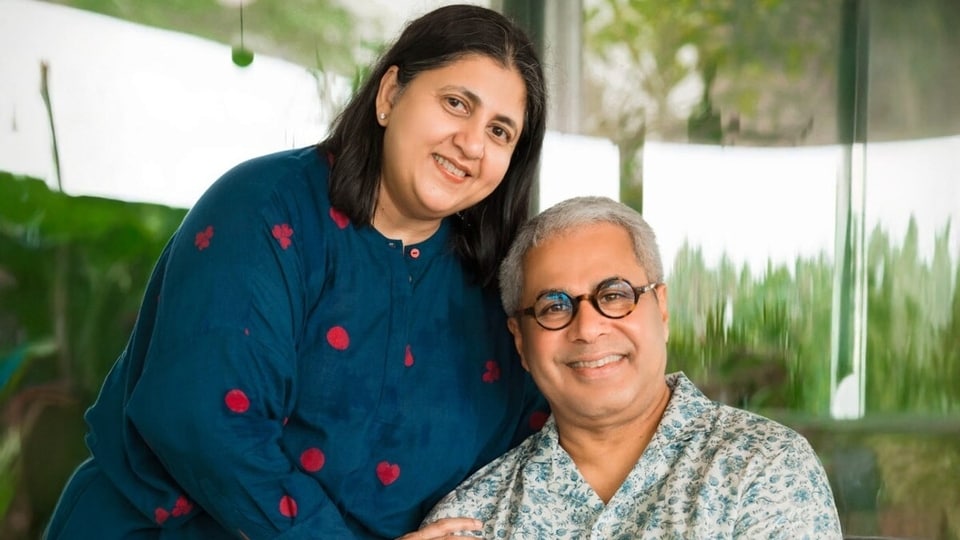
In an exclusive conversation, Faizal E. Kottikollon — Founder and Chairman of the Faizal & Shabana Foundation (FSF) and architect of the PRISM reform framework — explains how a model born in Kozhikode has grown into a blueprint for schools across India, and why he believes Kashmir is the beginning of a national movement.
A model that began with a question: Why can’t government schools be world-class?
For Kottikollon, the inspiration goes back more than a decade.
“In 2012, during an interview with Malayala Manorama, I said something that stayed with me—that 250 million children study in government schools without the opportunities private-school children get,” he recalls. Soon after, he visited Kozhikode’s Nadakkavu School, then a neglected campus with leaking roofs and broken toilets. That visit, he says, “changed everything.”
Working with the Indian Institute of Management Calicut, his foundation conducted a detailed gap analysis — what works, what doesn’t, and what the children urgently need.
“Creating a good environment is the simplest problem to solve, yet nobody was solving it,” he says.
The results were transformative. Over the next decade, the Nadakkavu model evolved into a state-wide movement in Kerala, impacting more than three million students and inspiring over a thousand government schools to upgrade their learning environments, infrastructure and teaching quality. Outside Kerala, the model has so far been replicated in one school each in Tamil Nadu, Karnataka and Jammu & Kashmir.
What is the Nadakkavu model? A patient, diagnostic approach to reform
The framework behind the transformation is PRISM — Promoting Regional Schools to International Standards through Multiple Interventions.
“It starts with a needs assessment,” Kottikollon explains. “Every school has different gaps — infrastructure, teachers, labs, or simply the lack of a learning environment.”
The team spends nearly three months studying each school before any intervention begins. Teacher training is a central pillar: educators from several states have travelled to Kerala to train with Nadakkavu teachers.
“These cross-state exchanges open minds — for students and teachers alike,” he says.
Making government schools aspirational
One of the strongest features of the model is how it shifts the mindset of students.
“Culture and sports matter as much as infrastructure,” he says. At Nadakkavu, children from extremely modest backgrounds have gone on to become doctors, nurses, computer engineers, and biomedical professionals working globally. “If you provide the right environment, both rich and poor children flourish.”
Why the model scaled: results, not promises
Nadakkavu has consistently ranked among the top 10 government schools in India since 2013. That, Kottikollon says, is what convinced others.
“When schools see proof, they believe transformation is possible. Government schools can be as good as private schools — or better — without any fees. That belief is what scaled the model.”
FSF even shares its “playbook” with those who wish to replicate the model.
Bringing the model to Kashmir — and why it worked
Two years ago, during a visit to Srinagar, Kottikollon showed the J&K Lieutenant Governor a short video of Nadakkavu’s transformation. “He immediately understood the potential,” he says.
The new middle-school block at Kothibagh — completed in just 14 months — includes modern classrooms, STEM labs, robotics facilities and a design-first learning environment.
“Human beings are the same everywhere — Kashmir, Kerala, Kolkata, Delhi. Children don’t create boundaries,” he says. “Good schools with strong values shape better human beings.”
The challenges: changing mindsets first
The biggest barrier to public-school reform, Kottikollon says, is disbelief.
“People don’t believe government schools can match private schools. But when they visit Nadakkavu, their perception changes.”
Kerala’s media played a critical role by consistently reporting on the school’s transformation. “The first ten years were tough. Now, replication is easier. When people saw Kerala students in Srinagar — confident and articulate — they felt what was possible.”
Policy changes needed for nationwide impact
Kerala passed three government orders to enable FSF’s partnership. J&K followed suit.
“India needs a uniform national policy that allows foundations and individuals to partner in public education reform,” he says.
“With J&K joining this effort, the model is no longer a Kerala story — it’s a pan-India movement.”
A vision for the next decade
“I want to change the lives of millions of students,” Kottikollon says simply.
To do that, he hopes to bring more philanthropists, business leaders and policymakers together. “Education and healthcare are vast fields — no one person can transform them alone. But together, we can.”
The Kothibagh project, he believes, is just the beginning: “A spark that can ignite a national movement.”


