
 E-Paper



Punjab polls: With new ally, SAD takes on challenge to regain lost turf
The Panthic party SAD is relying on its strong cadre and Hindu faces amid shrinking base in urban areas in Punjab after split with BJP

 Prefer HTon Google


Shiromani Akali Dal (SAD) leaders are upbeat and the cadre coalesced as the party has managed to run a steady campaign in Punjab since early last year. However, the biggest challenge faced by Sukhbir Singh Badal-led party ahead of the February 20 polls is to bring urban population into its fold and check the Aam Aadmi Party’s advance on its bastion in Malwa region.
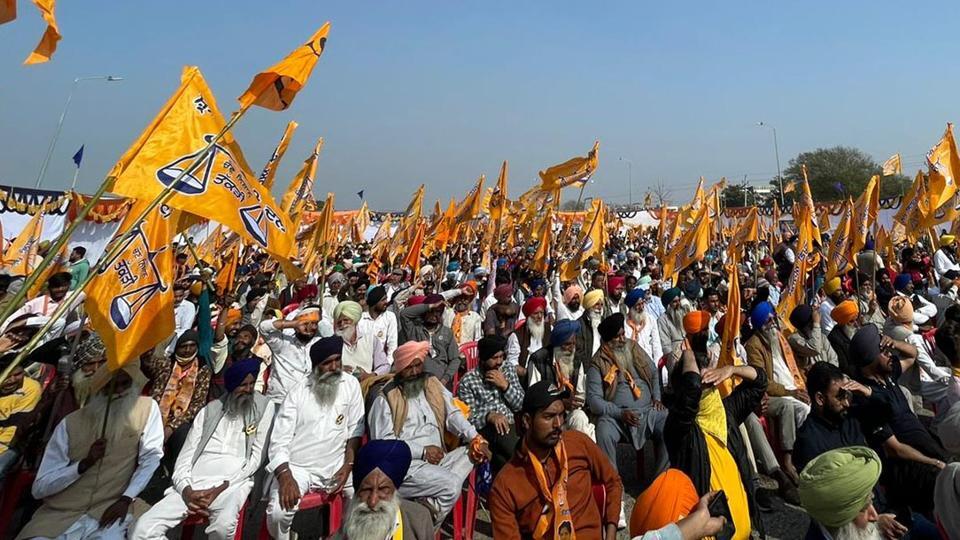
Calling itself “Punjab’s own party” and keeping its campaign “development oriented” with a “pro-people” agenda, the SAD is for the first time in 25 years contesting the elections without its old ally Bharatiya Janata Party (BJP), which has clearly left a void in urban areas.
The Panthic party that has won thrice in the past five elections is seeing its base shrinking among urban voters, particularly Hindus, and has thus roped in 12 Hindu faces.
In Malwa belt, Prem Kumar Arora is contesting from Mansa, Sarup Chand Singla from Bathinda Urban, Rohit Vohra from Ferozpur Urban, Hans Raj Jossan from Fazilka, Mohinder Rinwa from Abohar, RD Sharma from Ludhiana North, Harish Dhanda from Atam Nagar, NK Sharma from Dera Bassi, Harpal Juneja from Patiala and Parkash Chand Garg from Dhuri.
The remaining two have been fielded in Majha belt: Raj Kumar Gupta (Sujanpur) and Anil Joshi (Amritsar-North). Whether this gamble pays off will become clear on March 10, when the poll results are announced.
Sacrilege shadow still looms
The SAD is fighting the election under the shadow of sacrilege cases, which took place during its regime in 2015. This is the second consecutive election, after 2017, when Akalis are feeling marginalised due to the sensitive issue.
Though the Congress government could not bring the issue to a logical conclusion in the past five years, the issue is still haunting Akalis.
According to Professor Balkar Singh, former head of Guru Granth Sahib Studies department at Punjabi University, Patiala: “The turf that slipped under the Akalis’ feet has been encroached upon by the AAP and BJP. The SAD is facing a challenge to regain it. Good thing for them is their cadre is intact, and it is sticking to the (Sikh) tenets.”
The recent meeting of Union home minister Amit Shah with the Akal Takht jathedar is an attempt to push Akalis further out of the Panthic domain, ringing alarm bells for them, “as it has a deep underlying connotation”.
Farmers and Dalit factor
The SAD entered into a poll alliance with the Bahujan Samaj Party (BSP) in June last year, after severing ties with the saffron party in September 2020 fearing a backlash over the now-repealed contentious farm laws. The party’s lone representative in the Narendra Modi cabinet — Harsimrat Kaur Badal — also quit in protest.
The move seems to have had little impact, as after the annulment of these laws, a section of the peasantry apparently is still not wiling for a patch up with Akalis, questioning their earlier flip-flops over the law.
What disturbs the Akalis most at this juncture is their bastion Malwa coming under an attack by the AAP. The belt has 69 seats, and Sukhbir has been tactically focusing on it during campaigning in the past one week. “We will not let the AAP get even a single seat here,” said a SAD leader.
The SAD has given 20 seats to the BSP, keeping 97 for itself as the alliance fights for the 117-seat Punjab assembly.
The experiment to touch base with 32% Dalit electorate in the state through the Mayawati-led party could prove fruitful for the coalition, as its vote share is expected to go up. At 31%, Akalis’ vote share in 2017 was their worst, as the party managed to win just 15 assembly seats.
Making a head start paid
The Akalis made a head start by announcing their candidates and releasing a 13-point poll agenda before other parties, which helped in mobilising the cadre and making them poll-ready on time.
Among all political parties in the fray, Akalis faced least turbulence as they managed to check factionalism and there were fewer defections. The SAD president, who managed to make the party’s entire rank and file stand behind him, added to the advantage. They even managed to bring Taksali (old guard) leader Ranjit Singh Brahmpura, who had resigned three years back, back into the Akali fold.
“Sukhbir has organised the party as an election machinery, and devoted time and kept contact with people working in his favour. What’s important is that he was never a direct target of the opponents during poll campaign. He is going to spring a surprise,” said Prithipal Singh Kapur, a Sikh historian.


