
 E-Paper



'Ab sab dhandha hai’: Kitu Gidwani slams today’s TV as low quality, detests saas-bahu obsession
Kitu Gidwani reminisces about the impactful female-driven narratives of 80s and 90s Indian television, criticising the current portrayal of women.

 Prefer HTon Google


One of the finest actors of Indian Television's golden period, Kitu Gidwani, revisited a time when TV was not just watched, but deeply felt. Her memories trace an era when women-led narratives weren’t just common, they were the backbone of storytelling.
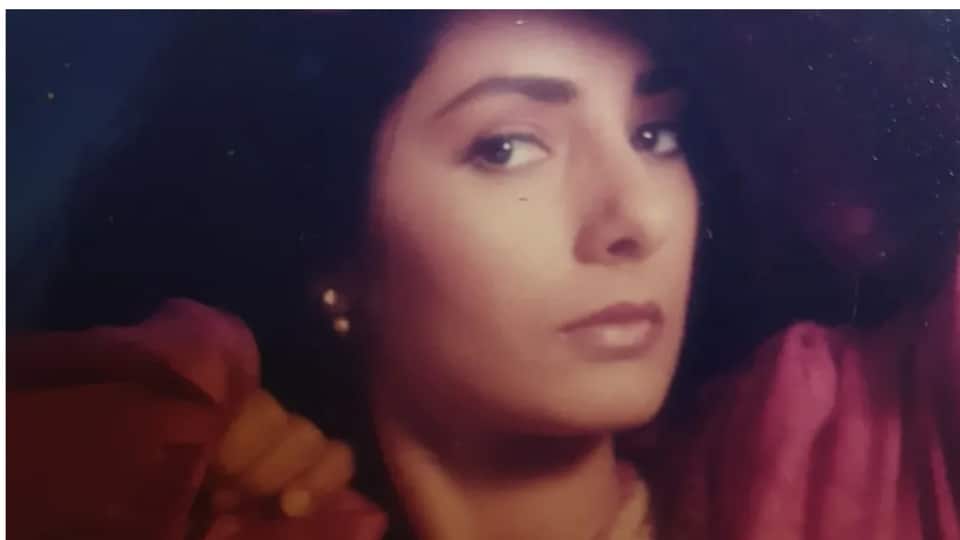
Kitu opens up about when women solved real problems on Indian TV
In a conversation with Oka Boka TV, Kitu said, “With Indian women characters, we don’t see any strong ones on TV like we had Rajni, Shanti, my Svetlana in Swabhiman… I don’t see them. We don’t see that central woman character, driving the whole serial,” Kitu said, pointing to a shift in how female protagonists are written today.
The 1980s and 90s were marked by powerful, central female characters who drove entire narratives. Rajni (1985) was directed by Basu Chatterjee and starred Priya Tendulkar in the titular role. Rajni was a fearless middle-class woman taking on corruption and inefficiency, episode by episode, becoming a cultural force in urban India.
Then came Udaan (1989), created and directed by Kavita Chaudhary, who also played the central character, Kalyani Singh. The show chronicled her journey from a small-town girl to an IPS officer, inspiring a generation of women to dream beyond domestic confines. In the mid-90s, Shanti (1994), directed by Adi Pocha, featured Mandira Bedi as Shanti, a journalist unravelling powerful family secrets. It was India’s first daily soap, yet it retained a strong, investigative female core.
And of course, Swabhiman (1995), directed by Mahesh Bhatt, where Kitu’s portrayal of Svetlana became iconic. Glamorous yet layered, Svetlana broke away from one-dimensional portrayals, embodying both vulnerability and strength.
TV in the 90s was about a society in transition
Kitu contextualised these stories within a larger social churn. She said that in those days, we were still finding our identity, and women were finding theirs as well. Questions around work, marriage, independence, and family roles were being negotiated in real time, and television mirrored that uncertainty.
This was also the era of richly diverse storytelling. Shows like Gul Gulshan Gulfaam, set in Kashmir, and Sahil, centred around a music composer’s life, reflected regional and artistic narratives. Meanwhile, Junoon (1994), produced by Mahesh Bhatt, featured a huge ensemble cast, including Tom Alter, Soni Razdan, Mangal Dhillon, Neena Gupta, Archana Puran Singh, Pankaj Berry, Rajesh Khattar and Puneet Issar, in a sprawling drama about rival business families. Kitu recalled, adding that both Junoon and Swabhiman ran successfully for nearly four years.
‘Television today is a different universe,’ says Kitu
Kitu did not hold back when asked about contemporary television. “It is a whole different universe today, and I don’t do it anymore because the quality is so bad. But everybody loves it. There is something in the Indian psyche which loves this very horrible situation between a saas and bahu… I detest it. Ab television ko kya ho gaya hai… ab sab dhandha hai (Don't know what happened, it is all business now). Somebody told me, bas aankh band kar ke kijiye, ye dhandha hai. (Somebody told me, close your eyes and do it, it is all business now)”
Kitu Gidwani’s acting journey through TV and films
Kitu’s own journey mirrors the evolution of Indian television. She chose TV at a time when it was still emerging as a serious storytelling platform. Her early breakthrough came with Trishna (1985), widely regarded as her first major television role, where she played a central character. Beyond television, Kitu has played varied roles in films like Priyanka Chopra's Fashion, Kiran Rao's Dhobi Ghaat, Alia Bhatt starrer Student of The Year, Aditya Roy Kapoor and Shraddha Kapoor's OK Jaanu, but according to her the highlights of her career came on the international stage with the film Dance of the Wind (1997), directed by Rajan Khosa. The film, centred on a young classical singer grappling with the loss of her voice and identity, earned worldwide critical acclaim. Kitu won the Best Actress award at the Festival des 3 Continents in Nantes, France, an achievement she counts among her proudest moments.
Kitu's latest project
In recent years, Kitu Gidwani has worked selectively across television, films and OTT, choosing roles that offer depth rather than visibility. Her most recent confirmed television appearance is Hum Rahe Na Rahe Hum (2023), which marked her return to TV after nearly two decades. In the show, she played a regal and tradition-bound Rani Sa, a queen-like matriarch rooted in old-world values, bringing authority and nuance to a character caught between legacy and changing times. She was last seen in 2025, Madam Driver, in which she played a woman working as a professional driver in a largely male-dominated space. It was a limited release.


Get more updates from Bollywood, Taylor Swift, Hollywood, Music and Web Series along with Latest Entertainment News at Hindustan Times.


