
 E-Paper



Decode. Detect. Defeat: United for Sickle Cell Elimination by 2047
Survivors, doctors, scientists, advocates and policymakers unite at Sickle Cell Summit 2025 to reshape India’s fight against this major health challenge.

 Prefer HTon Google


New Delhi: The National Sickle Cell Summit 2025 brought together a powerful cross-section of voices, including survivors, healthcare providers, scientists, patient advocacy groups, and senior policymakers, with one common goal: to eliminate Sickle Cell Disease (SCD) as a national public health concern by 2047. Organised by Hindustantimes.com and Health Shots, in collaboration with the National Alliance of Sickle Cell Organisations and Novo Nordisk India, the event closely aligned with the goals of the National Sickle Cell Anaemia Elimination Mission, launched under the leadership of Prime Minister Narendra Modi (https://sickle.nhm.gov.in/)
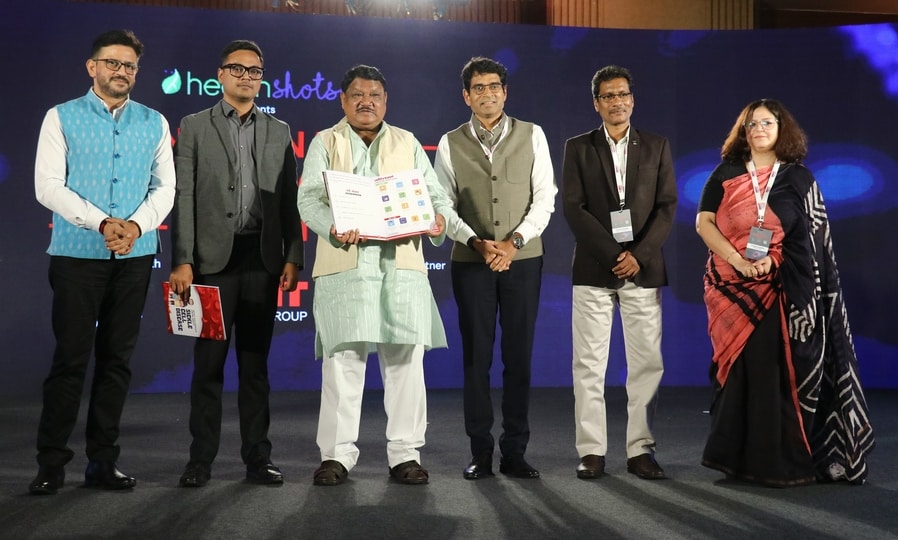
While the summit’s agenda focused on early detection, treatment access, and community engagement, what truly stood out were the voices of those who live with the condition every day. Their stories, layered with resilience and hope, became the emotional anchor around which discussions of policy and reform were built.
Tackling a Generational Crisis
Setting the tone for the summit, Smt. Anupriya Patel, Hon’ble Minister of State for Health and Family Welfare, acknowledged the scale and depth of the challenge.
“Sickle Cell Disease is not just a clinical burden; it's a social, economic, and generational burden,” she said.
Her keynote traced the progress of the National Elimination Mission since its 2023 launch. By 2025, over 5.8 crore individuals had been screened, 2.54 crore had received status cards, and more than two lakh individuals were confirmed with SCD. She noted that the programme was not only about screening but also about providing access to care, counselling, and de-stigmatising the disease.
This context helped ground discussions for the rest of the day, where each voice was built on the urgency she underscored.
https://sickle.nhm.gov.in/home/guest_dashboard - last accessed on 23 July 2025
When Lived Experience Leads the Conversation
The importance of patient advocacy was brought to life in the panel “From Pain to Possibility”, moderated by Vartika Tolani of Live Hindustan. It was here that Mr. Gautam Dongre, General Secretary of NASCO, shared his journey as a parent of two children with SCD.
“I have two children with Sickle Cell Disease. Our financial and social life collapsed. Doctors gave up. But we refused to,” he said.
His experiences led to the creation of NASCO, a patient-led network working to influence policy through lived experience. Mr. Dongre highlighted that access to Hydroxyurea, a key drug in SCD management, must be made available even at the most remote sub-centres. He also challenged the misconception that SCD only affects tribal groups, clarifying that while the prevalence may be higher in tribal groups, it affects non-tribals as well.
Additionally, Dongre raised concerns about the gendered stigma surrounding the disease, particularly the blame placed on women in families where children are diagnosed. He stressed the need for widespread genetic counselling and awareness campaigns that reach into every social segment.
Press Note Details: Press Information Bureau – last accessed on 23 July 2025
Shaping Systems Around People
Public health leadership was another strong theme throughout the day. Mr. Vivek Virendra Singh, Chief, Health (a.i.), UNICEF India, spoke about the importance of redesigning systems to support people, not merely diagnose them.
“You either live with the disease or suffer from it. Our job is to make sure systems help people live,” he said.
He proposed a multi-ministerial approach involving Health, Tribal Affairs, Women and Child Development, and Education, to ensure that screening is followed by structured care pathways. Singh also highlighted the need for culturally sensitive messaging and the integration of survivor voices in the design of public health communication.
He emphasised that chronic care for SCD should be normalised the same way it is for conditions like diabetes, with frontline workers empowered and trained to deliver compassionate care.
Voices That Moved the Room
Survivor testimonies provided some of the most impactful moments of the summit. Mr. Lalit Kishor Pargi, a Sickle Cell Warrior from Rajasthan, shared his late diagnosis at the age of 16 and how hospitalisation in 2021 led him to take up awareness work in tribal communities.
“I was diagnosed at 16, after years of pain and hospital visits. But from my hospital bed in 2021, I decided no one should suffer silently like I did,” he said.
In the same panel, Ms. Swati Panika, a survivor from Madhya Pradesh, highlighted the daily obstacles faced by those living with SCD, from navigating education with frequent absences to dealing with stigma and lack of workplace support.
“Managing Sickle Cell with school and hospital visits was exhausting. But I chose to be a warrior, not a victim,” she said.
Her advocacy underscored the need for job security, flexible attendance policies in schools, and wider access to genetic counselling.
Together, their stories grounded the summit in lived reality, reminding every stakeholder that policy must begin with people.
Bridging Policy and Implementation
State-level leaders brought attention to what implementation looks like on the ground. In the panel “From Mission to Movement”, moderated by Abhishek Singh, health officials from Jharkhand, Rajasthan, and Maharashtra described how mobile vans and community-level health camps are being used for large-scale screening.
The Screening and Early Detection (SED) portal, a digital tool for tracking screenings and follow-ups, was recognised as a critical link between data collection and ongoing care. Chhattisgarh was acknowledged for leading in screening coverage. At the same time, Odisha emerged as the state with the highest number of diagnosed cases — a statistic that reflects both proactive engagement and the deeper prevalence of the condition.
These case studies demonstrated that the national mission is no longer confined to policy documents; it is being adapted and implemented in villages, towns, and health sub-centres.
Aligning Innovation with Inclusion
A dedicated panel on “Innovation in Action” brought together researchers and public health experts focused on making medical advances more inclusive. In a fireside chat, Mr. Vikrant Shrotriya, Managing Director of Novo Nordisk India, discussed the private sector’s role in supporting sustainable change.
“Innovation must be grounded in inclusion. We need to scale what works — not in labs, but in lives,” he said.
He emphasized that in conditions like Sickle Cell Disease (SCD), trust is as critical as treatment.
“Our strategy is simple: listen first, then act. Whether it’s through wellness hubs, frontline training, or partnerships with state systems, our goal is to co-create care with communities.”
Highlighting Novo Nordisk’s latest pipeline breakthroughs, Mr. Shrotriya also stressed that innovation must go beyond symptom management:
“The goal is not just to manage SCD, but to truly transform outcomes. Families living with this disease have waited long enough for meaningful solutions.”
On the research front, scientists such as Dr. Manisha Madkaikar, Dr. Giriraj Chandak, and Prof. Soumendra Mohan Patnaik called for more genomic studies tailored to Indian populations, especially tribal communities. Their collective appeal was to design clinical interventions that are socially accepted, economically viable, and linguistically accessible.
This shift—from lab-centred innovation to patient-centred delivery—emerged as one of the summit’s most powerful thematic takeaways.
Reframing Health as Justice
Bringing a policy perspective grounded in social justice, Shri Jual Oram, Hon’ble Minister of Tribal Affairs, made an impassioned case for aligning health delivery with tribal empowerment.
“For tribal India, this mission is not just medical — it’s justice,” he said.
Oram stressed the importance of tribal leadership in eliminating stigma and ensuring that diagnosis is accompanied by dignity. His comments reframed the Sickle Cell Mission as not merely a medical programme, but a vehicle for equity and rights — one that must recognise cultural nuances, challenge misinformation, and place affected communities at the centre of the conversation.
This call for equity echoed across the summit and became a unifying thread from science to policy.
Conclusion: Beyond the Summit
In his closing remarks, LiveMint Deputy Editor Abhishek Singh summed it up simply:
“We didn’t just listen to experts. We heard from survivors.”
The National Sickle Cell Summit 2025 was more than an event; it was a call to act. Real change begins when lived experiences shape every decision, from rural clinics to national policy.
India’s journey to eliminate Sickle Cell Disease by 2047 must be built not just on data, but on dignity, dialogue, and shared responsibility, ensuring no one is left behind.
Note to the Reader: This article has been produced on behalf of the brand by HT Brand Studio and does not have journalistic/editorial involvement of Hindustan Times.
Promomats number: IN25BRO00011


