
 E-Paper



Pragati: AI for Impact- enabling inclusion at the centre of innovation
This initiative highlights how inclusive AI by I-Stem, RightWalk Foundation, and NavGurukul helps India’s youth learn, work, and grow.

 Prefer HTon Google


It is rightly said that a nation’s future depends on its youth. India, therefore, stands at a defining moment right now. With nearly 65% of the population under the age of 35 and a median age of 28, India has one of the largest working-age cohorts, and will add 70-80 lakh youth to its labour workforce over the next decade. This demographic dividend is seen as a good economic opportunity for India, but also a limited one. According to the United Nations Population Fund and Economic Survey, qIndia’s demographic dividend began in 2005–06 and will peak around 2041 before narrowing by 2055–56 as the share of the elderly rises. Its potential will be realised only if education, skilling, and inclusion advance together to empower the youth.
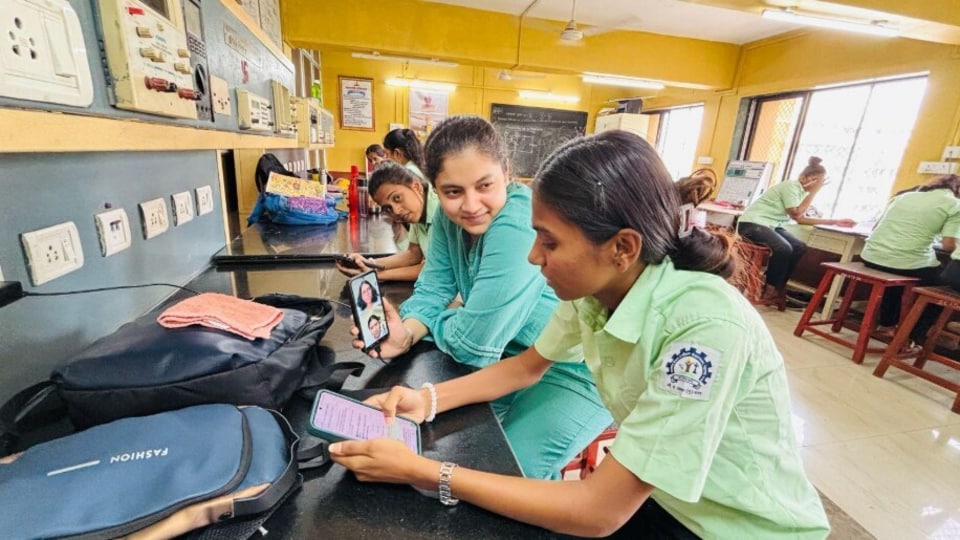
The National Push
Over the past few years, India has made progress through initiatives such as Digital India, Skill India, Startup India, and the Pradhan Mantri Kaushal Vikas Yojana. These efforts have expanded access to skilling and employment, with the trained workforce rising from 8 percent to 27 percent between 2017–18 and 2022–23 while unemployment has declined. Together, they underline a key point: when opportunities are visible and accessible, people respond.
The Remaining Gap and the Role of AI
Yet, this progress has not been uniform. Large sections — women, rural youth, and persons with disabilities — remain on the margins because existing systems are fragmented and costly to access. For instance, while the female labor force participation in India increased to 41.7% in 2023-24, more than half of working-age women are still out of the workforce. Similarly, only around 23.8% of persons with disabilities in India are employed.
The next phase of India’s growth must focus on inclusion: ensuring that every individual can learn, work, and participate meaningfully. Artificial Intelligence can help by reducing the cost of learning, expanding reach, and creating tools that make participation possible for all.
From Policy to Practice
While policy measures have created the framework, the real test lies in how inclusion translates on the ground — where learners, workers, and communities engage with technology in their everyday lives. Across India, a new wave of entrepreneurs are showing what inclusive AI can look like in practice.
This ethos is at the centre of Pragati: AI for Impact, an initiative by Meta and The/Nudge Institute that supports organisations such as I-Stem, NavGurukul, and RightWalk Foundation - each using AI to enhance access and opportunity in their own way.
India’s innovation ecosystem:
India’s innovation ecosystem is demonstrating how technology, when designed for access, can help bridge gaps. From improving accessibility for persons with disabilities to simplifying youth apprenticeships and making advanced skilling affordable, these organisations show how AI can reduce barriers where intent already exists.
I-Stem: Advancing Disability Inclusion
I-Stem is working to make the digital world more accessible for persons with disabilities — a group that numbers over 26 million in India and remains among the least represented in the workforce. The challenge is not ability, but access: websites, mobile apps, learning platforms, and workplaces often remain inaccessible.
I-Stem’s AI-enabled platform supports document conversion, career discovery, and accessible digital interaction tools that can help users navigate online education and work environments. By enabling persons with disabilities to participate more fully in education and employment, I-Stem demonstrates how accessibility and productivity can align.
RightWalk Foundation: Improving Youth Access to Opportunity
RightWalk Foundation focuses on making government and skilling systems more inclusive and effective. Its AI-driven WhatsApp bot, Chatur AI, helps young people from disadvantaged backgrounds register for apprenticeships, access information in multiple languages, and receive guidance through each step of the process. By integrating feedback and support mechanisms, RightWalk is simplifying complex procedures into user-friendly pathways, ensuring that skilling programmes reach the youth they are meant to serve.
NavGurukul: Making Advanced Skilling Affordable
NavGurukul creates pathways to technology careers for youth from underserved communities. Through a mix of residential and online programmes, it provides free training in technology and software development. NavGurukul’s newer initiatives include AI-enabled learning tools that enhance tutoring support and track student progress, helping first-generation learners build confidence and employable skills. By lowering the cost and barriers of quality skilling, NavGurukul helps bring the vision of NEP 2020 - equitable access to high-quality education - closer to reality.
Taken together, these organisations share a common understanding: AI can expand access where human intent already exists. What I-Stem, RightWalk, and NavGurukul illustrate is how inclusive technology can make systems simpler, more affordable, and more responsive to those who need them most.
The Future Paved Through Learning
India’s digital journey shows what is possible when innovation begins with access. The success of platforms like UPI, Aadhaar, and CoWIN was not just about scale — it was about usability, trust, and adaptation. AI can follow a similar approach by embedding inclusion as a foundational principle.
The demographic dividend presents potential, but to turn it into growth, the focus must remain on equipping every individual — whether a young woman in a rural school, a person with a disability navigating digital systems, or a youth seeking their first apprenticeship — with the tools to learn, work, and grow.
For policymakers, funders, and practitioners, the task ahead is to invest in models that place inclusion at the heart of innovation. Because the question is no longer whether AI will change India’s future of work — it already is — but whether it will do so in a way that ensures progress is shared by all.
The organisations I-Stem, Navgurukul and RightWalk Foundation are part of the Pragati: AI for Impact initiative by Meta and The/Nudge Institute. For more information, visit website.
Note to the Reader: This article is part of Hindustan Times' promotional consumer connect initiative and is independently created by the brand. Hindustan Times assumes no editorial responsibility for the content.


