
 E-Paper



Uttarakhand holds first cabinet meeting in Champawat border town Banbasa
The Uttarakhand government has held its first-ever cabinet meeting in Banbasa, a border town, signaling a commitment to regional development.

 Prefer HTon Google


Uttarakhand held a cabinet meeting in Banbasa, a town close to the India-Nepal international border in Champawat district, as the state government seeks to take its decision-making process beyond Dehradun and address development priorities in remote and border areas.
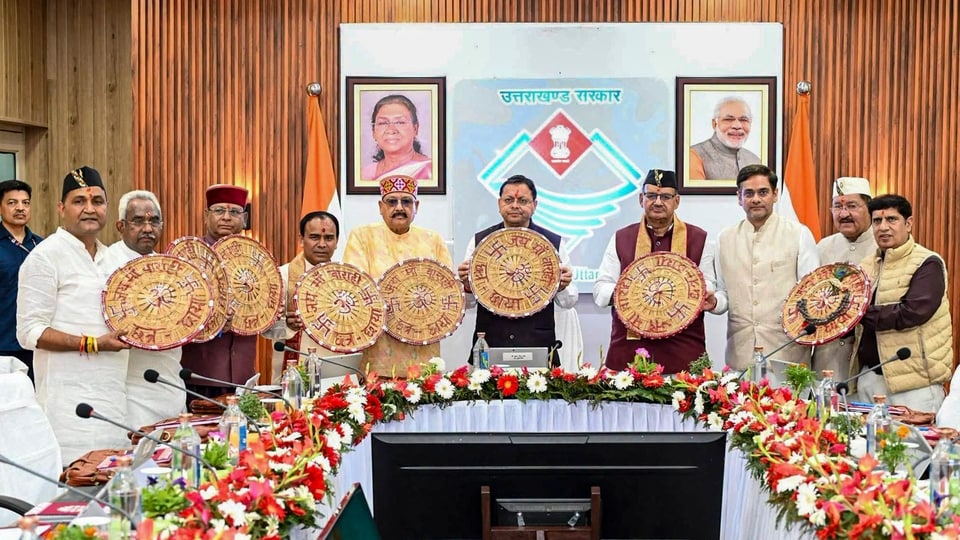
The meeting, chaired by Chief Minister Pushkar Singh Dhami at the NHPC complex in Banbasa, was the first cabinet meeting to be held in Champawat district. Dhami said cabinet meetings would no longer remain confined to Dehradun and would also be organised in other districts of the state.
The government said the move is intended to provide greater scope for local issues, development requirements and regional priorities to be placed directly before the state cabinet. It also seeks to give policymakers greater exposure to the conditions and administrative requirements of different parts of Uttarakhand.
The initiative comes as the state continues to focus on infrastructure, connectivity, employment and tourism in its border and mountainous regions. Given Uttarakhand’s geography, areas along the India-Nepal and India-China borders have significance for both regional development and connectivity.
Border areas remain a policy focus
Dhami said border areas should be viewed not only as geographical boundaries but also as areas linked to security, culture and economic development. He said the government’s focus would include strengthening basic infrastructure, employment opportunities, tourism and connectivity in these areas.
Holding the cabinet meeting in Banbasa allows issues concerning Champawat and surrounding border areas to be brought directly into the state government’s decision-making framework. The government said meetings held in different districts would help officials and ministers understand local conditions and identify development requirements more directly.
Infrastructure development in Uttarakhand’s remote areas is influenced by difficult terrain and dispersed settlements. Road connectivity, public services, digital connectivity and tourism infrastructure are therefore among the areas that can have a direct bearing on local economic activity and access to government services.
For border communities, improved connectivity and employment opportunities are also linked to the ability of residents to access markets, education, healthcare and other public services. The government has indicated that these requirements will form part of its broader approach to balanced regional development.
Cabinet meetings to move beyond Dehradun
Dhami said the government’s objective was to bring governance closer to residents by taking cabinet meetings to different parts of the state. According to him, holding meetings outside the capital would provide an opportunity to understand local expectations and development requirements while facilitating decisions based on regional conditions.
Banbasa’s location also gives the initiative a specific border-area context. Situated near the India-Nepal border, the town is connected to wider issues involving border infrastructure, tourism and the local economy.
The move represents a shift in the location of the state’s highest-level policy discussions, although its effectiveness will depend on whether issues identified during such meetings translate into specific policy decisions, projects and implementation measures.
The Uttarakhand government has said balanced development across the state remains a priority, from border villages and mountainous districts to the plains. Further cabinet meetings in other districts are expected to extend this approach and bring local development priorities into the state’s formal decision-making process.


