
 E-Paper



Why Faster Hot Water Is the New Everyday Necessity, and How Modern Tech Makes It Possible
Indian homes now expect instant hot water as everyday efficiency driven by modern lifestyles, faster heating technology, and more.

 Prefer HTon Google


Research-Backed Choices
Every product we recommend is chosen through a combination of Primary Research and Secondary Research.
Comfort in Indian homes was once measured through visible upgrades. Larger televisions, modular kitchens and imported fittings were seen as markers of progress. Over time, however, the idea of comfort has evolved. Today, it is increasingly defined by how smoothly daily routines run. It shows up in small efficiencies that save time, reduce friction and allow households to function better. One such shift is happening quietly in bathrooms across urban and semi-urban India, where faster access to hot water is no longer viewed as an added benefit but as a basic expectation.
According to urban housing data, the average Indian household spends between 15 and 25 minutes every morning navigating bathroom schedules during winter months. In homes with a single bathroom, that waiting time often stretches further. What was once accepted as a normal inconvenience is now being questioned more openly. Consumers are beginning to ask why a basic utility should slow down the start of the day, especially when the rest of the home has become more efficient.
This change in attitude is closely linked to evolving lifestyles. Work-from-home arrangements, earlier school hours, fitness routines and a stronger focus on personal hygiene have all contributed to higher hot water usage. Showers last longer, handwashing is more frequent, and warm water is increasingly used for grooming and hygiene throughout the year. As usage increases, expectations around speed, consistency and reliability rise alongside it.
Why speed now matters more than capacity
For a long time, tank size dominated buying decisions in the storage water heater category. A larger tank was seen as the safest choice, particularly for families. That thinking is now shifting. Consumers are realising that faster heating and better heat retention often matter more than sheer capacity.
The logic is straightforward. A 15-litre tank that heats quickly and retains temperature efficiently can deliver more usable hot water than a larger tank with slower recovery. Industry estimates suggest that inefficient circulation in conventional water heaters can reduce usable hot water output by as much as 15 to 20 percent, largely due to premature mixing of hot and cold water inside the tank.
Newer internal designs address this issue directly. Technologies that regulate water movement within the tank reduce temperature loss and improve recovery time between consecutive uses. The practical outcome is that families can complete their morning routines faster without increasing electricity consumption or opting for bulkier appliances that take up more space.
Speed, in this context, is less about indulgence and more about efficiency. When hot water is available quickly and predictably, it removes one of the most common pressure points in shared household routines.
The cost of waiting, measured in time and energy
Waiting for water to heat is not only inconvenient, it also has a measurable cost. Many households compensate for slow heating by switching on their water heaters well in advance. Over time, this habit leads to higher electricity usage. Energy analysts estimate that inefficient heating practices can add between 10 and 15 percent to a household’s monthly power consumption during peak winter months.
Faster heating systems help reduce this wastage. When heaters warm water quickly and maintain temperature more effectively, users are less likely to overrun heating cycles. This becomes increasingly relevant as electricity tariffs rise and consumers pay closer attention to energy efficiency ratings.
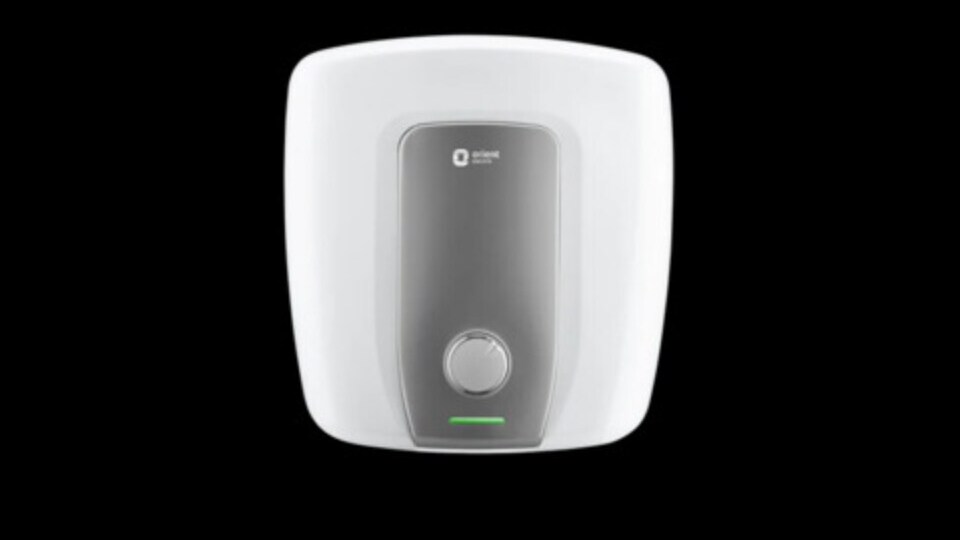
It is in this context that products like the Orient Aquator Neo enter the discussion. Positioned in the mid to premium segment, the Aquator Neo uses Whirlflow technology to prevent the direct mixing of hot and cold water inside the tank. This results in up to 20 percent more hot water output from the same capacity, directly addressing the inefficiencies associated with older heater designs.
By improving internal circulation rather than relying solely on higher wattage, such systems align more closely with the way modern households actually use hot water.
Safety moves from feature to expectation
As bathrooms become more compact and residential buildings grow taller, safety considerations around water heaters have taken on greater importance. Voltage fluctuations, high water pressure and dry heating scenarios are far more common today than they were a decade ago.
Industry data suggests that a large proportion of water heater failures are linked not to manufacturing defects, but to irregular operating conditions. This has led manufacturers to rethink safety as a layered system rather than a single protective switch.
The Aquator Neo reflects this shift with a five level safety shield designed to manage thermal, electrical and pressure-related risks. While these safety measures rarely attract attention in everyday conversations, they play a significant role in building long-term trust. For many buyers, peace of mind now ranks alongside performance when choosing an appliance.
Durability becomes part of everyday reliability
Another reason faster hot water has gained importance is its connection to durability. Consumers are moving away from appliances that require frequent servicing or early replacement. Hard water affects large parts of the country, and scale build-up remains one of the most common causes of performance decline in water heaters.
The Aquator Neo addresses this through Duron technology and a copper heating element, materials chosen for their resistance to corrosion and efficient heat transfer. The six-year warranty on the heating element and seven-year warranty on the tank reflect a growing preference for long-term assurance rather than short-term solutions.
Ultimately, the conversation around faster hot water is no longer about luxury. It is about reliability, efficiency and the expectation that essential appliances should work seamlessly in the background. When hot water arrives on time, every day, it supports routines rather than disrupting them. That shift, from waiting to working smoothly, is what defines comfort in today’s Indian homes.
Note to readers: This article is part of HT's paid consumer connect initiative and is independently created by the brand. HT assumes no editorial responsibility for the content, including its accuracy, completeness, or any errors or omissions. Readers are advised to verify all information independently.
Want to get your story featured as above? click here!


