
 E-Paper



Women’s leadership key to effective governance, says MP CM Mohan Yadav at Nari Shakti Vandan Sammelan
CM highlights role of women in decision-making, honours board exam toppers at Bhopal event.

 Prefer HTon Google


Madhya Pradesh Chief Minister Mohan Yadav on Tuesday said that governance becomes more effective when women take charge of decision-making, underlining the need for greater participation of women in public life.
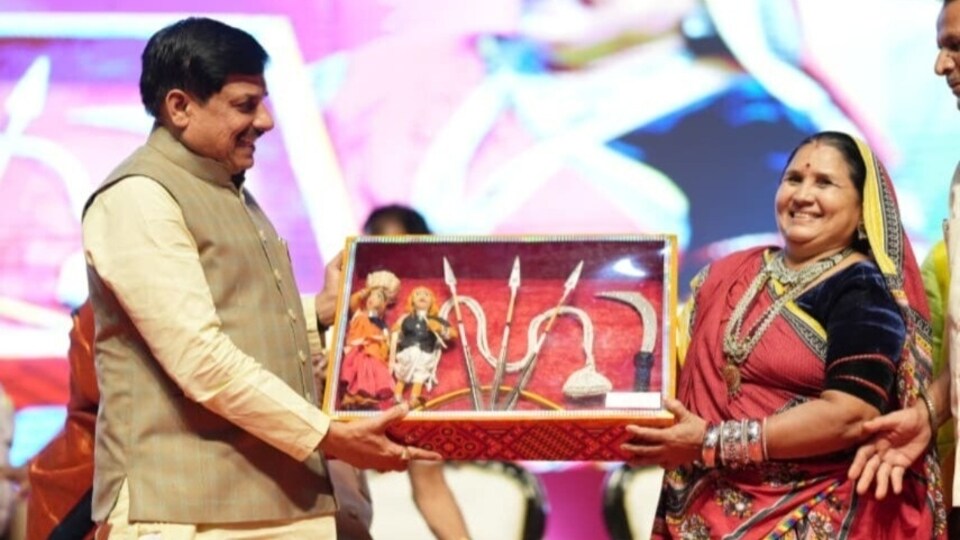
Addressing the ‘Nari Shakti Vandan Sammelan’ held at Ravindra Bhawan in Bhopal, the Chief Minister said the country is witnessing a new phase of women-led development under the leadership of Prime Minister Narendra Modi. He added that the implementation of the Nari Shakti Vandan Act would further strengthen India’s democratic framework.
Yadav inaugurated the event and also felicitated meritorious students, including higher secondary joint toppers Khushi Rai and Chandni Vishwakarma from Bhopal, and Class 10 topper Pratibha Singh Solanki from Panna district.
Highlighting India’s progress, the Chief Minister said several landmark decisions in recent years have strengthened the country socially and economically. He credited the Centre for initiatives aimed at improving women’s dignity, safety and participation in governance.
Referring to historical and cultural examples, Yadav said Madhya Pradesh has a rich legacy of women leaders such as Ahilyabai Holkar, whose governance model continues to inspire. He added that when women lead, governance outcomes often improve significantly.
He also noted that women are being given 50% reservation in urban local bodies in the state, and said the proposed 33% reservation in legislative bodies would mark a major shift in political representation.
Calling April 16 a “significant day for women empowerment”, the Chief Minister said it would symbolically be celebrated like “Diwali and Holi together”, reflecting a new beginning for women’s participation in governance.
Minister of State Krishna Gaur said the Sammelan represents a “thought movement” aimed at strengthening women’s empowerment through legislative and social change. She noted that the journey of women’s reservation has been long, with earlier attempts in 1996, 1999 and 2010, before gaining momentum in recent years.
Women and Child Development Minister Nirmala Bhuria said the Act would ensure 33% representation for women in Parliament and state assemblies, enabling stronger participation in policymaking.
Educationist Shobha Pethankar highlighted the role of women in shaping society, saying that women are central to family and social structures and play a critical role in nation-building.
The event witnessed participation from women across sectors, with speakers emphasising the need for education, representation and equal opportunities to ensure holistic development.


