E-Paper



85% Pictorial warnings on tobacco packs work: govt survey

 Prefer HTon Google


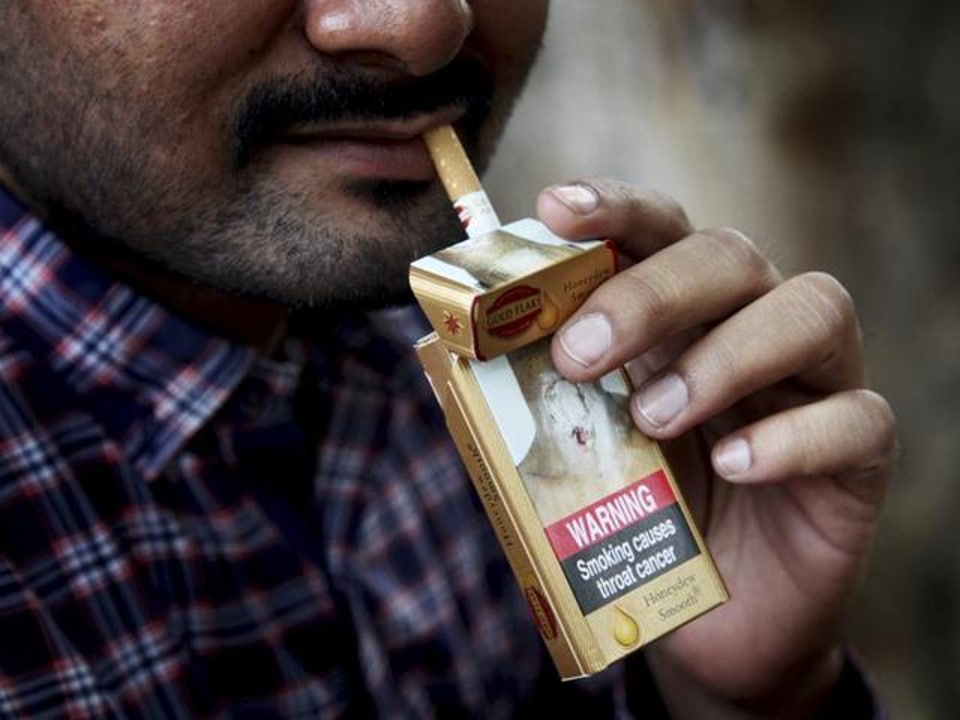
Close to 10 lakh poeple die in India each year due to tobacco-related illnesses, including various types of cancers.
The verdict is out on whether bigger graphic warnings on cigarette packets work or not. They do. In a government survey, 62% of cigarette smokers confessed to having thought of quitting smoking after looking at graphic warning labels.
From April 1, last year, government implemented 85% pictorial warnings on packets of tobacco products including cigarettes and bidis, amidst apprehensions from several quarters about whether the move will actually deter people from consuming tobacco products or not.
The second chapter of Global Adult Tobacco Survey (GATS) that Union health ministry released last week put all apprehensions to rest with a section on impact of large tobacco pack warnings showing 62% of cigarette smokers and 54% of bidi smokers thought of quitting because of warning label on the packets.
Also, 46% of smokeless tobacco users thought of quitting because of the warning label on smokeless tobacco products, which are encouraging figures.
Thanks to these images, there has been a change in perception, which is reason why 92% of adults surveyed believed smoking caused serious illness, and 96% said use of smokeless tobacco causes serious illness.
There is a growing demand for cessation centres as 55% of smokers and 50% of smokeless tobacco users were planning or thinking of quitting tobacco use.
“Health warnings on tobacco products are the most cost-effective tool for educating on the health risks of tobacco use,” said a senior specialist from the pulmonary department of All India Institute of Medical Sciences (AIIMS).
“In a country like India, where people use several languages and dialects, the pictorial warning transcends the language barrier.”
According to Package Health Warnings International Status Report that was released last year, India has moved to 3rd position out of 205 countries that has pictorial health warnings on tobacco packages. India’s earlier ranking was 136 in 2014 and 123 in 2012.
Awareness of ill-effects of tobacco use is also growing, with the percentage of adults who believed second-hand smoke causes serious illness among non-smokers having increased from 83% to 92%.
Percentage of adults who believed that use of smokeless tobacco causes serious illness has also increased from 89% to 96 percent.
GATS is a global standard for systematically monitoring adult tobacco use (smoking and smokeless) and tracking key tobacco control indicators that is representative of national scenario.
Tobacco: Facts and Figures
Prevalence of tobacco use in India (% of adults)
* Tobacco users: 28.6
*Smokers: 10.7
*Smokeless tobacco users: 21.4
*Adults using tobacco in any form: 26.7 crore
*Adult users in rural areas: 19.9 crore
*Adult users in urban areas: 6.8 crore
*Adults smoking tobacco: 10.0 crore
*Adults using smokeless tobacco: 19.9 crore
*Khaini is the most commonly used tobacco product: 10.4 crore adults
*Followed by bidi: 7.2 crore adults