
 E-Paper



SC flags concerns over functioning of Pharmacy Council, says regulatory uncertainty hurts students
A bench comprising CJ Surya Kant and Justices Joymalya Bagchi and V Mohana asked why an "obsolete" regime continued despite the Centre's proposed reforms.

 Prefer HTon Google


The Supreme Court on Monday expressed serious concerns over the functioning of the Pharmacy Council of India (PCI) and questioned the rationale behind granting year-to-year approvals to such colleges, saying that the existing regulatory framework was creating uncertainty for students.
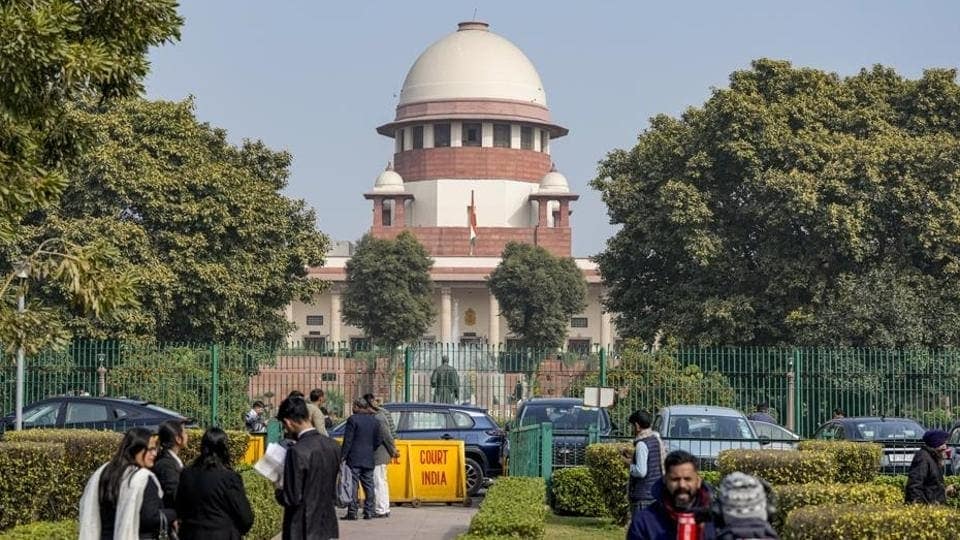
A bench comprising Chief Justice Surya Kant and Justices Joymalya Bagchi and V Mohana asked why an "obsolete" regime continued despite the Centre's proposed reforms.
Students continue protests in Ranchi over alleged JPSC, JSSC exam irregularities, demand CBI probe
The bench was hearing a plea filed by the PCI relating to pharmacy colleges.
Solicitor General Tushar Mehta appeared for the Centre.
During the hearing, the bench said that unpredictability in the approval process for pharmacy institutions was undesirable for students and suggested that extraneous considerations were adversely affecting the quality of pharmacy education.
Justice Bagchi questioned the rationale behind granting approvals on a year-to-year basis despite institutions possessing the required infrastructure.
Behind India’s protests is a crisis in the graduate-jobs market
"Sometimes the machines and equipment are also of a higher standard... You can do it for B. Pharma, M. Pharma or any other diploma which the college is offering. But you cannot say that the B.Pharma course will have a licence for one year and then again for the second year," Justice Bagchi said.
The solicitor general acknowledged that the present system was creating uncertainty for students.
"From the college's point of view, it becomes absolutely unpredictable for a student. Uncertainty is not desirable. But let me speak to them and come back to you. I have understood," Mehta told the bench.
UP: Principal, 10 others held for allegedly using 'solvers' in ITI exam
The law officer informed the bench that the Centre was working on a new legislative framework to replace the existing regime.
"The Bill is pending. I cannot make a suo motu statement. It might come in this session as well.
"It is on similar lines as the National Medical Commission. It would be the National Pharmacy Commission," he said.
Responding to the submission, the CJI said the court's primary concern was the regulatory framework governing pharmacy education.
"Our concern is only that much. Under the new statute, Parliament may prescribe anything. We do not care.
"If they do not want to run colleges, let them close them. We are not concerned about that. If you can bring a new avatar, a new legislative framework, that is fine," the CJI said.
The law officer said the bill may be presented in Parliament.
"But the elected people have their own subjectivity. I put it as modestly and as mildly as possible because this situation in the present form is creating a lot of problems," he said.
The bench said that it would defer further consideration of the matter in view of the ongoing Parliament session.
"We can take it up after two weeks. Parliament is in session. Or we can take it after August 20. Let us see," the CJI said.


