
 E-Paper



Meet the doctor who treated Gorakhpur’s first Japanese Encephalitis case in 1978


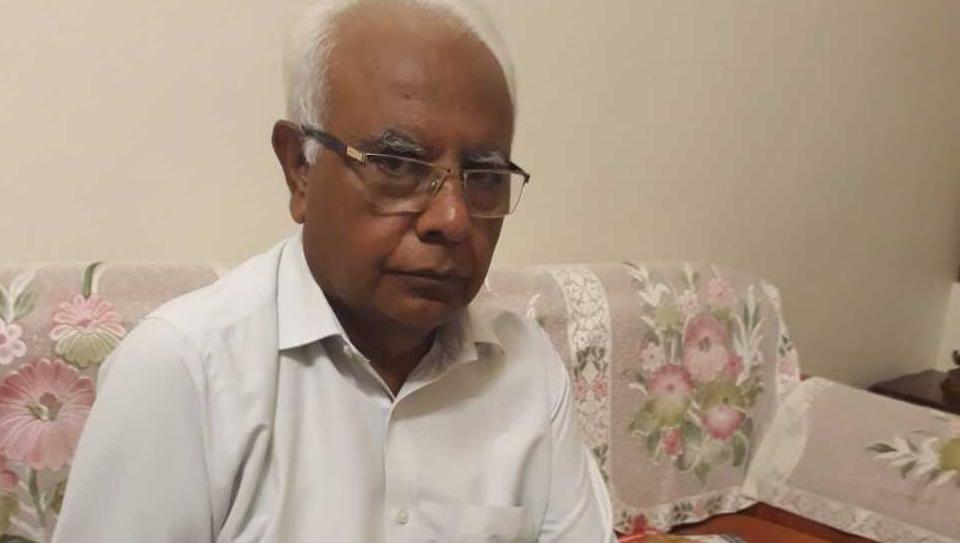
Dr RN Singh was a 28-year-old senior resident in the department of paediatrics at Gorakhpur’s Baba Raghav Das (BRD) Medical College when the hospital got its first case of what was later diagnosed as Japanese Encephalitis.
Dr RN Singh was a 28-year-old senior resident in the department of paediatrics at Gorakhpur’s Baba Raghav Das (BRD) Medical College when the hospital got its first case of what was later diagnosed as Japanese Encephalitis.
That was in 1978. Since then, the mosquito-borne viral infection has caused annual outbreaks in the region, killing hundreds of children each year.
“An 8-year-old boy was brought to the emergency early in the morning with a high fever that was about 104 degrees Fahrenheit, convulsions, and incoherent behaviour. He went into a coma six to eight hours later and died the next day. No one knew of what,” recalls Dr Singh. “Soon, the hospital was getting around 50 cases a year.”
Japanese encephalitis and the deadlier Acute Encephalitis Syndrome (AES) became the national buzzwords after 30 children died between August 9 and 11 in BRD Medical College, Gorakhpur’s largest government hospital, amid allegations that a private company contracted to supply oxygen cylinders cut supply over a payment dispute.
The state’s Bharatiya Janata Party government admitted the shortage but dismissed allegations that an interruption in oxygen supplementation, which is crucial for critical care patients, caused the deaths. It said the vector-borne disease and other complications were responsible. However, opposition parties blamed government apathy for the tragedy.
The first JE case was reported in the North Arcot district of Tamil Nadu in 1955 and the infection stayed confined to southern India till 1973 when it was recorded from Burdwan and Bankura districts of West Bengal. In 1978, suspected outbreaks of JE were reported from 18 states and 24 states and Union Territories.
“Gorakhpur did not have the testing facilities needed and a diagnosis was made on the basis of cerebrospinal fluid (CSF) analysis. When cases started growing, samples were sent to the National Institute of Virology in Pune, which confirmed it as encephalitis caused by Japanese B virus,” the 68-year-old doctor said.
There is no cure for encephalitis and symptoms are treated to manage the disease. The death rate is a high 30%, which means 30 of the 100 people who develop the symptoms die of it. Neurological disabilities in JE survivors often affect limb movements, mental ability, hearing and speech.
Records at BRD’s physical medicine and rehabilitation (PMR) show it attended to 7525 cases in 2016-17 and 5750 in 2015-16. This year, the figure has already crossed the 4000-mark even as the peak season has set in for JE and AES.
After completing his residency, Dr Singh moved out of BRD and started a private practice in Gorakhpur and works to raise awareness about hygiene and early signs of encephalitis in the seven districts of eastern Uttar Pradesh— Gorakhpur, Maharajganj, Kushinagar, Basti, Deoria, Sant Kabir Nagar, and Sidharth Nagar. Of these, the worst affected are Gorakhpur, Kushinagar, and Maharajganj.
After Gorakhpur’s worst outbreak in 2005, India began vaccinating all children against JE from the next year. Vaccination, however, did not bring down the numbers, so India sought help from the Centers for Disease Control and Prevention (CDC) in the United States.
“NIV established a branch in Gorakhpur in 2007 and after extensive testing, concluded in 2007 that non-JE cases were also in circulation,” said Dr Singh.
Doctors began using the blanket term AES in 2008 for non-JE cases caused by viruses, bacteria, fungus, parasites, spirochetes, chemical, and toxins.
Like much of eastern UP, Gorakhpur is a JE-prone area and chief minister Yogi Adityanath wants a research centre in the area. But experts believe previous studies were good enough to reduce the number of deaths.
“Until we clearly identify the cause for these cases in Gorakhpur, outbreaks cannot be stopped,” said Dr Singh.
Catch your daily dose of Fashion, Taylor Swift, Health, Festivals, Travel, Relationship, Recipe and all the other Latest Lifestyle News on Hindustan Times Website and APPs.


