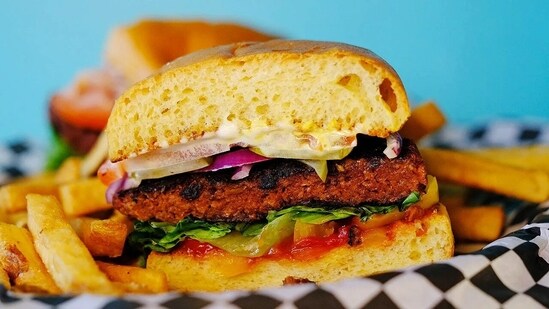
The plant-based burger once had investors licking their lips. In 2019 Beyond Meat, a maker of beef-free patties, went public at a market value of almost $4bn. The following year sales of plant-based meat in America surged by 45%, to $1.4bn. Countless startups joined the feast. Even some meat companies had a nibble at the business.
As meat sales surge, plant-based alternatives struggle with cost, consumer scepticism and slowing growth (Economist)
More recently, however, investors have lost their appetite. Sales of plant-based meats are in decline. Beyond is now worth less than $400m. Its revenue shrank year on year in each of the first three quarters of 2025, and probably again in the final three months. The share of American adults who say they regularly eat the stuff has stayed in the single digits, according to polling by YouGov for The Economist. Meanwhile, meat sales are booming. What happened?
Many in the industry argue that it is undergoing a correction, not a collapse. But they acknowledge several problems. One is price. Even as the cost of meat has soared, a result of shrinking herds and more expensive animal feed, it remains cheaper than plant-based imitations, thanks in part to farming subsidies. A pound of beef mince from Walmart, America’s biggest grocer, sells for $7.43; an alternative from Impossible Foods, a rival to Beyond, costs $9.04.
Another is taste. Some plant-based meat is still “awful”, admits Mark Cuddigan, the boss of This, a British meat-free company. One bad experience can put a curious consumer off for good.
Fake meat has also been embroiled in America’s culture war. Robert F. Kennedy junior, the health secretary, champions slogans such as “Eat Real Steak”. Interest in “whole” food is on the rise. Proponents of animal meat argue that the fake stuff is full of fat, salt and ultra-processed junk. Impossible acknowledges that some of its products contain more sodium than raw, unseasoned meat. Such a comparison “isn’t set on a level playing field”, it argues, as few people eat meat that way.
The chewier problem for plant-based-meat companies is that their products are classified as ultra-processed foods, a result of their long ingredient lists and production processes. Health-conscious consumers are now wrongly equating plant-based burgers with potato crisps and Oreos, argues David Welch of Synthesis Capital, which invests in food tech.
Enthusiasm for high-protein and high-fibre diets might prove friendlier to plant-based-meat companies. Peter McGuinness, Impossible’s boss, suggests that many of its products contain more of each than is found in animals. Both Impossible and Beyond now display their products’ protein content prominently on their packaging. Impossible recently partnered with a maker of protein-dense bread and pasta, while Beyond (which last year dropped the “Meat” from its name) has expanded into beverages, launching a flavoured sparkling water touting 20g of protein per can.
Some companies are also experimenting with half-meat, half-plant burgers. Sceptics may ask who would want to eat such a product, but Tim Dale of Food System Innovations, a research group, points out that potential customers include parents looking to sneak vegetables onto their children’s plates.
Investors may now be warier of plant-based meat, but some are placing bets instead on the cultivated variety, grown in a lab from the cells of animals. Unhelpfully, a few American states have passed or proposed bans on the production and sale of cultivated meat, but insiders point to progress at the federal level. In Britain it has received clearance as pet food.
Cultivated meat faces the familiar hurdle of cost. But Nick Cooney of Lever, a venture-capital firm, reckons that whereas plant-based meat has been dogged by the perception “that it’s a ‘fake’ thing”, cultivated products could find their way to supermarkets’ meat aisles. Uma Valeti, boss of Upside Foods, a cultivated-meat firm, sees the next decade as the time to prove that his industry can scale up, rather than rush to have “everything available all at once”. Move too fast, and the alternative-meat business may again end up in a stew.
To track the trends shaping commerce, industry and technology, sign up to “The Bottom Line”, our weekly subscriber-only newsletter on global business.
Are you a cricket buff? Participate in the HT Cricket Quiz daily and stand a chance to win an iPhone 15 & Boat Smartwatch. Click here to participate now.

 E-Paper