
 E-Paper



How connected e-cycles are redefining affordable and sustainable urban mobility in India
This article is authored by Tushar Choudhary, founder & CEO of Motovolt Mobility.

 Prefer HTon Google


In Bengaluru, it takes approximately 30 minutes and 10 seconds to travel 10 kilometres, according to the 2024 Tom Tom Traffic Index. Other Indian cities like Kolkata and Pune also feature in the report of the world’s slowest cities for vehicular traffic. We've accepted this as normal.
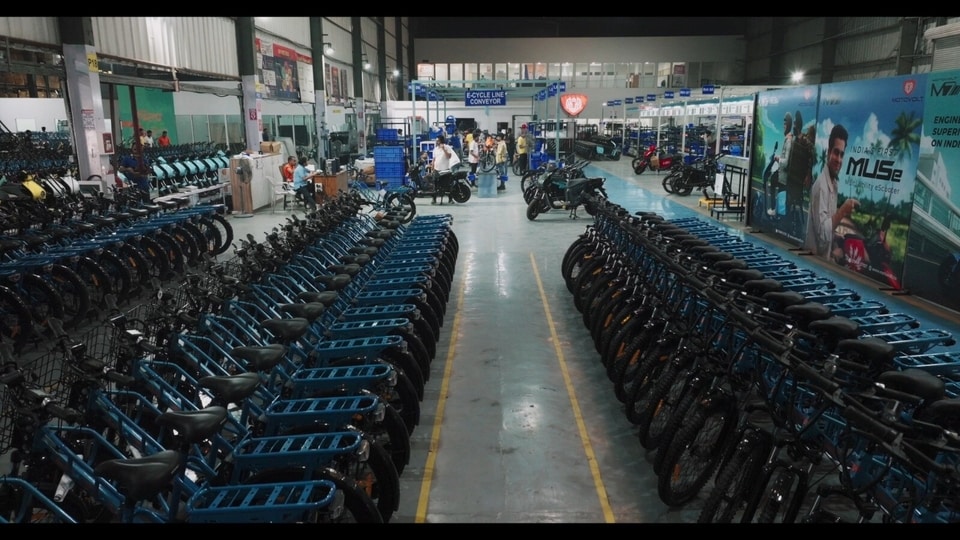
But there's a bigger cost nobody talks about. The average urban commuter spends thousands every year just on fuel and maintenance. That's real money leaving your pocket every month.
Smart e-cycles can fix this. Here's how.
When we talk about e-cycles, the conversation inevitably drifts toward sustainability and carbon footprints. Important? Absolutely. But here's what actually drives adoption: Cold, hard mathematics.
Consider the real cost of urban mobility. A typical ICE two-wheeler costs around ₹200 to travel 100 kilometers. However, for an electric cycle, that is just ₹10-20 for the same distance. Over a year of commuting 10,000 kilometers, it amounts to roughly ₹1,000-2,000 in charging costs versus ₹20,000 for petrol—a substantial difference that goes straight back into your pocket.
Add maintenance into the equation, and the gap widens further. Electric cycles generally require less maintenance than fuel-powered alternatives. With fewer moving parts and no need for oil changes, the reduced maintenance burden is one of the key economic advantages driving EV adoption.
This is why customers who calculate their total cost of ownership become our most passionate advocates. The running cost savings alone make a compelling case for switching to electric.
Here's where smart technology transforms e-cycles from simple transport options into intelligent mobility solutions. The difference between a basic e-cycle and a connected one isn't just features—it's fundamentally about eliminating the friction points that prevent mainstream adoption.
- Range anxiety: Solved through smart power management that optimises battery usage based on riding patterns. A simple smartphone and e-bike app tells riders exactly how far they can go based on current conditions, terrain ahead, and historical data. It allows you a stress-free riding experience--view real-time updates, no more guesswork, no more being stranded.
- Theft concerns: This was India's biggest barrier to two-wheeler ownership after road safety. Connected e-cycles with integrated Internet of Things (IoT) security systems now offer GPS tracking, geofencing alerts, and remote immobilisation. These are reliable solutions to theft protection. For a complete peace of mind, we suggest securing your smart e-cycle with a physical lock and insure it with a standard electric two-wheeler insurance policy.
- Maintenance surprises: Predictive diagnostics powered by Artificial Intelligence (AI) and data analytics alert riders to potential issues before they become critical problems, leading to downtime and compromising rider safety. The app monitors battery health, brake wear, and other critical components, helping schedule service appointments proactively. No more unexpected breakdowns or expensive repair bills.
But perhaps most importantly, connected e-cycles are turning commutes into productive time. Apart from being an eco-conscious choice, smart e-cycles help riders track fitness metrics, optimise routes based on real-time traffic, easily locate charging stations, save parking fees and even integrate with corporate wellness programmes—transforming daily travel across long distances into recreational time with quantified health benefits.
Conventional wisdom suggests metro cities would lead e-cycle adoption. The data tells a different story.
Tier-2 cities—Indore, Coimbatore, Visakhapatnam, Chandigarh—are actually ideal testing grounds. The infrastructure burden is lower, community word-of-mouth networks are stronger, and importantly, the e-cycle use case is better. In cities where 5-15 kilometre commutes are the norm rather than the exception, e-cycles offer superior door-to-door speed compared to cars stuck in traffic or bikes burning expensive fuel.
This is why over 80% of e-cycle sales still happen through offline channels in India, and the rest through online channels. Despite being a connected tech product, customers want to test-ride, feel the pedal-assist, and experience the build quality before committing. In Tier-2 cities, this trusted local presence matters more than any digital marketing campaign.
The strategy here isn't just geographical expansion—it's about recognising where the product-market fit is strongest and building deep roots before conquering metros.
Here's an unexpected accelerator: India's explosive quick commerce sector, estimated at ₹64,000 crore and projected to reach around ₹2 lakh crore by FY28, is accidentally solving the last-mile mobility crisis.
Companies are deploying thousands of electric delivery vehicles, building battery-swapping infrastructure, and normalising e-cycles in public consciousness. When consumers see delivery partners efficiently navigating cities on e-cycles day after day, it demystifies the technology and proves real-world viability.
The electric mobility ecosystem is rapidly developing. India currently has over 25,000 public EV charging stations, with plans to expand to 46,000 by 2030 to match growing demand. This represents significant progress in building the foundation for widespread EV adoption.
Policy support continues to play an important role in accelerating adoption during this transitional phase. Various incentive programs help bridge the price gap between conventional and EVs, making sustainable mobility more accessible to more Indians.
The real infrastructure challenge is building out comprehensive charging and swapping networks that match the convenience of traditional fuel stations. This is where private sector innovation is leading. Battery swapping networks, community charging solutions, and workplace charging partnerships are emerging to bridge this gap and create the seamless experience riders need.
Beyond economics, there's an urgent environmental case. According to WHO data, India has 14 of the world's 15 most polluted cities in terms of PM 2.5 concentrations. Traffic congestion costs billions in productivity annually. We're not just talking about lifestyle choices—we're talking about public health and economic efficiency.
Electric mobility isn't just an alternative; it's increasingly becoming a necessity for urban India's future.
Three years from now, I predict connected e-cycles will be a leading choice for urban commutes between 5-15 kilometres. Not solely because of incentives, not because of regulation, but because the economic and practical case will be undeniable.
We're committing to having 100,000 smart e-cycles on Indian roads by then—not just as vehicles, but as nodes in an intelligent urban mobility network. Each one is saving money, reducing carbon emissions, and proving that sustainable choices can also be smart financial decisions.
The imperative question now isn't whether Indian cities will embrace e-cycles. With our air quality challenges and traffic congestion, alternative mobility solutions are essential.
The only question is: Will you be an early adopter who benefits from substantial running cost savings, or will you wait until everyone else figures it out?
This article is authored by Tushar Choudhary, founder & CEO of Motovolt Mobility.


