
 E-Paper



Why flex-fuel ethanol vehicles must be part of the clean air strategy
This article is authored by Deepak Ballani, director general, Indian Sugar and Bio-energy Manufacturers Association.

 Prefer HTon Google


India’s worsening urban air pollution demands urgent and decisive action. Policymakers are right to push for cleaner mobility solutions as the country works toward its environmental and climate commitments. But the emerging narrative that the future of mobility must be only electric risks overlooking one of India’s most powerful, domestically available, and immediately deployable clean fuel options — flex-fuel ethanol vehicles (FFVs).
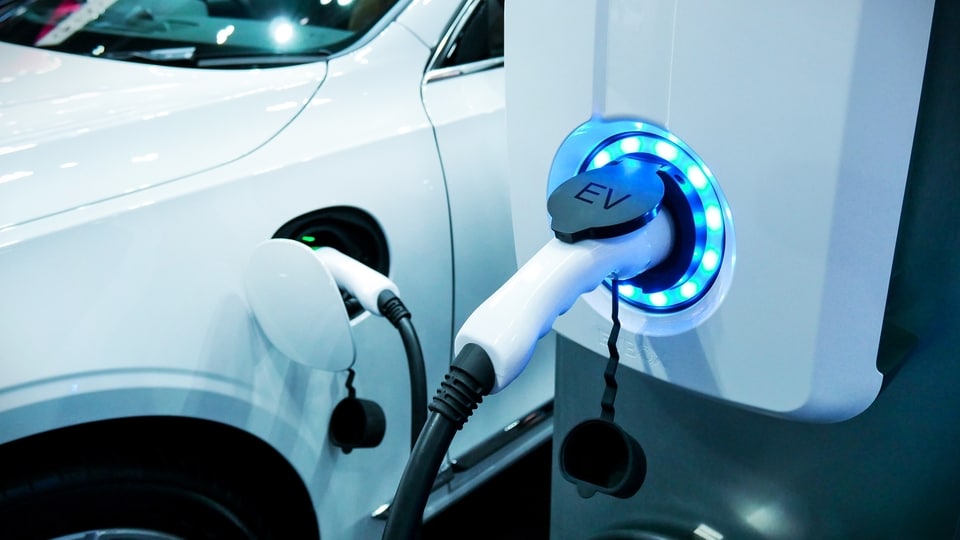
India’s clean mobility transition must be ambitious. But it must also be pragmatic, inclusive and strategically aligned with the country’s economic and energy realities. Treating electric vehicles (EVs) as the sole pathway to decarbonisation risks missing an opportunity to deploy a broader and more resilient set of solutions.
The debate around clean mobility has increasingly been framed as a binary choice: Either EVs or continued pollution. This framing ignores decades of global experience demonstrating that biofuels — particularly ethanol — can significantly reduce emissions while using existing infrastructure.
Flex-fuel vehicles capable of running on high ethanol blends such as E85 or E100 can cut life-cycle greenhouse-gas emissions by roughly 20–50 per cent compared to petrol, while dramatically reducing particulate emissions. These technologies are not experimental. Countries such as Brazil have built entire automotive ecosystems around them. Today, the vast majority of new vehicles sold in Brazil are flex-fuel, giving consumers the flexibility to choose between gasoline and ethanol depending on price and availability.
India already has the foundations to follow a similar path.
Over the past decade, India’s Ethanol Blended Petrol (EBP) programme has transformed the country’s fuel landscape. Ethanol supply to oil marketing companies has increased dramatically, and the country has achieved close to 20% blending in petrol in recent years.
The programme has delivered benefits far beyond environmental gains. It has generated over ₹1.3 lakh crore in payments to sugarcane farmers, stabilising rural incomes while strengthening India’s bio-energy ecosystem.
India’s ethanol production capacity now exceeds 2,000 crore litres annually. Ignoring this domestic energy infrastructure while designing a national clean mobility policy would mean sidelining a sector that has already made major investments and is capable of scaling further.
EVs will undoubtedly play an important role in India’s transport future. However, the transition faces structural challenges that cannot be ignored.
Charging infrastructure remains limited. Even in major urban regions, studies point to significant shortfalls in the number of public charging stations required to support mass EV adoption. Charging times — often ranging from 30 minutes to over an hour — remain far longer than conventional refuelling.
By contrast, India already has more than 60,000 petrol pumps nationwide. These outlets can be upgraded to dispense higher ethanol blends at relatively low cost, enabling rapid scaling without building entirely new infrastructure.
For a country with hundreds of millions of two-wheelers, commercial vehicles and long-distance commuters, such infrastructure realities matter.
Another challenge is affordability.
Even with government incentives, entry-level EVs remain significantly more expensive than conventional vehicles for most Indian consumers. The upfront cost of batteries continues to drive prices.
Flex-fuel technology, by comparison, requires only modest modifications to existing engines. The incremental cost of making a vehicle flex-fuel compatible is estimated to be a small fraction of the price premium associated with EVs.
For millions of middle-class and rural households, this difference could determine whether clean mobility is inclusive or exclusive.
Clean mobility is not only about emissions. It is also about energy security.
India imports nearly 90% of its crude oil, making the economy highly vulnerable to global disruptions. Recent geopolitical tensions around the Strait of Hormuz highlight the fragility of global energy supply chains. A significant share of the world’s oil flows through this narrow maritime corridor, and any disruption can quickly trigger price shocks.
While EVs reduce oil demand, they also create new strategic dependencies on imported battery minerals such as lithium, cobalt and nickel.
Ethanol, on the other hand, can be produced domestically from agricultural feedstocks such as sugarcane and grain. Every litre blended into petrol reduces crude imports and strengthens India’s energy sovereignty.
There is another overlooked dimension in the clean mobility debate. Passenger cars account for a relatively small share of overall urban air pollution. Other sources — including heavy trucks, construction dust, industrial emissions and agricultural burning — contribute far more.
A policy that disproportionately targets private vehicles risks imposing high economic costs while delivering only marginal improvements in air quality.
Higher ethanol blends already reduce carbon monoxide and hydrocarbon emissions significantly. Expanding flex-fuel adoption could amplify these gains, particularly in segments such as two-wheelers that dominate India’s vehicle fleet.
India’s clean mobility transition should not be about choosing one technology over another. It should be about achieving the best environmental outcomes at the lowest economic cost.
A balanced strategy could include:
- Encouraging flex-fuel vehicles
- Expanding availability of higher ethanol blends such as E85 / E100
- Allowing manufacturers to meet emission targets through multiple technologies
Such a technology-neutral framework would enable innovation while ensuring that consumers, industry and farmers all benefit from the transition.
India’s air pollution challenge demands urgency, but also strategic clarity. EVs are an important part of the solution — but they are not the only one.
With a rapidly expanding ethanol ecosystem, strong agricultural linkages and existing fuel infrastructure, flex-fuel vehicles represent a practical and scalable pathway toward cleaner mobility.
In the race to clean India’s air, the country should deploy every viable tool available. Putting all of India’s clean mobility hopes into a single technology basket would be a mistake. A diversified strategy — combining electric mobility with biofuels and other emerging technologies — offers a far more resilient path to a cleaner, more energy-secure future.
This article is authored by Deepak Ballani, director general, Indian Sugar and Bio-energy Manufacturers Association.


