
 E-Paper



Case for broader policy approach to mid-stream processing of critical minerals
This article is authored by Indu Shekhar Chaturvedi, former secretary, ministry of new & renewable energy, New Delhi.

 Prefer HTon Google


Some recent news reports indicate that India is considering an incentive scheme for lithium and nickel processing. The scheme will provide 15% capital subsidy, subject to a cap on the total subsidy amount, to eligible lithium and nickel processing projects starting on or after April 1, 2026. The outlay for the proposed scheme for Lithium and Nickel processing is not disclosed.
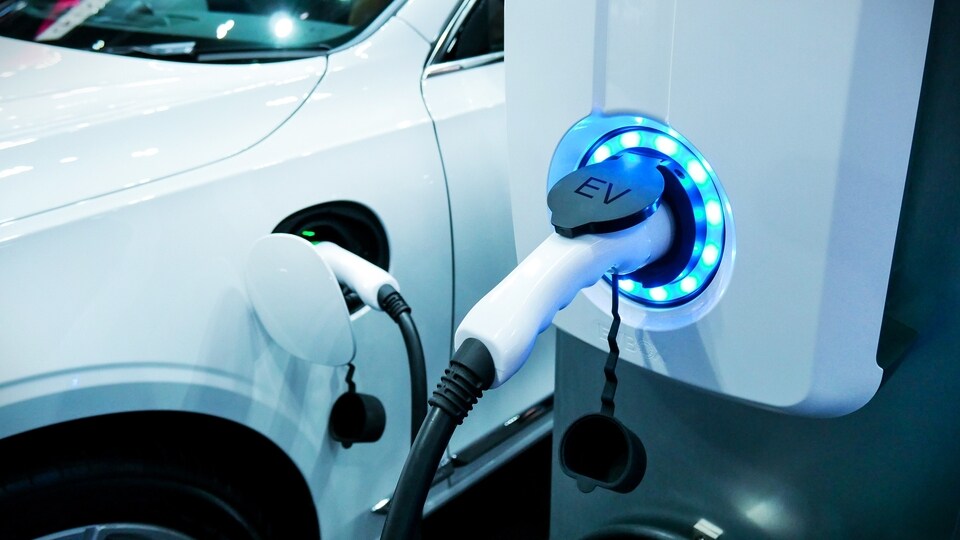
Among other things, lithium is used in lithium-ion batteries that are critical for electric vehicles (EVs), electronic equipment, and storage systems for solar and wind energy projects. Though the largest use of nickel is in making stainless steel, its fastest growing use is again for building lithium-ion batteries. The availability of both these elements in the processed form is thus critical to India’s ambitious plans for battery production, which in turn is of vital importance for the country’s decarbonisation efforts.
In fact, lithium-bearing minerals and nickel-bearing minerals are both included in the list of 24 minerals or mineral groups identified as ‘critical and strategic minerals’ under the National Critical Mineral Mission (NCMM), which was approved by the Union Cabinet in January 2025 with an outlay of ₹34,300 crore for the period up to FY 2031. The Mission defines critical minerals as naturally occurring elements and compounds that have diverse irreplaceable industrial applications but confront supply-related vulnerabilities either in the form of their limited geographic occurrences or sourcing challenges. It envisions securing a long-term sustainable supply of critical minerals and strengthening India’s critical mineral value chains encompassing all stages from mineral exploration and mining to beneficiation, processing, and recovery from end-of-life products. Further, the Mission provides for an outlay of ₹500 crore for a period up to FY 2031 for four parks to house critical mineral processing units, and for the scheme in this regard to be prepared by the ministry of mines.
India has identified reserves of lithium but does not yet have commercially viable production from these reserves. Its lithium refining capacity is also minimal. For nickel, the identified reserves are modest, and both mining and processing capacities are limited. In fact, for most of the critical minerals listed under the NCMM, India has limited mining and/or limited processing capacities, and for some, none at all.
Some of the other critical minerals for which India has no, or limited processing capabilities may be as vital to India’s ambitions as Lithium and Nickel, particularly for decarbonisation and advanced manufacturing. Rare earth elements (REEs), graphite, cobalt, gallium and germanium are examples. REEs are used to build magnets that power many of the motors, generators and systems fundamental to EVs, renewable energy installations, and sophisticated electronics. Cobalt and graphite are both used in making lithium-ion batteries, with cobalt also used in making defence equipment. Gallium is used in advanced electronics and making defence equipment. And germanium is an input for advanced electronic equipment and telecom networks. The uses cited here are not exhaustive and are only meant to illustrate the crucial importance of these critical minerals to India’s ambitions.
Thus, while lithium and nickel are undeniably important, India’s manufacturing ecosystem, from defence electronics to renewable energy, depends on a wider basket of critical minerals such as rare earth elements (REEs), graphite, cobalt, gallium and germanium. And focusing processing incentives on only lithium and nickel would leave unaddressed the lack of processing capabilities in respect of this wider basket.
Nickel-processing is already a commercially established activity worldwide. Large-scale capacity has expanded globally, driven by economies of scale and downstream integration. India has some nickel-processing capability for stainless steel and alloys but remains heavily dependent on imported feedstock and refined products. Similarly, lithium refining has seen sustained global investment. Against this background, the case for incentives to lithium- and nickel-processing India is based on lack of scale and demand visibility, and uncertain feedstock availability. However, these reasons may also apply to other critical minerals.
In fact, there may be a case for higher priority to giving incentives to processing capabilities in certain other critical minerals. Unlike lithium and nickel, processing of minerals such as cobalt, rare earth elements, graphite, gallium and germanium involves higher technological, environmental and market risks, and global investment is more concentrated. Yet, the production and processing of such minerals are presently not covered under a PLI scheme or any other programme of the central government. All this points to a strong case for incentives for these minerals along with lithium and nickel.
Ideally, processing incentives for critical minerals should be prioritised based on technological complexity, supply concentration, investment risk and strategic importance.
China controls a significant share of global processing capacity for several critical minerals, including lithium, cobalt, graphite, gallium, germanium and rare earths, for example. This concentration has historically allowed price interventions and supply disruptions that squeeze producers elsewhere, regardless of the underlying demand. India’s vulnerability in this regard doesn’t sit with one or two minerals, but with a number of materials where processing is concentrated and prices can be externally influenced.
The NCMM was approved over a year ago. It is time that the country took a broad approach to address vulnerability in critical minerals supplies, wherever it exists. This could be in the form of a mineral neutral processing scheme or additional schemes or other innovative policy measures.
This article is authored by Indu Shekhar Chaturvedi, former secretary, ministry of new & renewable energy, New Delhi.


