
 E-Paper



Self-reliance must begin with a stronger oil and gas push
This article is authored by Amir-Ullah Khan, economist and research director. CDPP and adjunct professor, TISS and Manipal University.

 Prefer HTon Google


The world today stands at the intersection of geopolitics and energy economics. What began as a series of trade skirmishes has evolved into a deeper energy realignment, where crude oil and natural gas have become stronger instruments of influence and leverage. These are no longer mere commodities — they are strategic assets. For India, which aspires to achieve self-reliance by 2047, this global flux underscores an urgent truth — energy security will be key to achieve young India’s aspirations.
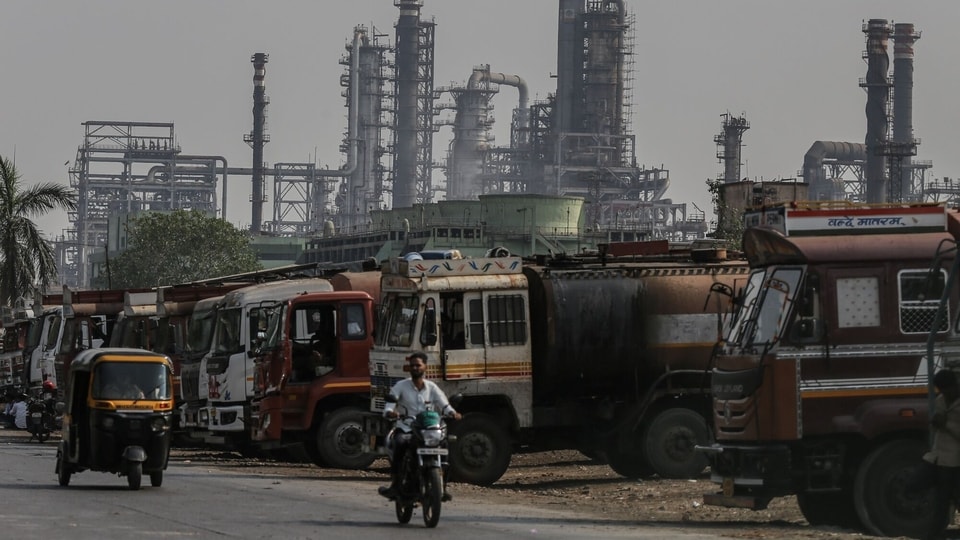
According to the Petroleum Planning & Analysis Cell (PPAC), India’s crude oil imports rose to 242.4 million tonnes in FY25, up nearly 10 million tonnes year-on-year, while domestic production remained at just 29.4 million tonnes. This pushed the import bill to $137 billion, despite relatively lower global prices. Every $10 per barrel increase adds about ₹15,000 crore to India’s import burden. For a country that imports nearly 89% of its crude requirements, such demand-supply imbalance can leave the economy exposed to global price swings and supply disruptions.
Ranjan Mathai, former foreign secretary of India and high commissioner to the United Kingdom aptly warned that India “cannot trade one form of dependence for another.” Energy self-reliance, therefore, is not just about reducing imports; it is about safeguarding economic stability, industrial competitiveness, and national sovereignty.
China has invested over $470 billion in its domestic oil and gas sector since 2019, with a strong focus on deep-water drilling and seismic imaging technologies. Its oil production has grown 13%, gas output over 50%, and offshore production from the Bohai Sea nearly 60%.
India’s upstream sector, by comparison, remains constrained by ageing onshore and offshore fields that have powered the economy for decades. Domestic output has stagnated below 30 million tonnes annually, even as consumption continues to rise by nearly 3% each year. Investment upstream in FY25 was only about ₹8,000 Cr – too little for a country that remains largely unexplored.
Global energy institutions have been sounding alarm bells. The International Energy Agency (IEA) and the US Energy Information Administration (EIA) have both warned that producers must drill more wells to sustain output and counter the natural decline of existing fields. According to the EIA’s November 2025 report shows that in the U.S., a 4.3 million barrels per day decline from older wells in 2024, prompting companies to drill nearly 15,000 new wells just to maintain production levels.
In this context, Prime Minister (PM) Narendra Modi’s Samudra Manthan initiative, launched in August 2025, marks a transformative shift.
The National Deep-Water Exploration Mission targets untapped hydrocarbon reserves across the Andaman–Nicobar, Krishna–Godavari, and Cauvery basins—covering more than one million square kilometres of unexplored seabed. According to India’s Hydrocarbon Outlook Report 2023-24, the Krishna–Godavari basin alone holds about 4,772 MMTOE of “in-place” resources, of which roughly 2,800 MMTOE remain untapped.
Equally significant is the government’s decision to open up no-go areas for exploration — a measure that could reshape India’s deep and ultra-deepwater exploration and production. Yet this step also exposes a reality: unlocking these frontiers demands massive capex, cutting-edge technology and global collaboration.
Despite being a largely unexplored territory, India’s upstream sector struggles to attract private investment. Investors cite uncertain fiscal regimes, lengthy approvals, and unpredictable contract terms as key deterrents. High exploration risk, long gestation periods, and fluctuating prices further dampen enthusiasm.
To reverse this, India must create an investment-friendly ecosystem that rewards risk and ensures regulatory certainty. Simplifying clearances and providing fiscal certainty can improve the ease of doing business and usher in the much-needed capital. The government could offer risk-sharing mechanisms or targeted subsidies for frontier capex, especially in deep and ultra-deep-water projects.
The recently enacted Oilfields (Regulation and Development) Amendment Act 2024 (ORDA) modernises the 1948 framework, streamlining approvals and strengthening investor confidence. Alongside, the Hydrocarbon Exploration and Licensing Policy (HELP) and Open Acreage Licensing Policy (OALP) provide a transparent and flexible framework for investors — marking India’s shift from policy intent to execution.
While frontier exploration is vital, India must also extract more from what it already has. Mature fields hold significant potential if revitalised through Enhanced Oil Recovery (EOR) and Improved Oil Recovery (IOR) methods such as CO₂ injection, polymer flooding, and AI-based reservoir modelling. This dual-track approach, frontier exploration plus smarter recovery, offers India a realistic roadmap to increase domestic output without waiting for new discoveries to mature.
Energy security today is the bedrock of economic resilience, as per M Govinda Rao, director, National Institute of Public Finance and Policy and former Chief Economic Adviser. “Oil-proofing India’s economy means producing more at home and reducing exposure to global volatility.” Building this foundation requires consistent upstream investment, fiscal innovation, and policy predictability.
Energy sovereignty is not a trade-off between growth and sustainability. The time has come for India to drill deeper, invest smarter, and collaborate wider. The foundation of Aatmanirbhar Bharat will not be built in foreign boardrooms; it will be forged in India’s own rich resource basins — beneath the surface, where the next chapter of national strength truly lies.
This article is authored by Amir-Ullah Khan, economist and research director. CDPP and adjunct professor, TISS and Manipal University.


