
 E-Paper



Tobacco tax hike could fuel illegal trade and undermine public revenue
This article is authored by Yogendra Kapoor, economist and market expert, New Delhi.

 Prefer HTon Google


One of the principal objectives of a single national tax system such as the Goods and Services Tax (GST) is to cast the net wider to bring a broader swathe of businesses within the regulatory and formal economy. It may be worthwhile to examine the recent hike in taxes on tobacco products through this lens.
The Government has notified new Central Excise and GST rates, implementing a changeover effective February 1, 2026. This transition shifts the assessable value base from 'transaction value' to 'retail sales price' and increases the tax rate from 28% to 40%.
Coupled with significantly increased Basic Central Excise Duty (BED) rates, the tax notifications are poised to lead to substantial tax incidence increases, ranging from 40% to 84% across various cigarette length segments.
The consumption pattern of tobacco in India shows higher usage among lower-income groups and regions, and an increase in rates from 28% to 40% could potentially encourage tax evasion and reduce savings in the hands of people, which goes against the government’s tax policies aimed at ensuring increased consumption and more money in the hands of the people.
India's tobacco consumption landscape is characterised by certain peculiarities that are distinct from global patterns. For one, while in many countries, tobacco consumption is largely synonymous with cigarettes, often representing around 90% of total tobacco use, India exhibits a different distribution.
Legal cigarettes account for approximately 9-10% of overall tobacco consumed in the country. The substantial remainder, comprising about 90% of consumption, consists of a diverse array of 29 tax-inefficient tobacco products. These include traditional forms such as bidis, various types of chewing tobacco, and khaini, alongside illegal cigarettes.
Significantly, within the cigarette segment, illegal and smuggled brands currently command an estimated 25% of the total cigarette market share, representing billions of sticks annually. This share has seen a steady increase, rising from approximately 15% in 2015, and is now projected to surge to 30-35% within the next 18-24 months (by FY2027-28) due to tax increases.
Smuggled products enter via porous land borders, particularly from Nepal, Bangladesh, and Myanmar, and involve producing look-alike brands, sometimes in semi-urban or rural areas.
These operate entirely outside the legal framework, thereby avoiding all duties and taxes, with complete disregard for regulations—including no licensing fees, no product inspections, and no compliance costs for health warnings or track-and-trace systems. This grants illicit players an advantage in terms of cost structure and retail pricing.
The mechanics of consumer shift are straightforward: An extreme price differential directly exploits consumer price sensitivity. For price-conscious smokers, especially in rural and semi-urban areas, the stark contrast makes illicit products an increasingly appealing alternative.
This creates significant challenges for revenue collection. Despite high taxes on legal cigarettes, the overall tobacco tax revenue is limited because the majority of consumption occurs within these less regulated segments.
The government stands to lose significant tax revenue as consumers shift from legally taxed products to non-duty paid illicit products. Legal cigarettes, despite representing only ~9-10% of total tobacco consumption, contribute a substantial 80% of tobacco tax revenue, generating an average of ₹50,000-60,000 crores annually.
During periods characterised by aggressive duty rate increases on legal cigarettes, excise revenue collections by the government demonstrated a comparatively modest Compound Annual Growth Rate (CAGR) of 4.7%.
This growth rate was approximately one-third of the duty rate increases applied to legal products. The revenue growth occurred because the taxation on legal cigarettes encouraged a shift in consumer demand towards cheaper, untaxed illicit alternatives, consequently shrinking the tax base for legal sales. The estimated annual loss to the national exchequer due to this illicit trade is approximately ₹23,000 crore.
A conservative estimate suggests that if the illicit market share grows by just 5 percentage points (from the current 25% to 30% of total consumption), shifting legal sales to illicit channels, the immediate additional revenue leakage could be substantial.
This loss has a compounding effect: Not only does the government forgo taxes on the shifted volume, but the decline in overall legal industry volumes also shrinks the tax base, creating a double revenue hit. Such a potentially considerable and cumulative revenue loss comes at a critical time when the government needs funds for vital projects and important expenditure imperatives.
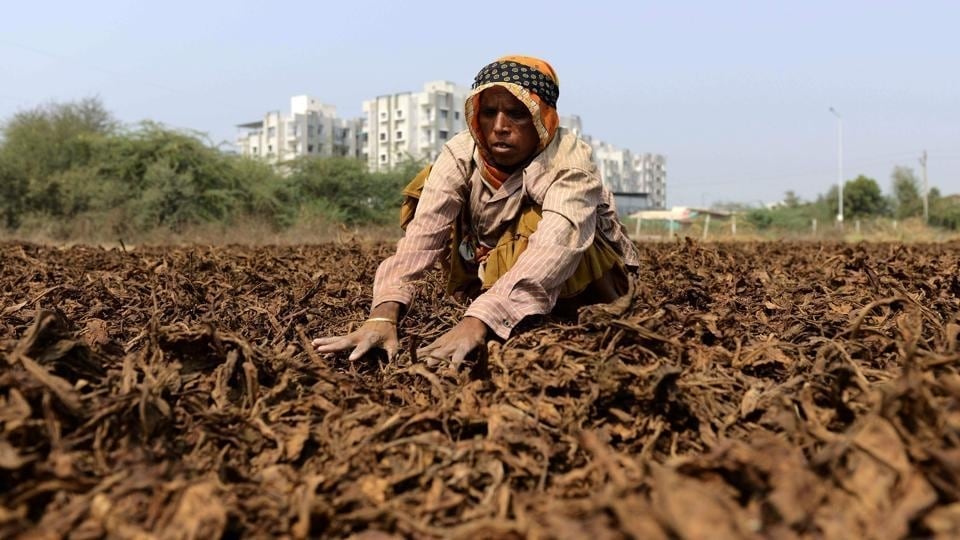
A decline in legal sales puts at grave risk the livelihoods of over 4.5 million tobacco farmers, predominantly small and marginal landholders, for whom tobacco cultivation constitutes a significant portion of their annual income.
Specific regions like Prakasam, Guntur, Nellore, and West Godavari districts in Andhra Pradesh, and parts of Karnataka and Gujarat, are heavily reliant on tobacco farming, making them highly vulnerable to market disruptions.
Beyond farming, a vast ecosystem of micro, small, and medium enterprises (MSMEs) supports the legal industry. This includes over 5,000 units involved in leaf processing, packaging material manufacturing (e.g., paper, filters, foil), printing companies for cigarette packs, and ancillary services. These MSMEs employ hundreds of thousands and represent billions in invested capital. The projected decline in legal sales directly threatens their viability, leading to widespread closures and job losses.
Global evidence bears direct relevance to India's current situation. Jurisdictions from Canada to New York State to Australia to the European Union have demonstrated a common pattern: Tax increases beyond a certain threshold—typically when legal product prices are 2-3 times higher than illicit alternatives—trigger rapid and irreversible growth in the illicit market. Expert opinions and academic research consistently point to an "optimal" tax level that maximises revenue without inadvertently ceding market share to illegal operators. India's recent 40-50% tax increase, creating a 100% price advantage for illicit products, places it squarely in the high-risk zone of following the same trajectory.
This article is authored by Yogendra Kapoor, economist and market expert, New Delhi.


