
 E-Paper



Humanoid robots: Your AI companions by 2030?
This article is authored by Nikhil Goel, senior director, engineering, India, embedUR systems.

 Prefer HTon Google


By 2030, your morning shift may already include a robot that has mapped the aisle, picked the parts, and lined up the next task before anyone clocks in. What feels like pilot testing today will soon be standard practice. Humanoid robots partnered with AI will be crossing the line from novelty to necessity.
The pressing question is not whether humanoids will be in the workforce, but where their intelligence will reside. Edge AI keeps perception, planning, and control on the device itself, enabling millisecond decisions, preserving privacy, and staying operational even when networks falter.
As robotics merges with general-purpose AI, those who prove safety at scale and transform fleet learning into consistent productivity will lead the field.
Humanoids are beginning to show real progress in spaces built for people, where tight aisles, shifting loads, and hard-to-read labels make automation notoriously difficult. Product leaders no longer debate “if humanoids will matter.” They are asking “where to start, which tasks to entrust to them, and under what safeguards.”
Tesla planned to produce 5,000 Optimus robots by 2025 but has only manufactured a few hundred units, with production temporarily halted for design improvements and component issues. It currently handles basic material moves and aims to drive down costs, though hand dexterity is still finding its range.
Boston Dynamics’ Atlas is now fully electric. Older versions used hydraulics. Electric motors are simpler and easier to maintain. They also allow very precise movements and better uptime. Atlas shows impressive demos and new skills, but it is mainly a research and pilot platform. It is not yet a plug-in replacement for a human worker.
Agility Robotics Digit is among the first humanoids working in warehouses. It can self-dock, carry loads up to 35 pounds (with 50 pounds planned for next generation), and run for eight hours. Most importantly, it is designed with safety certifications that allow it to share space with people, easing approvals for managers wary of risk.
Honda’s ASIMO may have bowed out of the public stage, but its expertise in mobility and autonomy now flows into vehicles and broader robotics programmes.
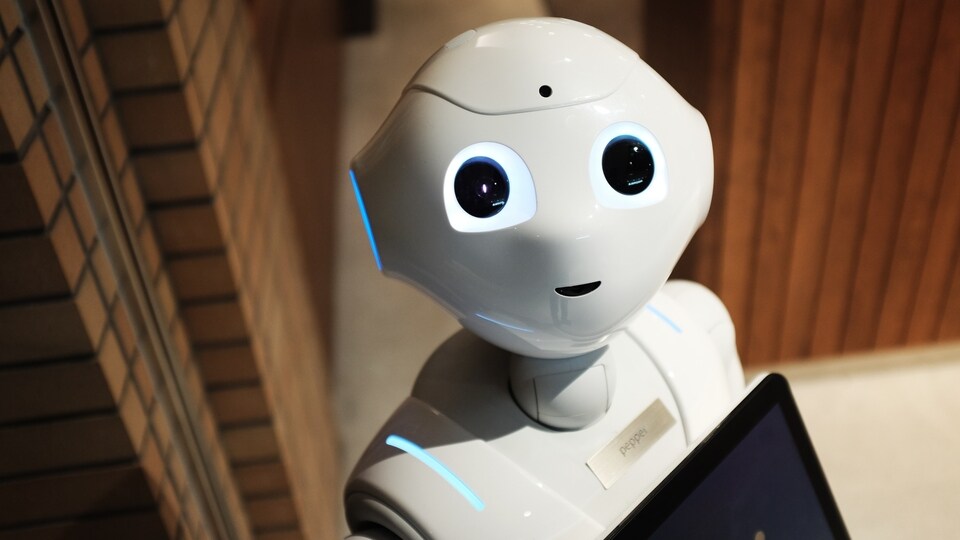
SoftBank Robotics Pepper remains in service and customer interaction, its value less in heavy lifting and more in software integration.
The ecosystem is advancing along clear lines. Locomotion is steadier, hands are more capable, sensors blend data more seamlessly, and batteries last longer. Yet the hardest problem remains: Matching human speed with human-level reliability. That is why edge AI has become critical. Perception, mapping, and motion planning must run directly on the robot so it can keep working through Wi-Fi dropouts and sub-second latency spikes. The cloud still matters, but only as the library for updates and fleet learning, not as the reflex loop.
Autonomy is climbing step by step. Today’s systems can navigate store aisles and factory lines, patrol warehouses, run deliveries in offices and hotels, assist in hospitals, support basic tasks on construction sites, and help at home. They still need help when the goal is unclear or the scene is novel. Open-ended requests, fragile objects, and crowded public settings raise the bar for judgment and safety. Reinforcement learning and imitation learning speed up skill acquisition and improve energy use, but policies must be verified before rollout. Teams test behaviours in simulation and staged trials, build in clear fallbacks and remote oversight, and set simple guardrails such as force limits and safe stops. That is how autonomy becomes both useful and trustworthy on real floors.
For now, the biggest wins come from partnership. Robots carry, stage, and fetch, while humans handle exceptions, judgment, and quality control. Each success lays a brick in the foundation of trust, and each step brings humanoids closer to becoming not just pilot projects, but part of the daily rhythm of work.
It is 7:15 on a weekday morning in 2030, and the rhythm of work looks different. In a suburban kitchen, a humanoid robot sets down plates of breakfast before moving to pack a school bag. Across town, on a factory floor, two others unload a trailer, then pivot seamlessly to a line changeover. By afternoon, the same machines are reassigned to rework late orders. What once felt like science fiction now feels routine.
Gartner predicts that within this decade, as many as eight in 10 people will interact with smart robots daily, a leap from the handful of early adopters today. In supply chains, one in 20 managers may oversee robot fleets more often than human crews.
The key to this shift is not the robot’s frame or motor strength. It is intelligence at the edge. By moving perception and decision making onto the machine itself, latency drops, privacy improves, and performance holds steady even when networks stumble.
Modern multimodal models, trained to blend vision, language, and control, allow robots to read cluttered spaces, interpret goals, and choose safer actions. Show a humanoid a short clip of someone wiping down a glass shelf, and it can break the motion into steps, then apply the same skill to a stainless counter it has never seen before.
Entire categories of repetitive tasks will shrink, while demand for human strengths such as empathy, leadership, creativity, and judgment will grow. Companies that prepare early will not only buffer against disruption but also unlock new capacity.
Preparation is less about the robots themselves and more about the systems around them. Standard toolchains for on-device models reduce integration pain. Fleet orchestration ensures hundreds of machines can be scheduled, monitored, and updated without chaos.
Documented safety cases prove that hazards are mitigated before robots step onto the floor. Change management, paired with reskilling programmes, helps human workers shift into roles where their skills matter most.
By 2030, robots will no longer be confined to pilot programmes or glossy demonstrations. They will be part of daily routines. Humanoids will take the lead because they can step into the world as it already exists. They can climb stairs, push carts, open doors, and reach into cabinets designed for human hands. Around them, social robots, collaborative cobots, and mobile platforms will handle the repetitive, hazardous, and isolating jobs that people are less able or willing to do.
The urgency is clear when you look at aging. The United Nations projects that by 2050 one in six people will be over 65, compared to one in 11 in 2019. The World Health Organization warns of a shortfall of nearly 11 million health workers by 2030. Meeting that gap requires scale. Humanoids can lift, steady, and fetch, while socially assistive companions can prompt medication, notice changes in mood or behavior, and sustain conversation. Early studies of devices like PARO, the robotic seal, suggest such support can reduce loneliness and depressive symptoms, though results vary by setting and design.
Hospitals and homes will feel these changes most directly. On a ward, a humanoid could move linens, meals, and lab samples between rooms while mobile platforms disinfect corridors. Processing data on the device keeps information local, reduces delays, and strengthens privacy protections. At home, social robots might encourage daily exercise, track vital signs, or escalate anomalies to a clinician before they become emergencies. This division of labour lets human caregivers focus on what they do best: Judgment, empathy, and complex procedures, while machines take over the night shift for logistics and repetition.
Robots will also step into the dangerous and the dull. In disaster zones, at wildfire fronts, or inside unstable industrial facilities, they can enter spaces too hot, toxic, or structurally unsound for people. As mobility and manipulation improve, expect more deployments that keep humans out of blast zones, collapsed buildings, and smoke lines.
Cobots already work inside production cells, but the next step is humanoids that can walk aisles and slot into workflows without a wholesale redesign of facilities. Case picking, tote loading, late-shift replenishment, and first-mile staging are all tasks within reach. With computing at the edge, robots will be able to read labels, sense balance, and navigate crowded aisles in real time, even when networks
As automation shifts from isolated pilots to widespread deployment, the winners will be those who treat robotics and AI not as experiments but as strategic infrastructure. The next decade will reward companies that build the right data pipelines, invest in edge intelligence, and redesign workflows around machines that can adapt, operate continuously, and learn from real-world conditions. The foundations being laid today will determine who captures the productivity windfall and who gets left navigating yesterday’s limitations.
This article is authored by Nikhil Goel, senior director, engineering, India, embedUR systems.


