
 E-Paper


Can India’s education system do more to counter child marriage?
This article is authored by Ashok Thombre, international business advisor, The Quantico.

 Prefer HTon Google


Child marriage in India is always discussed in the context of laws, implementation of laws, awareness campaigns. These are significant, but there's another institution that can have a much greater impact on the prevention of child marriage – the education system.
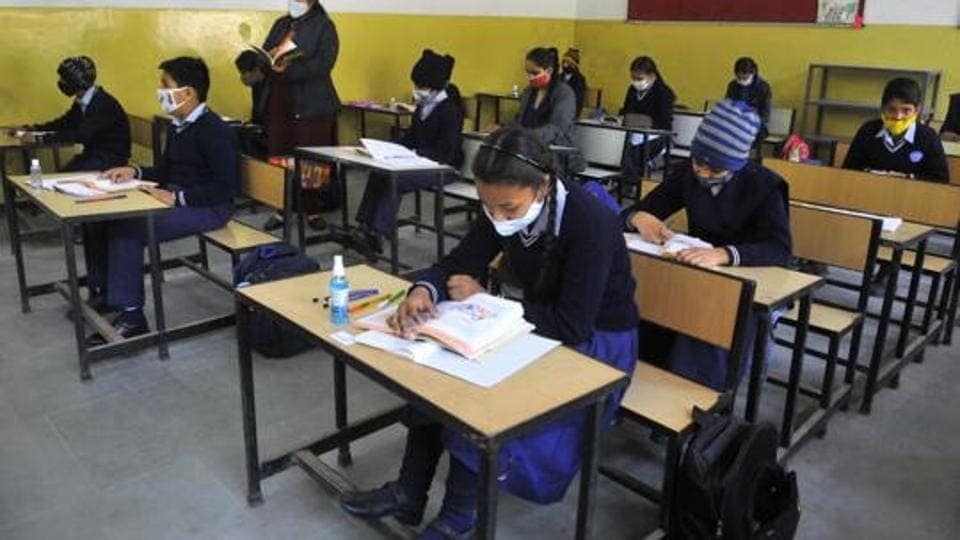
Education plays a vital role in empowering young girls by building their confidence, increasing awareness of their rights, and expanding their opportunities to make informed choices about their future.
There is one of the strongest relationships and education to the age at which girls marry. UNICEF's analysis indicates that girls who are in school are less likely to marry before age 18, whereas girls with few or no years of education are more likely to end up in a marriage. Less than two out of 10 of girls who marry as children continue to be in school.
This is because a girl's education is not a standalone issue but rather one of the key parts of addressing child marriage.
However, it is more complex than just making sure that there is a school in the vicinity. A girl might enroll in school but not attend due to household responsibilities, financial issues, safety issues, or transportation challenges, or due to social expectations or pressure to marry. The economic benefits of educating a daughter may also clash with ingrained views on marriage among poor families.
Staff and teachers, frequently, are the first to observe a student's non-attendance or when attendance is missing for extended periods or when a student's situation changes. It is possible for schools to be an important early-warning point for child protection through appropriate training and referral systems.
The change from primary to secondary schools is a subject to be discussed in particular. As girls grow older, it becomes tougher for many of them to continue their education. It is challenging for many girls to continue their education as they grow older. The distance to school, absence of safe transportation facilities and household chores can become important obstacles. Thus, better access to secondary schools, transport and safe school environments can also have a wider impact than on achievement.
There is a need to make education relevant to a girl's future as well. If there is a connection between school and work, or career opportunities, or financial independence, students may see a more viable path to staying in school. Career counselling, vocational exposure, as well as education in digital skills and life skills can raise the awareness of girls regarding the various opportunities available to them.
This has been reinforced to me by my experience of mentoring students in a rural and semi-urban community. The real problem is not the lack of ability, but a lack of information. A student may never have known a woman from her community who became a teacher, civil servant, entrepreneur or a professional. These illustrations can influence a youth's thinking when it comes to his or her own future.
Boys and families need to be included in education as well. Talking to only girls is not enough to tackle child marriage. Boys must be aware of the related issues of gender equality, consent and rights. Parents should be provided with up-to-date information about education, available government programs and the implications of keeping girls out of school.
The participation of the community is also a key factor. UNICEF has increasingly linked education, child protection, social protection and community mobilisation in its work in India, rather than consider child marriage as a stand-alone issue. The Global Programme was used to reach more than 300,000 frontline workers, self-help groups and local governance bodies in 2021 with training to curb child marriage and promote adolescent empowerment.
Social protection can complement education as well. According to UNICEF, programmes in India have helped to reach millions of girls with cash transfers and other social protection interventions that help keep girls in school and mitigate child marriage economic costs.
The education system should also enhance the linkage between schools and communities. Schools can hold parent, community leader and women's group meetings on the need for secondary education and the legal age of marriage. Local examples and conversations tend to be more effective than generic messages as they speak to the realities that families live.
These efforts should be informed at the policy level by data. States and districts with higher rates of child marriage should not have uniform solutions to their problems. The prevalence figures vary significantly across states, and are high in some states like West Bengal, Bihar and Tripura, according to UNICEF statistics.
Child marriage is not something that can be completely prevented by education alone. Laws need to be implemented, social protection must engage vulnerable families, communities need to defy harmful norms and child-protection systems need to respond when girls are at risk. However, a lot of these efforts can be linked together by education.
However, in order to end the cycle of child marriage, it is crucial that for girls, not only is school attendance possible, but also relevant, safe and in reach. The classroom can't fix all of the social circumstances that affect a child, but it can increase her options. Sometimes, the first step to changing a whole life is to increase these options.
(The views expressed are personal)
This article is authored by Ashok Thombre, international business advisor, The Quantico.


