E-Paper


Nations must turn climate promises into practical action: COP31 prez
Turkey is hosting the summit as it holds the COP Presidency, while Australia will serve as President for Negotiations

 Prefer HTon Google


The UN climate summit (November 9-20) opened in Antalya, Turkey on Monday, with COP31 president Murat Kurum calling on countries to turn promises into practical action, as the world confronts increasingly interconnected climate, economic and geopolitical challenges.
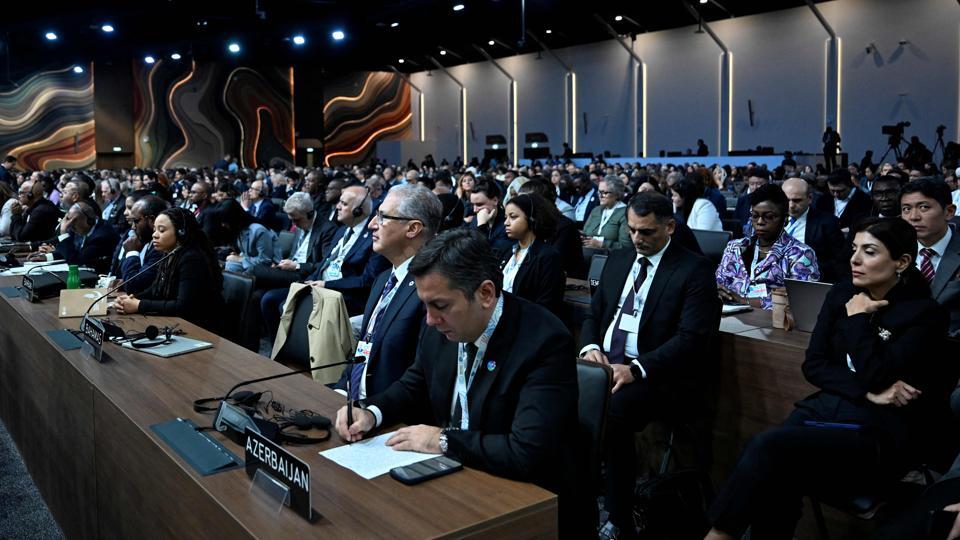
Calling this an “implementation COP”, Kurum, who is Turkey’s Minister for Environment, Urbanisation and Climate Change, also reaffirmed the Paris Agreement’s goal of limiting temperature rise to 1.5°C above pre-industrial levels as the benchmark guiding international action.
On the inaugural day, the World Meteorological Organization (WMO) also released its WMO State of the Climate Update 2026 report, which said the past 12 years have individually been the warmest on record globally, with the past four (2023-26) ranking as the top four.
The global average surface temperature for January–September 2026 was about 1.47° Celsius above the pre-industrial average, with the report stating this figure is likely to rise through the end of the year under El Nino, which has been intensifying since August and is expected to be the strongest on record by December.
Opening COP31, Kurum told delegates that climate change can no longer be considered in isolation from the other pressures facing countries and communities, and that “each crisis makes the others worse”.
He said conflict and geopolitical tensions, economic uncertainty and debt, food insecurity, rapid technological change and unequal access to capital and technology are all unfolding alongside a world that is becoming hotter, more fragile and increasingly exposed to disasters.
“We have to make COP31 an ‘implementation COP’ which focuses on closing the gap between commitments made in negotiating rooms and tangible improvements in people’s lives,” Kurum added, stating they will continue to be guided by the 1.5°C global warming benchmark. “It remains our guide and at COP31, we will be frank about what the science tells us.”
Kurum also used his opening statement to reinforce the role of electrification in the energy transition, highlighting Turkey’s “35-by-35” Global Electrification Pledge, which sets an objective of increasing electricity’s share of final energy consumption to 35% by 2035.
UN climate change executive secretary Simon Stiell, meanwhile, called out the costs of global heating and extreme weather on communities in his opening speech. He noted: “This year’s fossil fuel cost chaos has delivered a global shockwave, hitting households hard and spreading inflation like a cancer. But the solutions are clear – global renewables saved $265 billion in the first half of this year alone,” he said, stating it was in every country’s interest to limit global heating, and protect every community and economy.
Commenting on the WMO report, WMO secretary-general Celeste Saulo said the report did not cover the extremities of El Nino yet – since it had data only till September. “El Nino doesn’t add new heat to the planet. It releases heat from the ocean, which is the warmest ever measured. There is simply more heat available to release,” she said.