
 E-Paper



Sambhal: A strategy of firm policing, administrative reforms and cultural revival
Perhaps, the biggest of the challenges in Sambhal has been the tackling of the long history of communal riots

 Prefer HTon Google


Sambhal, once a district synonymous with chronic law-and-order challenges and communal unrests is witnessing a silent but steady transformation. The Uttar Pradesh government, under the chief ministership of Yogi Adityanath, has pursued a strategy which is a blend of firm policing, administrative reforms and cultural revival and the results are gradually coming to the fore.
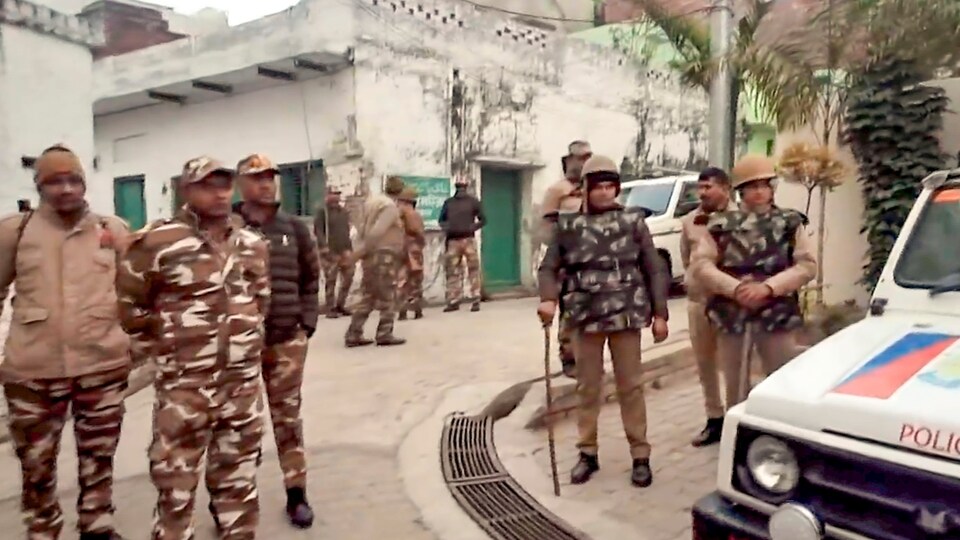
Perhaps, the biggest of the challenges in Sambhal has been the tackling of the long history of communal riots. Records show that since India attained its Independence, the region has remained volatile and over a dozen riots have taken place. This includes violent clashes as recently as November 2024, when a court-ordered survey at the Shahi Jama Masjid triggered lethal violence that resulted in multiple deaths and widespread arrests.
Since the day he took office eight years ago, the chief minister has often has often described Sambhal as a ‘wound needing surgery’, ensuring tough action to break cycles of violence. Therefore, it is no surprise that Sambhal has seen concrete expansion of law-enforcement infrastructure. Multiple news reports note that over 1,000 illegal encroachments have been removed, freeing more than 73 hectares and enhancing the authority of the law in areas challenged by disorder and have been a spark for igniting past tensions. To reinforce a zero-tolerance posture on crime and disorder, the Uttar Pradesh police have established two new police stations and 45 police outposts with CCTV and drone surveillance deployed in sensitive zones
The police strategy has also focussed on nipping trouble in the bud rather than dousing the fire. That’s why we have witnessed local authorities conducting flag marches, rapid response deployments and community patrols to pre-empt flare-ups.
At the heart of the chief minister’s approach in Sambhal lies the revival of the district's historical and religious heritage. He has committed to restoring centuries-old temples and sacred wells believed to have been encroached upon over the decades — a project he frames as reclaiming historical truth and civilisational legacy, not marginalising any community. More than 54 pilgrimage sites have been identified for restoration, with efforts continuing to locate and preserve others.
Linking these initiatives to similar heritage work across Uttar Pradesh, the chief minister argues that "true development lies in preserving legacy while shaping the future." He has pushed for greater focus on Sambhal's own ancient significance.
In public speeches, Adityanath insists his government respects all places of worship and is not against any religion. For him, Sambhal represents a powerful symbol: A district transforming from unrest and exodus into a place where law enforcement, heritage restoration, and economic growth are redefining local identity.
And the strategy appears to be yielding results. In the 2024–25 financial year, Sambhal ranked among the top districts in Uttar Pradesh for exports, driven by traditional industries and local products. Residents and community leaders tell local media that the combination of tighter security, civic restoration, and renewed cultural pride has shifted public perception. Families say they now feel confident staying in the district and participating in public life without fear.
Still, challenges remain. Past grievances need addressing. Sensitive religious issues require careful handling. Equitable policing must be ensured. Yogi Adityanath's Sambhal model — blending firm law enforcement with heritage-focused politics is likely a permanently stabiliser in the district's social fabric and rebuilds trust across communities.
This article is authored by DS Chauhan, former police chief, Uttar Pradesh.


