
 E-Paper



An assessment of Mutaqqi’s India visit
This article is authored by Yogendra Kumar, former ambassador, New Delhi.

 Prefer HTon Google


The wheel of history has turned a full circle in South Asia – if a tad differently – with the visit of Taliban foreign minister Amir Khan Muttaqi from October 9-16. An extended visit, its careful management illustrated sensitivities in New Delhi and Kabul. Apart from meeting external affairs minister S Jaishankar for extensive consultations, there were indications about a meeting with the national security adviser Ajit Doval but there are no public details. He visited Deoband seminary – another first for an Afghan official – where his public address was cancelled on official advice. His Agra visit was also cancelled on official advice; instead, he addressed a second press conference open to all journalists unlike his first one which excluded women journalists. He also had meetings with the Afghan expatriate population, including members of the non-Muslim communities, and with business leaders.
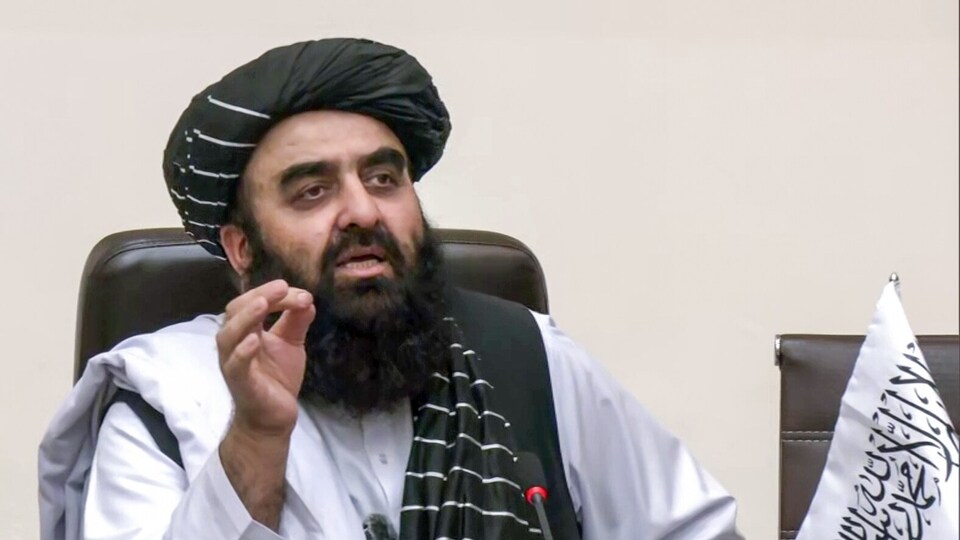
The Taliban government is not recognised by the UN and several top leaders are under UN Security Council anctions complicating the conduct of its foreign relations. India upgraded its “technical mission” in Kabul to the status of an “embassy” like some other countries including China and Pakistan. The issues about display of the Taliban official flag and access for their representatives to various Indian government agencies remain; the chaos at the Afghan mission, under the nominees of the old regime, for the foreign minister’s first press conference is a foretaste of shaky steps of Taliban diplomats in India.
A joint statement by the two foreign ministers expresses condemnation against “all acts of terrorism emanating from regional countries” and includes Taliban’s condemnation of the Pahalgam terrorist atrocity; it also emphasised “respect for each other’s sovereignty and territorial integrity”. India offered scaled up development cooperation especially in healthcare, public infrastructure and capacity building. Humanitarian assistance, access to higher education with scholarships, sports, hydroelectric projects and agriculture were identified for cooperation. Afghanistan offered commercial prospects, including mining sector, welcoming the commencement of the air freight corridor.
The major constraint is overland connectivity. The US termination of sanctions waiver for the Chabahar route for bulk supplies to Afghanistan complicates it further, especially as Indian suppliers would be deterred by possible secondary US sanctions. The Indian minister talked of optimising the “air corridor” whilst the Taliban minister spoke about the use of the Wagah border through a joint Afghan-Indian approach to Pakistan and about the Turkmenistan-Afghanistan-Pakistan-India gas pipeline.
The Afghan approach on connectivity is a nonstarter under the current circumstances. Minimal that its use is, the Chabahar’s potential can possibly be tapped by the Taliban through their business links in the Gulf. Another, howsoever remote, may be for the Afghan approach to Pakistan to make an exception for the two-way transit of goods under a special arrangement. In short, the tragic socio-economic circumstances due to its half-century of conflict are unlikely to be significantly ameliorated in the short and medium term.
In contrast with the previous regimes, the Taliban relations with all its immediate neighbours are stressed in varying degrees of severity despite its critical dependencies. The attenuation of strengthened Russian military engagement with the Tajik and Uzbek governments in the wake of the Taliban victory (2021) due to the troops relocation to the Ukraine theatre provided the Taliban government an opportunity to divert the waters of Amu river alarming the water stressed Tajikistan, Uzbekistan and Turkmenistan. There was also a brief skirmish with Iran over sharing of the Helmand river waters. The Pashtun heartland straddling Afghanistan and Pakistan – its main political base - is in serious turmoil with armed clashes escalating in recent days. Afghan refugee populations in Iran and Pakistan are being forced back into the country adding pressure on its weak economy. Concerns about terrorism are reflective of uncertainty of the effectiveness of Taliban control over its entire national territory.
Regime fragility is a concern too. Its leadership has walked back on its early promise to hold a Grand Assembly (Loya Jirga) to draw up a more inclusive government system offering reassurance to many sections of its multi-ethnic population which feel disenfranchised presently. The handling of the first press conference in Delhi excluding women journalists reflects sensitivities - and internal fault lines – in the top leadership on a critical question of international concern. The regime vulnerability to internal and external shocks remains high; inadequate internal political consolidation, weak economy, governance issues and gathering climate crisis threat (water stress, drought and extreme weather events) could all generate shocks prone to be exploited by diverse set of external actors. A joint Afghan-Pak conference – the first of its kind -took place in Islamabad end-September with the participation of numerous anti-Taliban elements, including some associated with the former Northern Alliance.
Indian interests are well served by building relations with the government there. The media had reported that Muttaqi’s visit was preceded by those of a deputy minister for medicines and food and a top Taliban official dealing with security and strategic affairs. Growth in cooperation would certainly improve intelligence flow on terrorism. The constraints due to the regime fragility can be addressed to an extent through rapid building up of quick impact community projects and through leveraging and improving the country’s mass communication infrastructure for suitable, subtle messaging about the impact of Indian help whilst respecting the local and national cultural and political sensitivities. Investing in communities across the country’s diverse demography will provide the ballast to the India-Afghanistan relations as uncertainties accelerate in the region and beyond.
This article is authored by Yogendra Kumar, former ambassador, New Delhi.


