
 E-Paper



Hormuz blockade: Boon or bane for clean energy?
This article is authored by Sajal Ghosh, Management Development Institute Gurgaon and Prof. Kakali Kanjilal, International Management Institute New Delhi.

 Prefer HTon Google


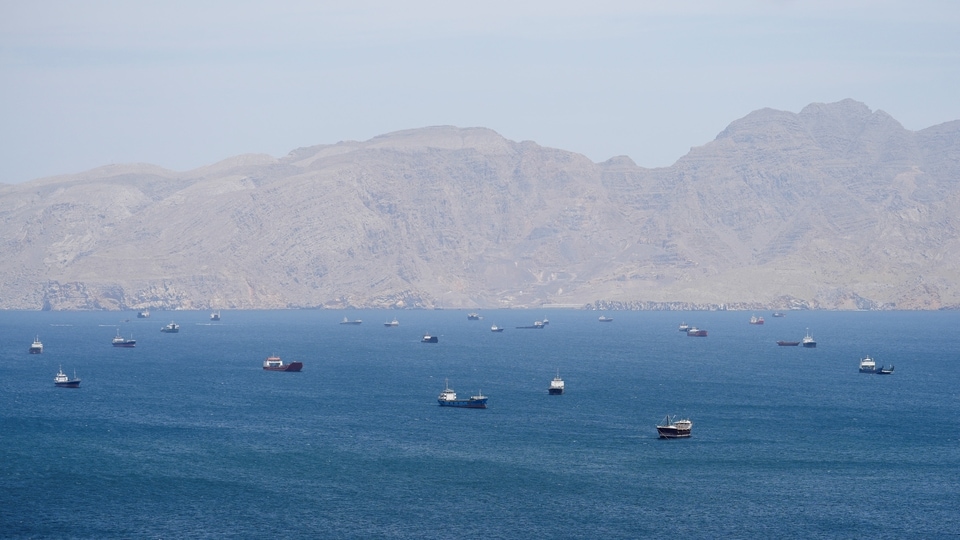
The escalation of tensions in the Gulf and the effective disruption of shipping through the Strait of Hormuz have once again exposed the fragility of global energy markets. Nearly one fifth of the world's oil and about 20% of global liquefied natural gas have no viable alternative route out of the region, making this narrow strait a critical pressure point. Iranian attacks disrupted tanker traffic and damaged Qatar’s Ras Laffan LNG complex, reducing around 17% of LNG capacity for up to five years. For countries heavily dependent on imported oil and gas, the effects are immediate: Supply shortages, higher fuel costs, inflationary pressures, and renewed concerns over energy security. As of early April 2026, Brent crude has already surged past $100–110 per barrel and, according to projections by Fitch Ratings, Goldman Sachs and the EIA, it could spike further to $130–170 per barrel in a prolonged disruption scenario. Asian LNG spot prices (JKM) have also spiked sharply to over $25/MMBtu and could rise to $30/MMBtu or higher if the crisis extends.
Such disruptions often compel governments and industries to look for alternatives, making clean energy options such as renewables and electric mobility increasingly attractive. Evidence of this shift is already visible. Global renewable energy capacity reached 5,149 gigawatts by the end of 2025, accounting for nearly half of the world’s total electricity generation capacity. Electric vehicle (EV) sales climbed to 20.7 million units in 2025, growing by about 20% year on year and representing roughly one in four new cars sold globally.
Renewable energy sources offer a clear advantage during geopolitical shocks. Unlike fossil fuels, solar and wind generation require no ongoing fuel supply once installed, making them largely insulated from supply shortages and price volatility. Countries with substantial renewable capacity, such as Spain, Portugal, and Norway, have shown greater resilience to fuel price shocks in recent crises. Rapid rooftop and distributed solar adoption in nations like Pakistan, India, South Africa, and Brazil has enabled households and businesses to partially shield themselves from imported fuel disruptions. Electrification of transport further bolsters this resilience by cutting dependence on gasoline and diesel.
The clean energy transition, however, carries its own vulnerabilities. It is not merely an energy shift but a mineral intensive transformation. EVs, for example, require roughly six times more mineral inputs than conventional internal combustion vehicles, while an offshore wind plant needs nearly 13 times more minerals than a similarly sized gas fired power plant. Apart from the volume, electric vehicles alone depend on more than a dozen critical minerals, including copper, lithium, nickel, cobalt, graphite, and rare earth elements. Solar panels and wind turbines rely on a similarly wide range of critical minerals. This surge in demand requires scaling up mining and processing capacity, which carries significant ecological costs. Processing certain rare earth minerals, for instance, can generate thousands of tons of toxic waste for every ton of output. As the clean energy transition gathers pace, these material requirements introduce new environmental and supply chain challenges.
A less discussed but critical vulnerability lies in sulphur supply. The Persian Gulf region accounts for roughly 45 to 50% of global seaborne sulphur trade, much of which transits through the Strait of Hormuz as a by-product of oil and gas processing. Disruptions have already tightened global availability, with shipments delayed and prices rising sharply. Sulphuric acid, derived from sulphur, is essential for leaching and refining key metals such as nickel, lithium, cobalt, copper, and rare earth elements. Any shortage could disrupt clean energy supply chains, slowing electric vehicle deployment, battery production, and grid expansion.
Clean-energy technologies also remain dependent on petroleum-derived petrochemicals. Wind turbine blades use epoxy resins and composite materials; solar panels require plastic encapsulants, back-sheets, and protective coatings; EVs depend on plastics for interiors, adhesives, insulation, and battery casings. Disruptions to Gulf petrochemical flows, combined with higher oil prices, are inflating manufacturing, logistics, and production costs throughout clean-tech supply chains.
Another emerging risk is the growing concentration of clean energy manufacturing and mineral processing in the hands of a near monopoly supplier. China controls more than 80% of global lithium ion battery manufacturing and a similar share of solar photovoltaic production, including most polysilicon and wafer manufacturing. It also accounts for over 90% of rare earth and graphite processing. China’s dominance further extends to key battery materials, including lithium and cobalt refining, as well as cathode and anode components, reinforcing its central role across clean energy supply chains. In contrast to oil and gas markets, which are relatively diversified and competitive across multiple regions, clean energy supply chains risk shifting toward a more concentrated structure with limited alternatives in the near term. Such concentration creates deeper geopolitical vulnerabilities, already evident in supply restrictions, export controls, and rising dependence across critical minerals and clean energy technologies.
A Hormuz blockade does not offer a clear verdict on the clean energy transition. It may temporarily slow deployment through higher input costs and supply bottlenecks, even as fossil fuel scarcity strengthens the case for reducing dependence on imported oil and gas. The disruption reveals both the resilience and the vulnerabilities of the transition. Whether the crisis ultimately accelerates or delays the global shift remains uncertain. In that sense, the Hormuz disruption may prove to be both a boon and a bane for clean energy.
(The views expressed are personal)
This article is authored by Sajal Ghosh, Management Development Institute Gurgaon and Prof. Kakali Kanjilal, International Management Institute New Delhi.


