
 E-Paper



How liberators undermine what they claim to build
This article is authored by Vipin Juneja, co-founder, Centre for New Economy Research (India).

 Prefer HTon Google


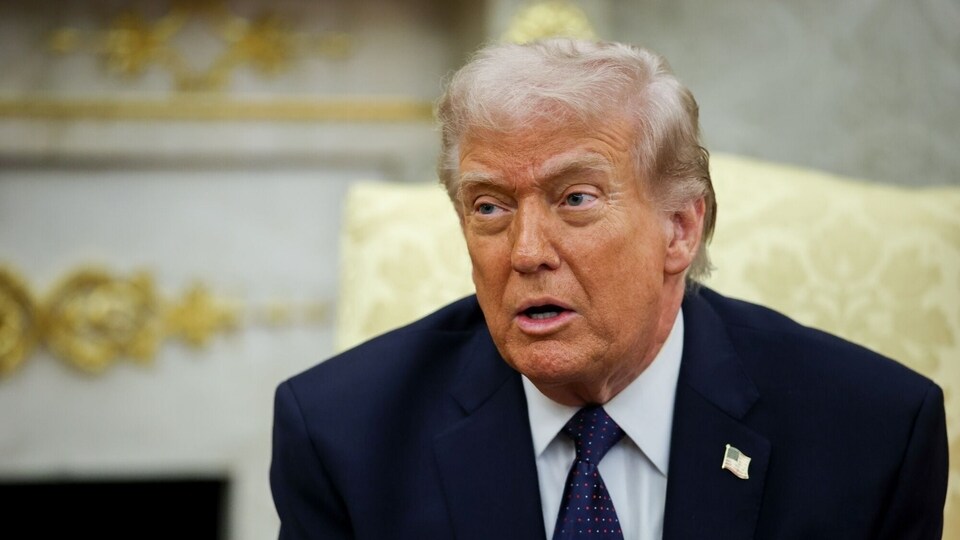
On February 28, 2026, the US and Israel launched Operation Epic Fury, a sweeping joint military assault on Iran targeting nuclear facilities, military commanders, and ultimately the country’s Supreme Leader. Ali Khamenei, who had ruled the Islamic Republic for nearly four decades, was killed in the strikes on Tehran. President Trump, addressing the Iranian people in an early morning broadcast, told them their country would soon “be yours to take.” The words had a familiar ring. They always do.
The crisis did not begin that morning. It had been building through a twelve-day war in June 2025, when Israel first struck Iranian nuclear and military infrastructure and the US joined days later. It intensified through failed negotiations, domestic protests that the regime crushed with extraordinary violence, and a final breakdown of nuclear talks in Geneva just two days before the latest assault. What Washington and Tel Aviv call a war of necessity looks, from a longer historical vantage, like something far older: the imposition of one civilisation’s idea of order upon another’s.
The phrase forced freedom is not a contradiction. It has a well-documented genealogy. Bill Clinton declared in 1994 that “democracies do not make war.” Yet, George W. Bush constructed an entire foreign policy doctrine on the premise that toppling authoritarian regimes would birth democratic societies in their place. Trump’s language follows the same script: the belief that external military force can serve as the midwife of internal liberation.
The historical record does not support this belief. Democracies have been anything but peaceful towards the non-democratic world. The history of modern western liberal States runs in parallel with the history of colonial conquest, carried out in ways that were anything but peaceful, with victim counts that rival those of the totalitarian regimes the West defined itself against. The most instructive modern case: Henry Kissinger’s 1970 order to orchestrate a coup against Chile’s democratically elected president, Salvador Allende. Freedom for some; a CIA operation for others.
The political scientist Martin Shaw made this point with precision. western democracies did not fight one another during the Cold War not because they were democracies, he argued, but because of their shared subordination to American power and their common rivalry with the Soviet bloc. As correlation is not causation, peace among democracies was the product of geopolitical architecture, not moral enlightenment.
For a study in what happens when an imported democratic model lands on culturally incompatible soil, one need not look to West Asia. The Solomon Islands, an archipelago of 900 islands in the South Pacific, home to 64 living languages and a society organised around tribal lineages known as wantoks, offers a sobering and underexamined lesson.
When Britain granted independence in 1978 and installed the Westminster parliamentary model, colonial administrators believed they were transferring the machinery of civilised governance. What followed was a decade of mounting tension that erupted, between 1998 and 2003, into ethnic conflict, state collapse and the looting of public institutions. This was not the failure of a State that had been built and then broken. It was the failure of a State that had never truly cohered.
The problem was structural. Solomon Islands society operated through the logic of the Big Man, a leader not born to power but one who earned authority through generosity and the redistribution of wealth within his kin group. Translated into parliamentary politics, the results were predictable. Politicians served their wantoks rather than the nation. In 32 years since independence, there were 15 governments. Democracy had arrived. Peace had not. The lesson was uncomfortable: electoral democracy is not a universal solvent. For it to produce peace, it must be supplemented by justice, equality and institutions that reflect the social fabric of the society it governs.
To understand what has now been destroyed in Iran, one must understand the peculiar origins of its supreme leadership. When Ayatollah Khomeini died in June 1989, Iran faced an immediate succession crisis. The constitution required the Supreme Leader to be a marja-e taqlid, a Grand Ayatollah whose religious authority was recognised across the Shia world. No suitable candidate was available. And so, in a closed emergency session convened before Khomeini’s death had even been publicly announced, the Assembly of Experts turned to Ali Khamenei.
Khamenei told the assembly plainly that he was not qualified. He was not a marja. He did not even hold the formal rank of Ayatollah, carrying instead the mid-ranking clerical title of Hujjat al-Islam. He was elected nonetheless, by 60 of 74 votes, in what Iran’s first president later described as an engineered process. Former President Rafsanjani, who chaired the session, reportedly backed Khamenei precisely because he believed him manageable.
To legalise the appointment, the constitution was amended. The requirement for a marja was simply removed. Khamenei’s religious authority was thus, not recognised and then elevated; it was constructed after the fact by the political apparatus he would subsequently come to dominate. A man whose legitimacy was manufactured through political manoeuvre became the supreme guardian of a republic whose founding premise was divinely ordained authority. Under his rule, the supreme leadership shed its theological character and became, in essence, a military-political office, sustained by the Revolutionary Guards and the suppression of dissent.
None of this constitutes a defence of Khamenei or the Islamic Republic. A regime that killed tens of thousands of its own citizens during protests, that nearly built a nuclear programme in defiance of international norms and that funded proxy conflicts across four countries deserves serious accountability. The Iranian people, who mounted the largest protests since 1979 in the winter of 2025 to 2026, have made their own position clear.
But whether Operation Epic Fury will produce anything resembling freedom for Iranians is a separate question. History counsels scepticism. Iraq was also a dictatorship whose leader’s legitimacy rested on violence rather than consent. Its liberation produced not a stable democracy but a decade of sectarian war, the rise of the Islamic State and a fractured state that has never recovered. The same pattern recurred in Libya.
What the Solomon Islands teaches us, what Kant’s cautious republicanism tried to establish and what the triumphalism of 1989 failed to absorb, is that peace and freedom cannot be installed from outside like operating systems. They require justice, equality and institutions that grow from within a society’s own soil. A democracy imposed by airstrike is not a democracy. It is a crater with a ballot box placed in it.
Trump told Iranians that their country would soon be theirs to take. The liberators always say that. The question is what is left to take, and whether, once again, those doing the taking get to define what freedom means.
This article is authored by Vipin Juneja, co-founder, Centre for New Economy Research (India).


