
 E-Paper



Locking in the India-Canada reset
This article is authored by Rashi Radev, geopolitical analyst, Canada.

 Prefer HTon Google


Three years ago, India and Canada were expelling each other's diplomats and trading accusations in public. This month, nearly 300 Canadian business delegates toured Mumbai and Bengaluru looking for deals in energy, critical minerals, aerospace and artificial intelligence. Negotiators wrapped up a fifth round of trade talks in Ottawa on October 9, and both governments say they want a deal signed by the end of the year.
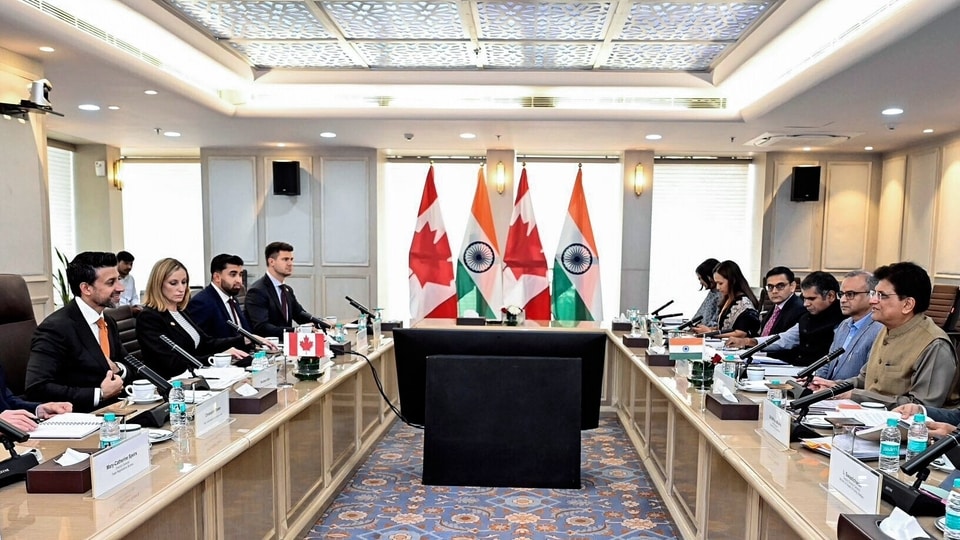
Few diplomatic recoveries have moved this fast. The harder question is whether this one will last. A relationship that collapsed once over domestic politics can collapse again unless both sides build something sturdy enough to survive the next election, the next protest or the next court ruling.
The simplest explanation is arithmetic. For most of the Trudeau years, the Liberals governed without a majority and leaned on the New Democratic Party, led by Jagmeet Singh, to survive. That dependence gave a vocal segment of Canada's Sikh community an outsized voice in foreign policy, and New Delhi's complaints about separatist activity were treated as a domestic irritant rather than a security concern.
The 2025 election broke that equation. Mark Carney's Liberals came within a seat of a majority, the NDP lost official party status, and Singh lost his own seat. Carney owes no political debt to the separatist fringe, and it shows. His statement on the anniversary of the Air India bombing this June condemned terrorism in every form, without the careful hedging of earlier years.
The second driver is economics. With Washington using tariffs as a weapon against friends and rivals alike, Canada needs new markets, and India is the fastest-growing large economy in the world. Two-way trade in goods and services reached about C$30.4 billion in 2025. Both leaders now want to more than double that to C$70 billion by 2030. A government chasing that target cannot afford to let a fringe agenda set the tone of the relationship.
India deserves credit for how it handled the opening. It never accepted the allegations of State involvement in the killing of Hardeep Singh Nijjar, whom New Delhi had designated a terrorist, and it repeatedly asked Ottawa to share evidence. But it also did not let anger harden into permanent hostility.
When a new government arrived, New Delhi moved quickly. Modi met Carney at the G7 summit in Kananaskis in June 2025, and the two agreed to restore high commissioners. By November they had agreed to restart trade negotiations. In March 2026, Carney came to New Delhi, and the two sides signed the terms of reference for a Comprehensive Economic Partnership Agreement (CEPA).
This was classic Indian diplomacy at its best: Firm on principle, flexible on process, and focused on the long game. India made clear that sovereignty and security were not negotiable, then offered Canada something it badly needed, which was access to one of the world's largest growth markets.
It would be a mistake to declare victory. The separatist networks that poisoned the relationship are still active. This summer, activists unveiled a so-called Embassy of the Republic of Khalistan in a Surrey gurdwara, alongside fresh plans for an overseas referendum by Sikhs for Justice, a group banned in India. Canada's own intelligence service now describes Khalistani actors as engaged in planning and financing violence abroad. That is a welcome admission, but words in a report are not the same as prosecutions.
The Nijjar case is another live wire. Four Indian nationals charged in May 2024 are being tried in the B.C. Supreme Court, and federal lawyers have sought to keep some material secret on national security grounds. Whatever the verdict, separatist groups will try to use the trial to reopen old wounds and paint India as the villain.
There is also the risk of a political reversal. Canadian governments change, and a future minority parliament could revive the old incentives to court radical voices. A relationship that depends on one prime minister's temperament is not yet a stable one.
The best insurance against a relapse is to give both countries too much to lose. Three steps would help.
- Sign the CEPA on schedule. Commerce minister Piyush Goyal has called the next 90 days a defining period, and Modi is expected to visit Canada around December. A signed agreement would tie Canadian exporters, pension funds and provinces to the relationship in a way no single politician could easily undo.
- Build a standing security dialogue. Intelligence-sharing on extremist financing, faster responses to threats against diplomats, and clear rules on extradition requests would move counter-terrorism from a source of friction to an area of routine cooperation.
- Engage the mainstream diaspora. Most of Canada's roughly 770,000 Sikhs are proud of both countries and have no interest in separatism. India should invest in them through investment channels, cultural ties and easier consular services, so the loudest voices in Surrey are no longer mistaken for the community as a whole.
The India-Canada story of the past year shows something important. Disputes rooted in domestic politics can be overcome when leaders choose interests over grievance. India held its ground on terrorism and sovereignty, and it kept the door open. Canada, under new leadership, finally walked through it.
Now both sides need to make sure the door cannot be slammed shut again. A signed trade deal, real security cooperation and a confident, engaged diaspora would turn a fragile thaw into a lasting partnership. For two democracies linked by family ties, education and commerce, nothing less makes sense.
(The views expressed are personal)
This article is authored by Rashi Radev, geopolitical analyst, Canada.


