
 E-Paper



Malaysia’s state elections and what the challenges that remain.
Author - Sriparna Pathak, associate professor, Chinese Studies and International Relations, OP Jindal Global University, Sonipat.

 Prefer HTon Google


Malaysia’s electoral ride has been full of ups and downs and the general elections last year led to an unprecedented hung parliament. Current Prime Minister (PM) Anwar Ibrahim took office in November as the head of a unity government. Anwar’s Pakatan Harapan (PH) had won the most seats but fell short of the outright majority that was needed to form a government. At the directive from the King, Al-Sultan Abdullah, the PH and rival parties, including former adversary, the much-tainted United Malays National Organisation (UMNO) came together and secured a two-thirds majority in the parliament.
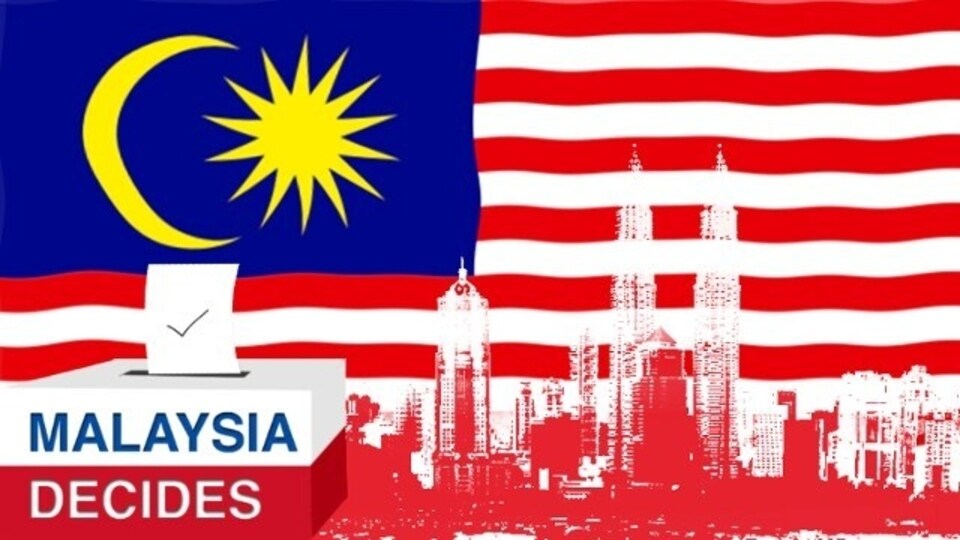
The unity government’s journey since then has been full of challenges since the economy needs a major boost as Malaysians continue to grapple with persistent inflation, rising costs and the weakening of the Malaysian ringgit against a basket of currencies since early this year. Amidst the continuing challenges, regional elections took place in the country’s six out of 13 states, which was widely seen as a referendum to Anwar’s leadership, as well as a test of the strength of the Opposition, which included the religious conservative Pan-Malaysian Islamic Party (PAS). The election results show that Anwar’s PH won in three states while the conservative opposition won three states. The three states in which the PH triumphed are the ones it held even prior to the vote and happen to be the country’s richest states--Selangor, Penang and Negeri Sembilan. The Opposition kept its hold on the heartland states of Kedah, Kelantan and northern Terengganu.
While Anwar welcomed the results, appealing for unity and stating the victory of the PH in three states as a decision of the people, the Opposition called the outcome a defeat for the ruling coalition and even asked the ruling coalition to step down. Beyond the war of narratives being put out by the political parties, fact remains that the outcome lifts pressures on the Anwar government and has all potentials to boost the stability of the nascent government. Had the PH lost its hold over the three states it already had control over, cracks in the unity of the 19 parties that hold the unity government together could have emerged. That possibility has been eliminated with the results. Given the myriad challenges facing the country in the realms of economics to political unity, hundred days in any case have not been enough to realise the full potentials of some of the schemes that the unity government has implemented, and with the breathing space granted by the state election results, the PH government can now focus more deeply on tackling the existing challenges.
In order to address the challenges faced by the economy, the ruling government launched a host of schemes under the Belanjawan 2023, to provide reliance, particularly to the vulnerable sections of society. Some schemes include initiatives like financial ones for youth entrepreneurs to immediate discharge for bankruptcy cases to provision of jobs with respectable wages for technical and vocational education, as well as schemes to train graduates. The unity government has allocated 2.1 billion Malaysian ringgit for empowering the country’s youth to become productive, innovative and socially responsible. Anwar also announced his Madani Economy vision on August 1 this year, outlining reform plans that he hopes will make Malaysia one of the world's 30 largest economies within 10 years. The state elections, which are being seen as a referendum to the first few months of Anwar’s coalition’s rule bring in that stability and the confidence to better implement the planned strategies.
While stability and confidence which these elections bring in are laudable, fact is that the PH still faces myriad challenges, as a significant percentage of Malays are suspicious of the unity government in being able to address issues around religion, corruption, economic havoc, and the special rights of the Malay people. Anwar’s appointment of Ahmad Zahid Hamidi who faces corruption charges as the deputy PM has also caused further distrust. How the PH navigates these challenges is something that remains to be seen. The ruling unity government is seen as being too liberal by many in Malaysia and fears are high that the Islamic identity and economic privileges under a long-standing affirmative programme could be chipped away. Under the affirmative action plan in Malaysia, the government formulates and implements policies in pursuit of distributional objectives to build capabilities and capacities of the groups that have been economically backwards, particularly among the Malays and other indigenous communities. Malays make up two thirds of the 33 million people in Malaysia with Indian and Chinese as large minorities.
The PAS has long positioned itself as a defender of Islam and of the Malays. Despite its poor economic track record in the three states that it rules, it has retained loyalty there through its religious agenda. PAS hardliner Abdul Hadi Awang has even stated earlier that the Opposition can easily topple Anwar’s government, if it sweeps all the six states. Even though the PAS is popular mostly in the east coast states, rising religiosity and Malay nationalism across the country since 2022 carried the party to greater heights in northern peninsular Malaysia as well. An additional challenge for the Anwar government is the fact that it is in coalition with the UMNO which was embroiled in the 1 Malaysia Development Berhad (1MDB) corruption scandal. Former PM Najib Razak is even currently serving a prison sentence for his role in the scandal. UMNO president Ahmad Zahid Hamidi is also in trial facing 47 counts of corruption, and he serves as deputy PM in the Anwar government. If not addressed properly in time, forces in the Opposition can churn out narratives of how the unity government can not just erode the religious identity of Malaysia, but also actively supports people charged with corruption. The economic imperatives of the unity government are laudable but need to go hand in hand with other policies that actively showcase that the government has the power to crack down upon corruption.
Author - Sriparna Pathak, associate professor, Chinese Studies and International Relations, OP Jindal Global University, Sonipat.


