
 E-Paper



Navigating Indo-Sino ties in a multipolar world
This article is authored by TP Seetharam, former Indian ambassador to UAE.

 Prefer HTon Google


It is in Asia that the contours of the new world order are being quietly shaped. Home to three of the world’s five largest economies, the region has gradually eclipsed the trans-Atlantic as the focal point of global economic activity. Its influence now extends well beyond markets to geopolitics, technology and multilateral leadership. Amid these shifts, the Indo-Sino relationship has acquired newfound significance, as both civilisational States navigate their roles and responsibilities as emerging global powers.
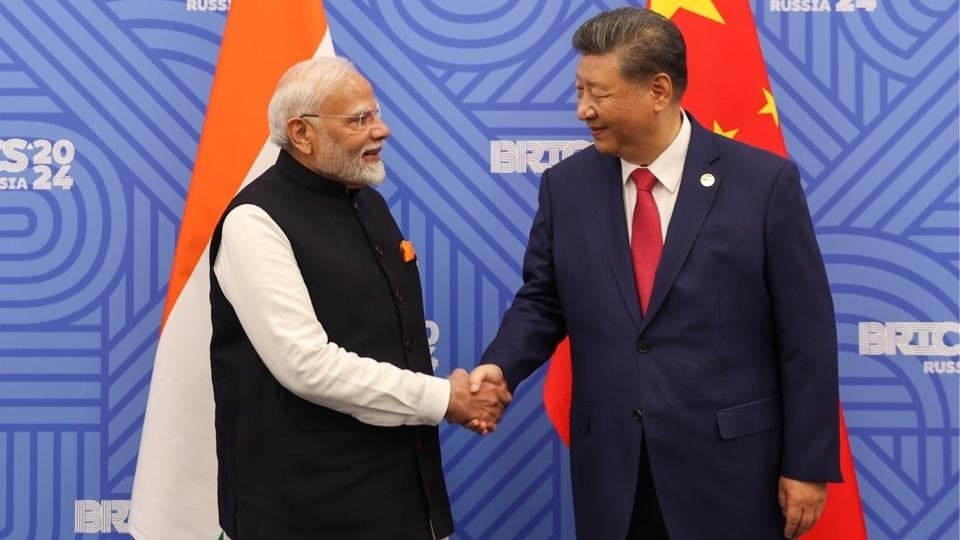
Although the bilateral relationship is often viewed through the selective prism of territorial issues, it is far more layered in reality. A steady yet understated rhythm of engagement continues across multiple fronts, even as certain areas call for careful management. At the heart of this engagement lies a broadly shared worldview, one that favours a more balanced and representative global order--translating into converging interests across the climate crisis, multilateral institutions, Global South priorities and stability in the broader neighbourhood.
Indeed, a constructive and forward-looking relationship aids the interests of both nations. While India continues to engage with China across critical domains such as trade, supply chains and emerging technologies, China too stands to gain from a strong and stable India. As the world’s fastest-growing major economy, India brings to the table a large and expanding consumer base, along with normative weight, serving as both a credible anchor and a reliable partner in an increasingly fragmented international environment.
It is imperative that any points of friction between the two countries be addressed with diplomatic wisdom and strategic cooperation. After a guarded lull in recent years, both New Delhi and Beijing have signalled a willingness to normalise ties. The meeting between the external affairs minister S Jaishankar and Chinese foreign minister Wang Yi reflected this intent, with both sides reaffirming cooperation on trans-boundary rivers, de-escalation along the border and support for people-centric initiatives such as the resumption of the Kailash Mansarovar Yatra. India’s decision to resume issuing tourist visas to Chinese nationals after a hiatus, along with the upcoming round of the Special Representatives dialogue, marks further steps in a positive direction.
Certain areas of persisting complexity call for nuanced understanding and careful navigation. The issue of restrictive trade practices, for instance, has resurfaced in Indo-Sino economic discussions, as flagged by the MEA during the Foreign Ministers’ meeting. The reported halt in speciality fertiliser shipments has had notable repercussions for India’s agriculture sector, while the electric vehicles (EV) industry has experienced challenges linked to the rare earths supply constraints. Though often imposed through indirect, procedural mechanisms, these developments remain consequential and merit careful attention.
India’s approach to the speciality fertilisers concern, involving strategic diversification through partnerships with Saudi Arabia and Morocco, illustrates the value of multilateral cooperation on such critical matters. To reduce supply risks, India should continue diversifying its imports, while also building domestic production capabilities. A similar path applies to the rare earths sector, where collaboration with countries like Brazil and the Dominican Republic can complement India’s own significant reserves. Balancing external engagement with internal strengthening will help create a more resilient and sustainable framework for smoothing differences.
India would do well to continue emphasising its twin track of strategic autonomy and multilateralism as it navigates the contours of its ties with China. In vital sectors such as electronics, renewable energy, infrastructure, and critical minerals, decisions such as those around joint ventures with Chinese entities must be approached with particular care and sensitivity. The focus should remain on securing meaningful technology transfers, rather than low-value assembly operations, in line with India’s broader ambitions of becoming a global manufacturing hub and achieving its $5 trillion economy goal.
As India and China approach 75 years of diplomatic engagement, their relationship marked by moments of strain, recalibration and continuity stands at a defining juncture. The recent thaw offers grounds for cautious optimism. As what was once projected as the Asian century takes shape, it is in both countries’ interests to focus on areas of convergence, while managing their differences with care. Sustained dialogue and cooperation between the two nations will be key to shaping an Asian future rooted in mutual growth and strategic foresight.
This article is authored by TP Seetharam, former Indian ambassador to UAE.


