
 E-Paper



The Netherlands as a legal gateway to Europe for Indian companies
This article is authored by Friederike Henke, Angelique Gillis and Maarten Smit.

 Prefer HTon Google


The world of trade and investment between India and Europe (including the Netherlands) has changed fundamentally in a short period of time. In 2026, the European Union and India signed the EU-India Free Trade Agreement, a bilateral agreement under which the parties commit to reducing or eliminating trade barriers such as tariffs, quotas and regulatory requirements between them. Commission President Von der Leyen described it as “the mother of all trade deals.” Meanwhile, the long-standing tax treaty between the Netherlands and India (Convention between the Kingdom of the Netherlands and the Republic of India for the avoidance of double taxation with respect to taxes on income and on capital) has for decades – since 1988! – formed the foundation for business operations between the two countries. The combination of these two legal instruments offers Indian companies more opportunities in the Netherlands than ever before.
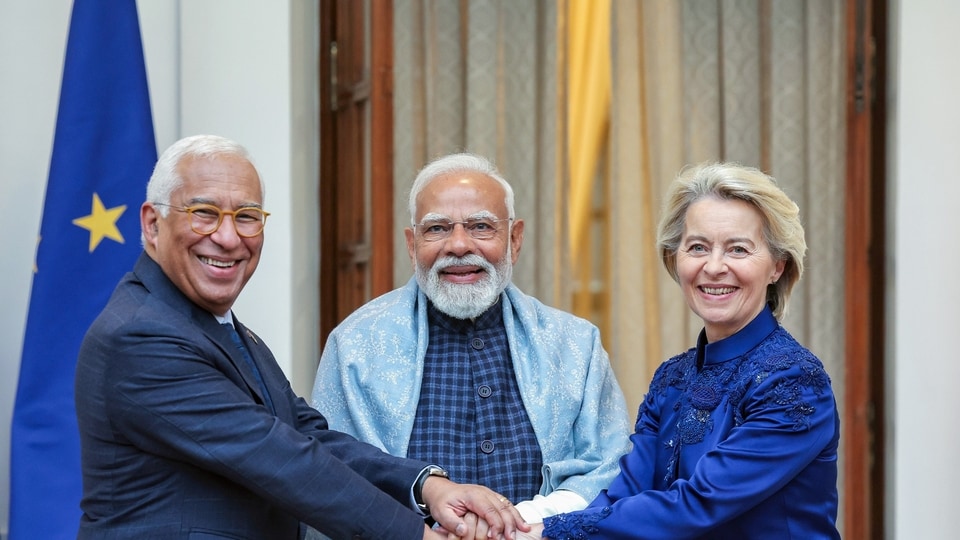
Recently, the Netherlands has emerged as one of the preferred destinations for investors looking to organise their European structures since the Netherlands occupies a unique position as an investment hub for Indian companies.
The Netherlands-India treaty aims to prevent double taxation and combat tax evasion. The tax treaty between the two countries offers concrete benefits including dividend distributions by Indian tax resident entities to Dutch tax resident entities should be taxed at a reduced tax treaty rate of 10% instead of the regular Indian rate of 20%, the withholding tax on interest paid by Indian tax resident entities to Dutch tax resident entities should be capped at a tax treaty rate of 10% as opposed to the 20% regular Indian domestic rate normally speaking and a favourable capped withholding tax rate of 10% instead of the regular Indian domestic rate of 20% should apply on royalty payment from Indian tax resident entities to Dutch tax resident entities normally speaking.
Any dividend distributions, interest payments and royalty payments made by Dutch tax resident entities to Indian tax resident international headquarters entities should not be subject to Dutch taxation based on Dutch domestic legislation normally speaking.
In addition to the Netherlands-India tax treaty, Indian companies investing in the Netherlands will be able to benefit from the EU-India Free Trade Agreement (FTA). The FTA is the largest trade agreement both parties have ever concluded, both in economic size and scope and covers five key areas: significant tariff reductions on EU exports, improved access to the Indian services market, stronger intellectual property protection, simplified customs procedures and strategic cooperation on sustainability.
India is eliminating or reducing tariffs on 96.6% of EU goods exports. European exporters can expect approximately $4.6 billion per year in tariff savings. For Indian companies, this means that access to the European market now comes with greater predictability. Using the Netherlands as a base offers lower costs and a clearer legal framework.
For India, bilateral exports into the EU are projected to rise by 86.6%, and Indian GDP is expected to increase by $80.6 billion (+1.0%), while real wages for both highly and low-skilled workers are set to rise. The textile, chemical, and services sectors stand to benefit the most.
A number of legal considerations warrant particular attention as Indian companies plan their entry into the Netherlands and the wider European market. First among these is investment structuring, since the legal structure and corporate vehicle chosen at the outset will shape much of what follows. Whether a holding company, a joint venture, or a subsidiary best serves a company's commercial objectives depends on a careful weighing of liability, governance, profit repatriation, and regulatory requirements, and this choice deserves early and deliberate attention rather than being treated as a formality.
Where the objective is acquisition rather than greenfield investment, the FTA's contribution should not be underestimated. By introducing greater regulatory predictability and clearer establishment rules, it makes due diligence and transaction execution in Dutch and European acquisitions considerably more manageable. Even so, this improved environment is no substitute for rigour: Indian companies pursuing acquisitions in the Netherlands or elsewhere in the EU still need thorough due diligence from an early stage, and the full transaction process, from signing through closing and into post-closing integration, must be managed carefully and in line with applicable Dutch and European legal requirements.
Trade compliance and tariff planning also demand close attention, particularly now that the FTA has entered into force and brought substantial change to the rules on customs, rules of origin, and non-tariff barriers. Companies would do well to revisit their existing supply chains and trade flows in light of this new framework, both to remain compliant and to ensure they are actually capturing the tariff reductions the agreement makes available.
Intellectual property is another area where the FTA changes the calculus meaningfully, given the stronger protections it introduces for trademarks, designs, copyrights, trade secrets, and plant varieties. This is especially relevant for Indian companies in the technology, pharmaceutical, and consumer goods sectors, which should take a hard look at what these changes mean for their IP portfolios and consider registering and enforcing their rights across the EU sooner rather than later.
Finally, tax considerations remain central to any Dutch establishment. Companies need a solid understanding of how Dutch corporate income tax, VAT, and withholding tax apply to whatever structure they adopt, and the ongoing compliance obligations that follow, including the preparation and filing of corporate income tax and VAT returns, should be built into operational planning from day one rather than addressed as an afterthought.
(The views expressed are personal)
This article is authored by Friederike Henke, partner – Head German Desk, Angelique Gillis, senior associate – Candidate Civil-Law Notary and Maarten Smit, senior associate – Tax Adviser, Buren.


