
 E-Paper



The next war zone is not too far
Author - Sudhanshu Kumar, CENJOWS (Centre for Joint Warfare Studies), HQ (IDS), ministry of defence, New Delhi and visiting research fellow at MGIMO, Moscow.

 Prefer HTon Google


On the night of January 3 this year, a team of American special operations soldiers entered Caracas and walked out with the president of Venezuela in handcuffs. The operation lasted under four hours. What made it different from every military operation in history was not the audacity. It was the brain behind it. The mission was planned with the help of Claude, an Artificial Intelligence (AI) tool made by an American company called Anthropic. The same family of technology that millions of people use every day to draft emails and answer questions was helping decide where to strike, when to move, and how to close the net around a sitting head of state. Six weeks later, American and Israeli forces bombed Iran. Same AI. Same system. Different country. Different continent. Same architecture. This is not science fiction. This is the world India wakes up in every morning.
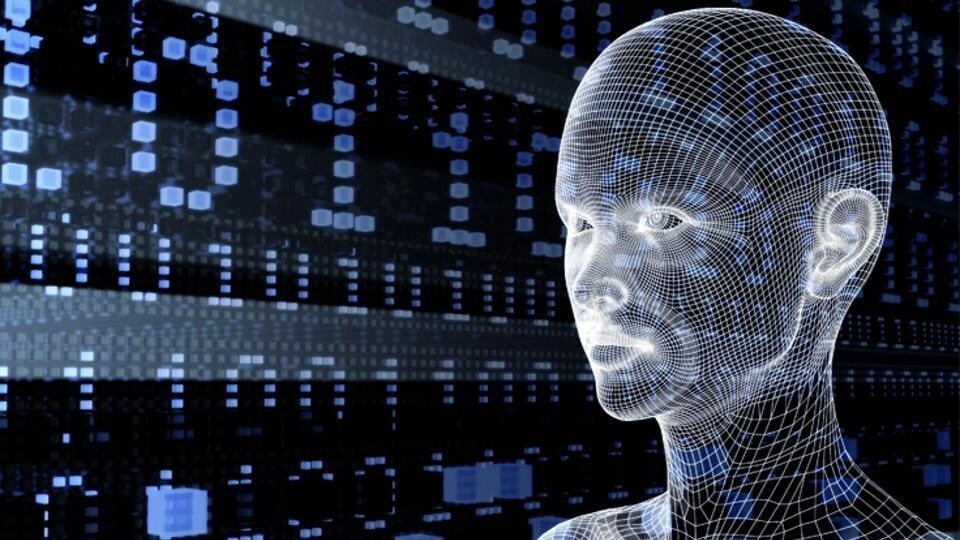
When most people think about AI in war, they picture killer robots from a Hollywood film. The reality is far more ordinary and far more dangerous. AI is already deciding who gets bombed in Gaza. An Israeli system called Lavender generated a list of 37,000 people marked for potential targeting. Human analysts were approving each name in under sixty seconds. In Ukraine, Russian drones fly themselves to targets using cameras that recognise military vehicles the same way your phone recognises your face. In the Sahel region of Africa, a jihadist group called JNIM is flying coordinated drone swarms across three countries simultaneously. In 2020, ten armed groups worldwide had combat drones. Today that number is 469. Thus, AI has not just entered warfare; it has taken up permanent residence. And if you look carefully at every single one of these conflicts, one common thread runs through all of them. American technology, American companies, American strategic interest. The same AI tool that planned Venezuela was available for Iran within weeks. The same operational system that supports US forces in South Korea is being built out for a potential Taiwan conflict. America is not fighting all these wars. But its fingerprints are on the weapon in almost every one of them. That is what researchers are now calling the Common Actor Problem.
India has a complicated relationship with this reality. On one side, India is a Quad partner with the US, buying American ISR systems, deepening defence technology cooperation, and positioning itself as Washington's preferred partner in the Indo-Pacific. On the other side, India shares a heavily militarised border with China, a nuclear frontier with Pakistan, and a neighbourhood that is rapidly becoming one of the most AI-saturated conflict zones on the planet. Operation Sindoor last year brought this home sharply. In a single night, Pakistan launched between 300 and 400 drones across 36 locations stretching from Leh to Sir Creek. India shot most of them down. But the fact that a neighbouring State could fire 400 drones in one night tells you everything about where the line has moved. This is not the 1999 Kargil template. This is not even the 2019 Balakot template. This is a new kind of conflict where AI-guided weapons can be fired in large numbers, under the cover of deniability, without either side formally declaring war. Thus, India must prepare itself for low-cost warfare using drones and loitering munitions.
In my research, I have found that the two theatres most likely to explode next are the Korean Peninsula and the South China Sea. Both have enormous military AI capabilities already deployed by all sides. Both have American forces deeply embedded. Both have the largest gap in the dataset between how much AI-enabled military hardware is sitting ready and how much actual fighting is currently happening. That gap is not a sign of peace. It is a pressure cooker with a sealed lid. When that lid comes off, and the historical pattern of US strategic AI deployment suggests it is a matter of when rather than if, India will be asked to pick a side. As a Quad member, the expectation will be clear.
When Iran was struck in February, LPG prices spiked within days. Iran sits on one of the most important chokepoints for global energy flows. India imports a significant share of its energy through the Persian Gulf. Any serious escalation in that region sends Indian cooking gas, diesel, and jet fuel prices upward almost immediately. We saw it. We felt it. Now think about what happens if the South China Sea, through which nearly 40% of global trade passes, becomes an active conflict zone. The majority of India's electronics imports, semiconductor components, and industrial machinery travel through those waters. Chinese ports, Taiwanese factories, South Korean shipyards. If that sea lane closes or becomes genuinely dangerous, the Indian manufacturing sector, the smartphone in your pocket, the laptop on your desk, the components going into the defence equipment DRDO is building, all of it gets more expensive and harder to source.
The Korean Peninsula matters too. South Korea is one of the largest suppliers of memory chips and display panels to Indian electronics manufacturers. A war on the peninsula does not just threaten Seoul. It threatens the supply chain for every mid-range phone sold in India. And then there is the Russia-Ukraine war, which has not ended. Ukraine was among the world's largest exporters of sunflower oil. India felt that in its kitchen. The Sahel conflicts are disrupting cobalt and lithium supply chains that are essential for the batteries going into Indian electric vehicles. These conflicts are not distant tragedies on a television screen. They are supply chain events that land on Indian dinner tables, factory floors, and defence procurement timelines.
India cannot prevent these conflicts. But India can decide how exposed it wants to be when they arrive. Thus, three things matter most. First, India must urgently build its own AI military capability rather than borrowing it. Deep dependence on American AI operational architecture carries a hidden cost. If the US decides how and when its AI systems are used, and with whom, India's battlefield awareness in a crisis could be shaped by American strategic interests rather than Indian ones. iDEX, DRDO's autonomous systems programmes, and serious policy research at top institutions on AI in joint warfare are not long-term industrial projects. They are immediate sovereignty requirements. Second, India needs strategic stockpile agreements for the commodities most vulnerable to conflict disruption. LPG this time. Chips and rare earth elements next time. The government knows which supply chains are fragile. The policy apparatus needs to build resilience before the next crisis. Third, India should be loudly and clearly advocating in every multilateral forum for binding international rules on AI in warfare. Not as a pacifist gesture. As a strategic interest. India is not a country that benefits from a world where great powers can use AI to conduct sub-threshold operations against smaller states without accountability. India is a large, capable, increasingly powerful country that still exists in a neighbourhood where its adversaries could one day turn these same tools against it.
The historian Barbara Tuchman once described how the World War I began because the technology of that age, railways and telegraphs, moved faster than the political will to stop it. By the time leaders realised what was happening, the mobilisation was already complete and the war was already inevitable. The AI military systems deployed right now in the South China Sea and on the Korean Peninsula are the railways of our time. The decision window in a future crisis there will not be measured in days. It will be measured in minutes. India has time, but not unlimited time, to decide what kind of actor it wants to be in that world. A country with its own AI capability, its own supply chain resilience, and its own voice in the governance of these technologies. Or a country that watches from the sidelines and pays the price when the next conflict zone lights up and the next commodity disappears from its shelves.
This article is authored by Sudhanshu Kumar, CENJOWS (Centre for Joint Warfare Studies), HQ (IDS), ministry of defence, New Delhi and visiting research fellow at MGIMO, Moscow.


